
Body Sensor Networks: A Data-Driven Approach to Cerebral Palsy Rehabilitation
Using Body Sensor Network to Measure the Effect of Rehabilitation Therapy on Improvement of Lower Limb Motor Function in Children With Spastic Diplegia
This paper introduces a framework utilizing a Body Sensor Network (BSN) called "LIS-WearNet" to quantitatively measure and evaluate lower limb motor function in children with Spastic Diplegia (SD). By employing an Extended Kalman Filter (EKF) for sensor fusion and a novel skeletal vector model, the researchers achieved high-accuracy motion reconstruction, validated against the OptiTrack optical system.
Executive Summary
TL;DR: Researchers have developed a wearable Body Sensor Network (BSN) called LIS-WearNet that uses an Extended Kalman Filter (EKF) and skeletal vector modeling to transform messy, abnormal movements of children with Spastic Diplegia (SD) into precise 3D kinematic data. This system provides a low-cost, portable alternative to $100k+ optical labs, proving that systematic rehabilitation (hippotherapy, hydrotherapy) yields measurable improvements in gait symmetry and joint range of motion.
Academic Context: This work bridges the gap between high-fidelity laboratory motion capture and practical clinical application. It moves beyond simple "step counting" by providing full 3D skeletal reconstruction and kinematic analysis specifically tuned for the non-linear, irregular gait patterns of Cerebral Palsy (CP) patients.
Problem & Motivation: The "Blind Spot" in Rehabilitation
For clinicians treating Spastic Diplegia, the primary challenge is quantification. Current assessments based on the ICF-CY framework often depend on the subjective eye of the therapist.
While optical systems like OptiTrack are the "gold standard," they suffer from:
- Occlusion: Markers are often hidden during complex movements.
- Environment Constraints: You cannot take a $100,000 camera rig to a swimming pool for hydrotherapy.
- Gait Irregularity: Standard gait algorithms assume a "zero-velocity" point (when the foot is flat). Children with SD, who often walk on their toes (equinus gait) or in a "crouch," never reach this state, making standard wearable tech inaccurate.
Methodology: From Raw Inertia to Skeletal Posture
The authors address these challenges through a specialized mechatronic sensing system and a robust mathematical pipeline.
1. Sensor Fusion via EKF
Unlike basic Complementary Filters, the Extended Kalman Filter (EKF) used here updates the state vector (quaternion and gyroscope bias) dynamically. This allows the system to "learn" the sensor's drift in real-time, which is crucial when tracking the jerky, spastic movements of SD children.
2. The Skeletal Vector Model
To reconstruct the body without cameras, each segment (thigh, shank, foot) is treated as a vector in the Body Segment Frame (BSF). By recursively applying quaternions from the hip down, the system builds a 3D model of the lower limbs.
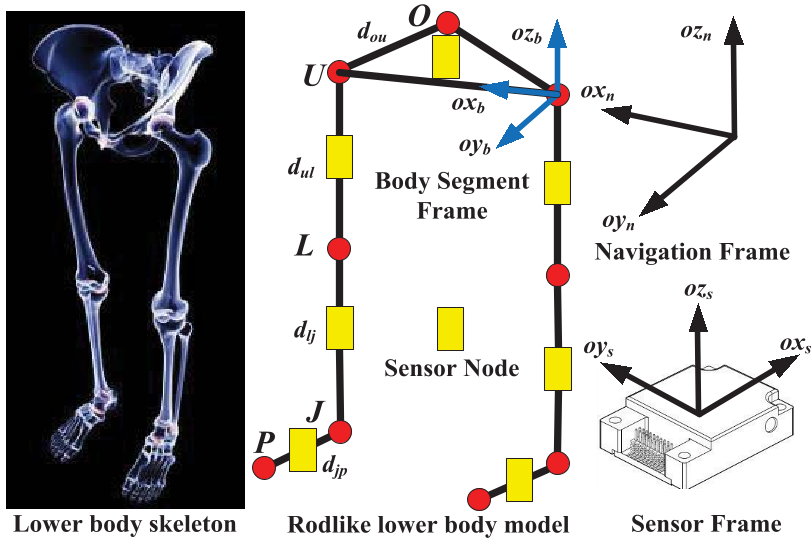 Fig 1: The LIS-WearNet operational flow, from IMU acquisition to data server processing.
Experimental Validation: EKF vs. The World
The researchers didn't just take their word for it; they validated the system against an OptiTrack optical system.
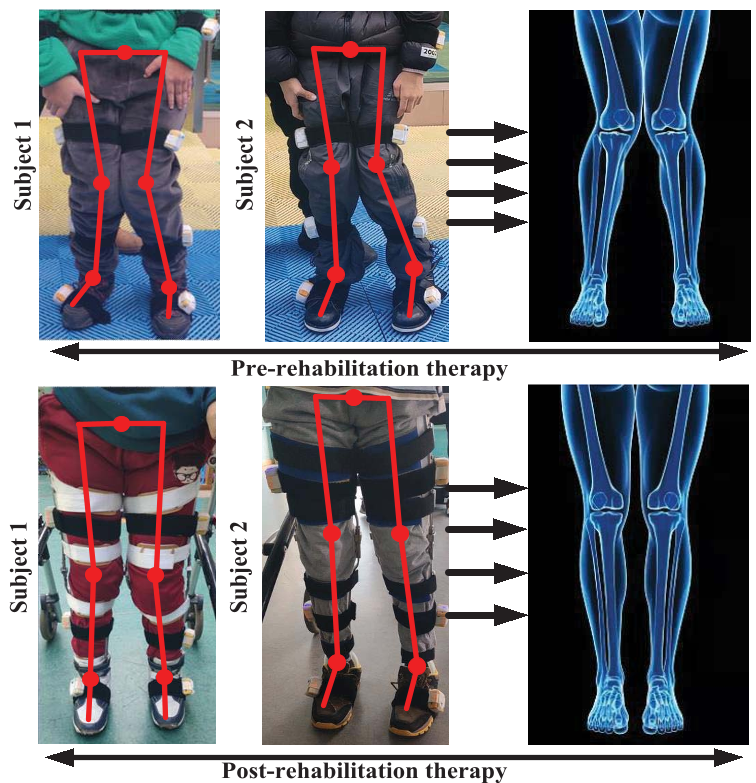 Fig 2: Visual proof showing the IMU-reconstructed model (left) nearly perfectly overlaying the optical ground truth (right).
The performance metrics were definitive: The EKF approach achieved a correlation coefficient of 0.996 for thigh flexion, significantly outperforming Gradient Descent Algorithms (GDA) and standard Kalman Filters (KF).
| Joint Angle | Parameter | EKF | GDA | KF |
|---|---|---|---|---|
| Hip () | Correlation | 0.9867 | 0.9607 | 0.9024 |
| Thigh () | Correlation | 0.9968 | 0.9703 | 0.9106 |
Clinical Impact: Does Rehabilitation Work?
After 1.5 years of monitoring SD children undergoing therapy, the data revealed striking "Kinematic Signatures" of recovery:
- Symmetry Restoration: Before therapy, SD patients showed wildly different flexion curves between left and right legs. Post-therapy, these curves began to converge, indicating better neural control.
- Gait Parameter Normalization: In one case (SD1), the stride time dropped from a labored 2.37s to a more fluid 1.51s.
- Crouch Reduction: The minimum knee angle () improved, meaning children could finally extend their legs fully during the stance phase.
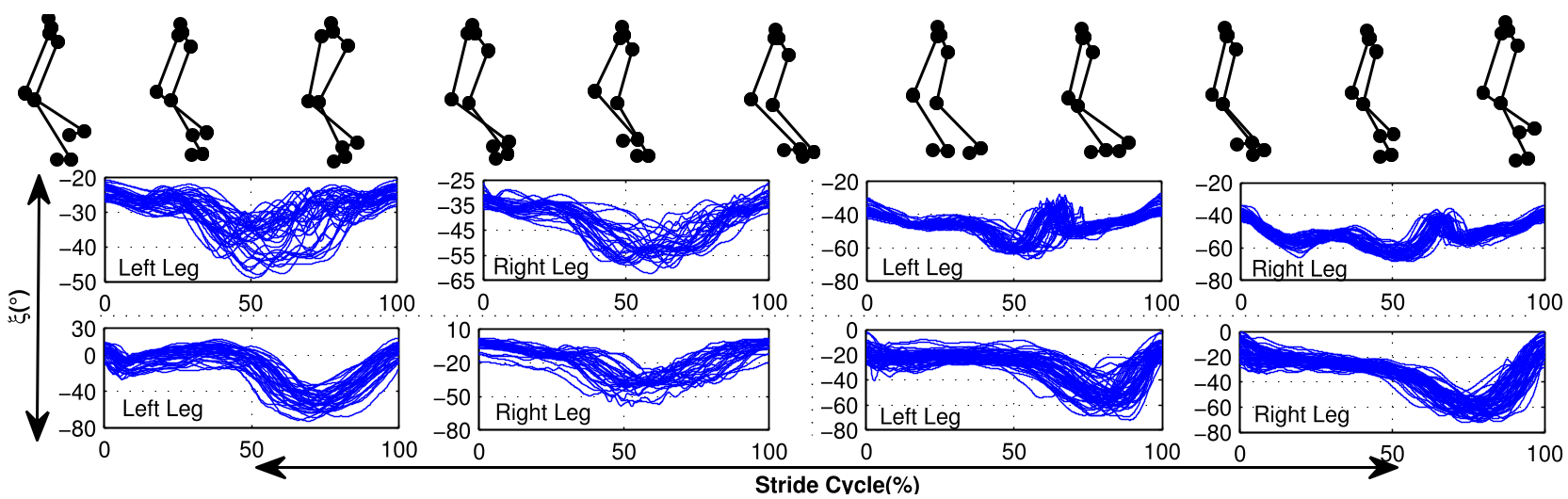 Fig 3: Comparison of knee bending angles () showing the stabilization of gait cycles after treatment.
Critical Analysis & Conclusion
The value of this study lies in its robustness. By successfully applying EKF to a population with "pathological noise" (spasms), the authors have proven that wearables can handle the edge cases of human motion.
Limitations: The sample size (13 children) is small, and the protocol requires 1.5 years of commitment. However, as a pilot study, it effectively moves the needle toward a future where "smart clothing" in rehabilitation centers provides doctors with a dashboard of recovery progress.
Future Outlook: The next logical step is multimodal fusion. Integrating surface EMG (muscle activity) with this kinematic BSN would allow researchers to see not just how the leg moves, but why a specific muscle firing pattern is causing a gait abnormality.