
Social Graph Intelligence: Why Bots Can’t Make "Friends" Like Humans Do
Bot Detection Based on Social Interactions in MMORPGs
The paper introduces a novel server-side bot detection method for MMORPGs (specifically EverQuest II) by analyzing social interaction patterns. It focuses on the "In-game Mentoring Network" and utilizes Eigenvector Centrality to differentiate human-like social growth from the more robotic, randomized connection styles of game bots, achieving over 91% classification accuracy.
TL;DR
Researchers from the University of Minnesota have unlocked a new frontier in game security: Social Interaction Analysis. By looking at who a player chooses to interact with—specifically in mentoring networks—they can identify bots with over 91% accuracy. The secret weapon? Eigenvector Centrality, a mathematical way to prove that humans are social climbers while bots are just random number generators.
Problem & Motivation: The Evolution of the "Bot"
In the world of MMORPGs like EverQuest II, bots are the ultimate "silent killers" of the virtual economy. They farm resources 24/7, causing hyper-inflation and ruining the "immersion" for real players.
The industry has tried everything:
- CAPTCHAs: Effective but annoying, they break the "flow" of the game.
- Traffic Analysis: High-speed but easily spoofed and often inaccurate.
- Basic Behavior Logs: Bots are getting better at mimicking human movement patterns.
The authors realized that while a bot can be programmed to move like a human, it is rarely programmed to network like one. Humans are inherently strategic; we seek out mentors who are more experienced, wealthier, or more influential. Bots, driven by simple profit-maximization scripts, lack this social ambition.
Methodology: Measuring Social Influence
The researchers focused on the Mentoring Network. In EverQuest II, mentoring is a formal relationship where a senior player helps a novice.
The Secret Sauce: Eigenvector Centrality
Instead of just counting how many friends a player has (Degree Centrality), they used Eigenvector Centrality. This metric assigns more importance to a player if they are connected to other important players (similar to Google's PageRank).
They developed two primary features:
- (Out-degree tendency): Does the player seek out mentors who are more "influential" than themselves?
- (In-degree tendency): Do less influential players seek them out?
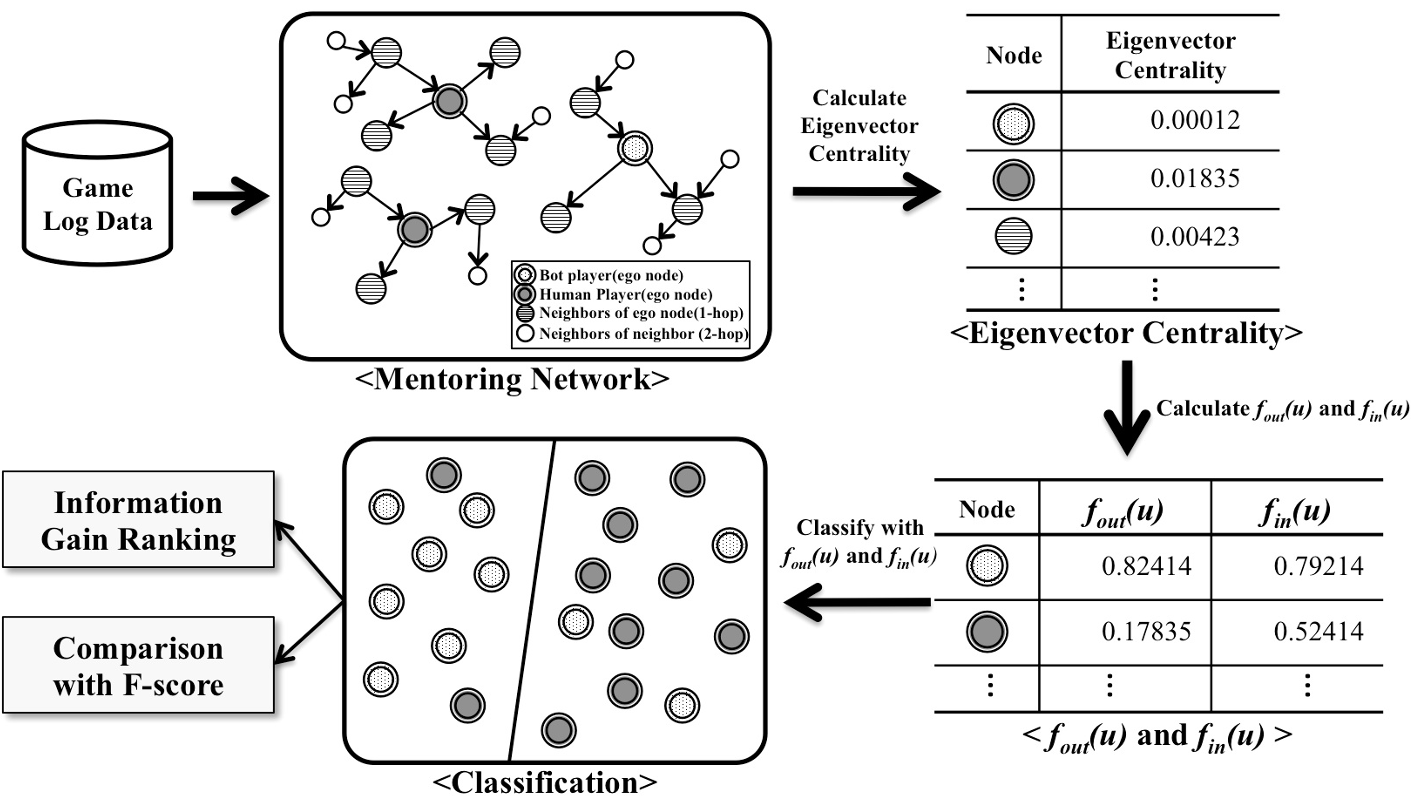 Fig 1: The workflow from game logs to classification.
Computational Rigor: Event vs. Period
To ensure the results weren't a fluke of timing, they tested two network construction methods:
- Event Date: A 13-week window centered on a player's ban or activity date.
- Period-Based: 25 separate "sliding windows" to prevent overlapping timelines.
Experiments & Results
The team tested their features against several base metrics like Session Length (SL) and Experience Points (XP).
1. The Mentality Gap
The data confirmed their hypothesis: Human players had significantly higher average Eigenvector Centrality and values. Humans "aim high"; bots connect almost at random or not at all.
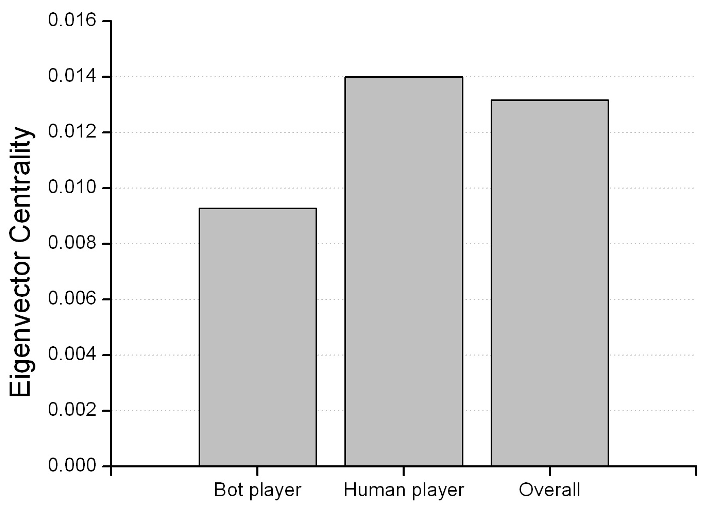 Fig 2: Humans (on average) are significantly more central to the mentoring social fabric than bots.
2. Massive Accuracy Boost
By adding and to standard machine learning classifiers (like J48 Decision Trees), the F-score jumped by 13%. In technical terms, the Social Features became the #1 most important factor in the model, even outperforming "Average Session Length."
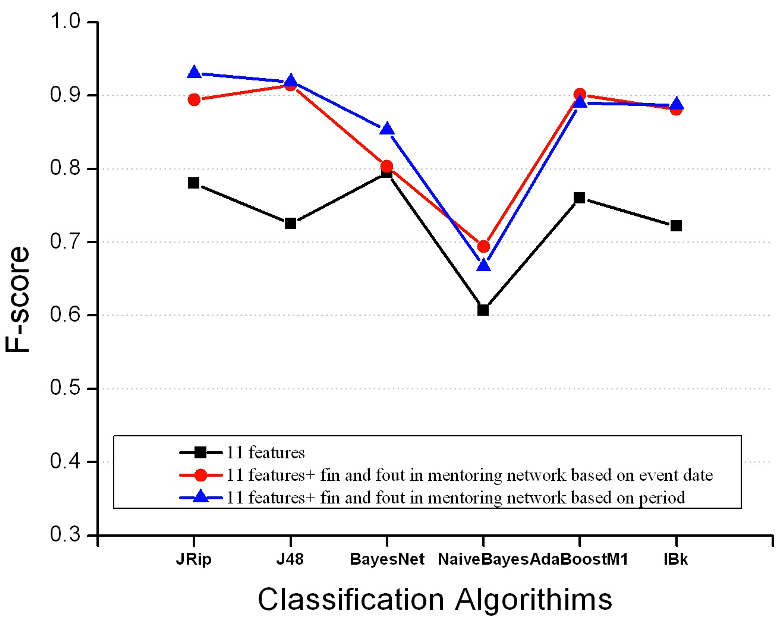 Fig 3: The yellow and red lines (with social features) clearly outperform the blue line (traditional features).
Critical Insight: The Value of Social Signatures
This paper proves that Inductive Bias in human behavior is most evident in collective dynamics rather than individual actions. While a developer can code a bot to walk in a "human-like" erratic path, coding a bot to navigate the complex social hierarchy of a guild or a mentorship network is exponentially more difficult.
Limitations & Future Work
The study primarily focuses on the Mentoring Network. However, bots might soon adapt by creating "bot-to-bot" mentoring circles to fake social depth. The authors suggest that future work should examine the content of interactions and expand to Trade and Housing networks to create a multi-layered social defense system.
Conclusion
This work shifts the bot-detection cat-and-mouse game from "what you do" to "who you know." By leveraging the inherent human desire for social status, game developers can build security systems that are not only more accurate but also completely invisible to the legitimate player.