
Bowling Online: How Internal Social Networks Generate Organizational Social Capital
Bowling Online: Social Networking and Social Capital within the Organization
The paper investigates the impact of "Beehive," an internal Social Network Site (SNS) at IBM, on organizational social capital. By analyzing survey data from over 2,400 employees, the authors demonstrate that intensive SNS use is significantly associated with higher levels of both bonding and bridging social capital, facilitating expertise sharing and cross-divisional connections.
TL;DR
Is social networking at work a productivity killer or a strategic asset? This seminal research on IBM's internal platform, Beehive, proves the latter. By applying the sociological lens of "Social Capital," the authors show that social networking sites (SNS) within the enterprise help employees—especially new hires and remote workers—build the "weak ties" necessary to locate expertise and the "strong ties" needed for emotional support and corporate citizenship.
Background: Beyond the Expert Directory
For decades, organizations tried to manage knowledge through cold databases and formal directories. The problem? Knowledge is social. You are far more likely to get a helpful answer from someone you've shared a digital "casual conversation" with than a stranger in a directory.
The paper posits that SNS affordances—profile browsing, commenting on personal photos, and articulating relationships—create the "social lubricant" required for bridging (accessing new info) and bonding (getting support) within a massive firm like IBM.
The "Beehive" Methodology
The researchers conducted a massive survey of IBM employees to measure the relationship between SNS Intensity and Social Capital.
1. The Core Metrics
The study broke social capital into five measurable dimensions:
- Bonding: Close-knit support (e.g., "someone who would lend me $500").
- Access to Expertise: Ability to find info outside one's immediate division.
- Global Connections: Feeling part of a worldwide community.
- Access to New People: The frequency of meeting new colleagues.
- Citizenship: Willingness to give back to the company beyond job duties.
2. The User Base
Unlike Facebook's early student-heavy demographic, Beehive's users were professionals with a median age of 30-39 and 5-9 years of tenure.
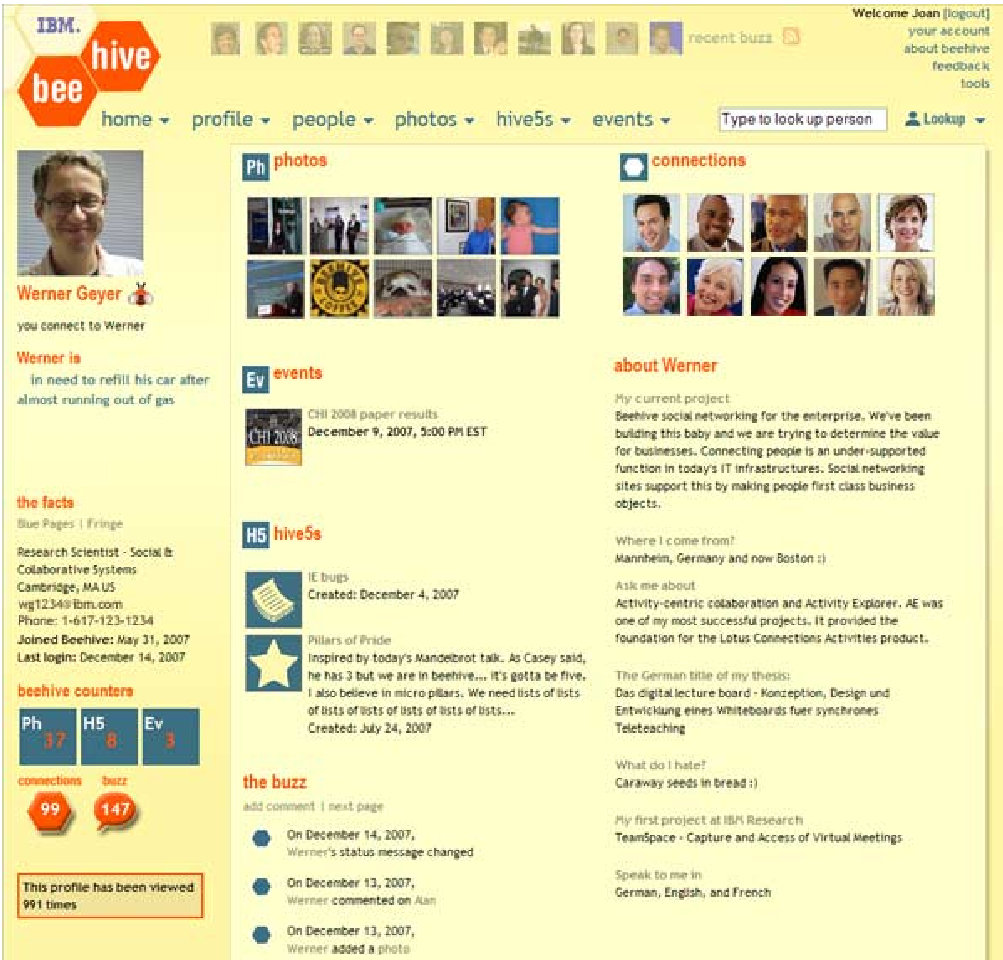 Figure 1: The Beehive profile page, blending professional expertise with personal content.
Key Insights: Why "Bowling Online" Works
The Power of Intensity
The most striking result was that Intensity of Use—how integrated the site was into an employee's workday—positively correlated with every dimension of social capital. It wasn't just about having the most "friends"; it was about the cognitive and social engagement with the community.
Overcoming the "Network Disadvantage"
The study found a "compensatory effect" for certain groups:
- New Hires & Younger Staff: Since they haven't had years to build networks, the SNS acted as an accelerator. The interaction effect showed that younger employees gained significantly more "Access to New People" through the site than veterans.
- Remote Workers: Employees outside the US headquarters reported higher bonding and access to expertise through Beehive. The SNS bridged the geographic gap that physical "face time" usually fills.
Visual Evidence of Community
The paper's title is a nod to Robert Putnam's Bowling Alone. In a delightful twist, researchers found dozens of photos of employees actually bowling together globally, shared on Beehive.
 Figure 2: Photos shared on the platform illustrating real-world social bonding facilitated by digital interaction.
Quantitative Results
The regression analysis confirmed that SNS usage for "existing/former contacts" was the strongest predictor of Citizenship and Bonding, while usage for "new contacts" drove Global Interest.
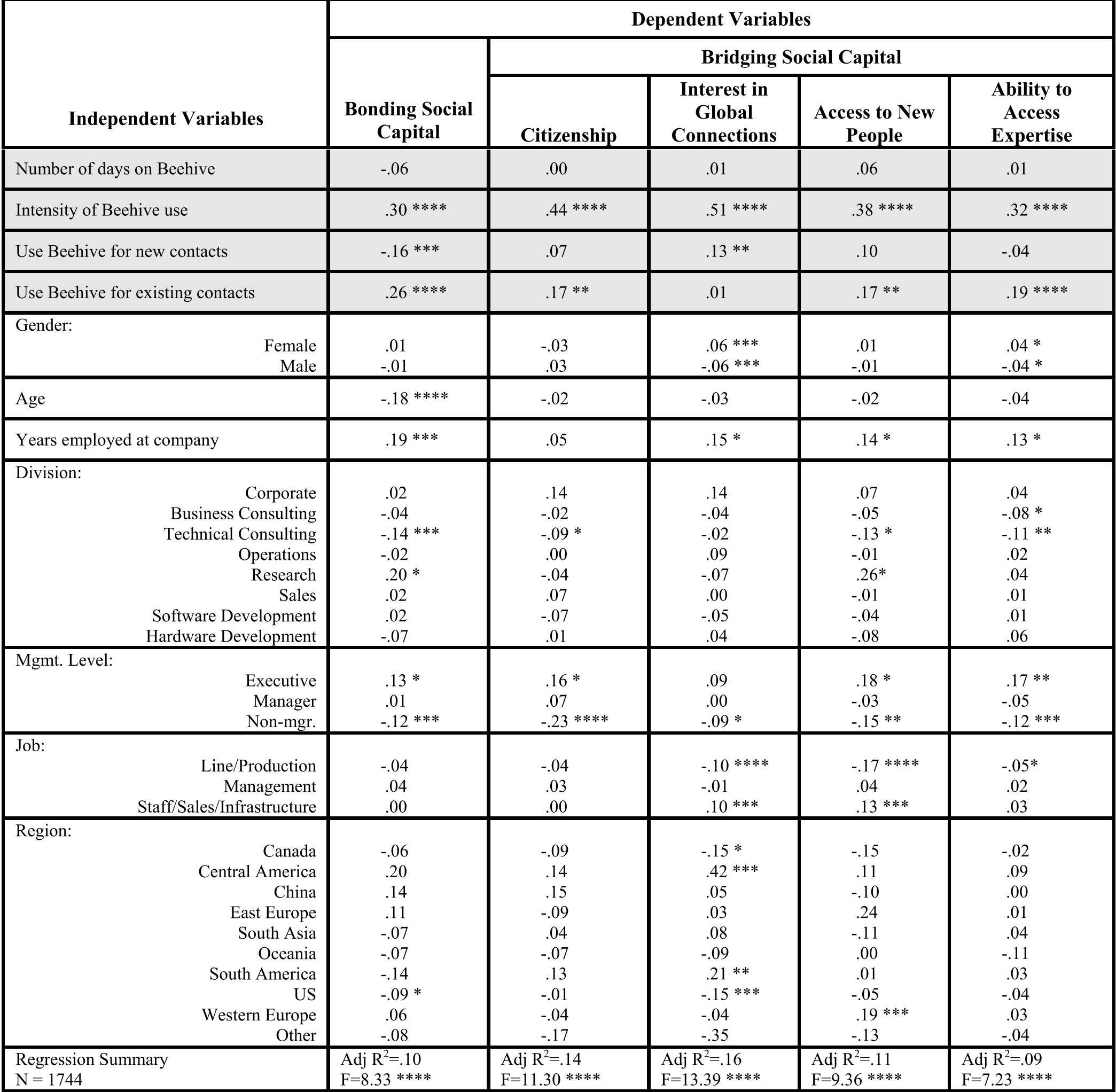 Table 1: Coefficients showing the relationship between usage patterns and social capital dimensions.
Critical Analysis & Conclusion
While this study was a "one-shot" survey and cannot strictly prove causality, it fundamentally reshaped the "Social Software at Work" debate.
The Takeaway: Managers who view internal social networking as "goofing off" are missing the bigger picture. These platforms are the digital bedrock of a modern, agile organization. They facilitate Socialization, Expertise Location, and Organizational Resilience by connecting the "weak ties" that formal hierarchies often break.
Future Outlook: As we move into the era of hybrid work and AI-augmented collaboration, the lessons from Beehive remain more relevant than ever. The next frontier? Integrating these social "signals" directly into AI tools to help us find not just the best expert, but the most reachable one.