
Brain-in-Car: Bridging Neuro-Signal Processing with Automotive AUTOSAR Architecture
Brain-in-Car: A Brain Activity-based Emotion Recognition Embedded System for Automotive
The paper introduces "Brain-in-Car," an EEG-based emotion recognition system integrated into the AUTOSAR framework for automotive safety. Utilizing a 14-channel neuroheadset and machine learning (Random Forest/AdaBoost), it achieves a mean accuracy of 91.7% in distinguishing happiness from sadness across multiple subjects.
TL;DR
"Brain-in-Car" is an innovative embedded system that utilizes EEG (Electroencephalography) to monitor a driver’s emotional state in real-time. By extracting Differential Entropy features from brainwaves and processing them through a machine learning pipeline integrated directly into the AUTOSAR framework, the system achieves up to 91.7% accuracy in distinguishing between happiness and sadness. This provides a high-fidelity alternative to facial or voice recognition for enhancing in-car safety.
Problem & Motivation: Why Brainwaves?
Current automotive safety systems often rely on cameras for facial recognition or microphones for voice analysis to detect driver agitation. However, these methods are easily bypassed: a driver can look calm while being internally furious or remain silent during a depressive episode.
The brain is the primary source of emotion. By tapping into EEG signals, the researchers aim to bypass "surface-level" expressions. The challenge, however, lies in the implementation—how do you take sensitive neural data and transmit it reliably across a car's internal network (CAN bus) while following industry standards like AUTOSAR?
Methodology: From Neurons to CAN Frames
1. Signal Acquisition and Pre-processing
The system uses the Emotiv EPOC headset, capturing data across 14 channels (AF3, F7, F3, etc.). To handle the noisy environment of a moving car, the team employed a Common Average Reference (CAR) filter:
This ensures that global noise across all electrodes is subtracted, leaving only the localized neural activity.
2. Feature Extraction: The Power of Differential Entropy
The researchers compared several methods but found that Differential Entropy (DE) was the most effective. DE measures the complexity of the signal and is equivalent to the logarithmic power spectral density for fixed-length sequences.
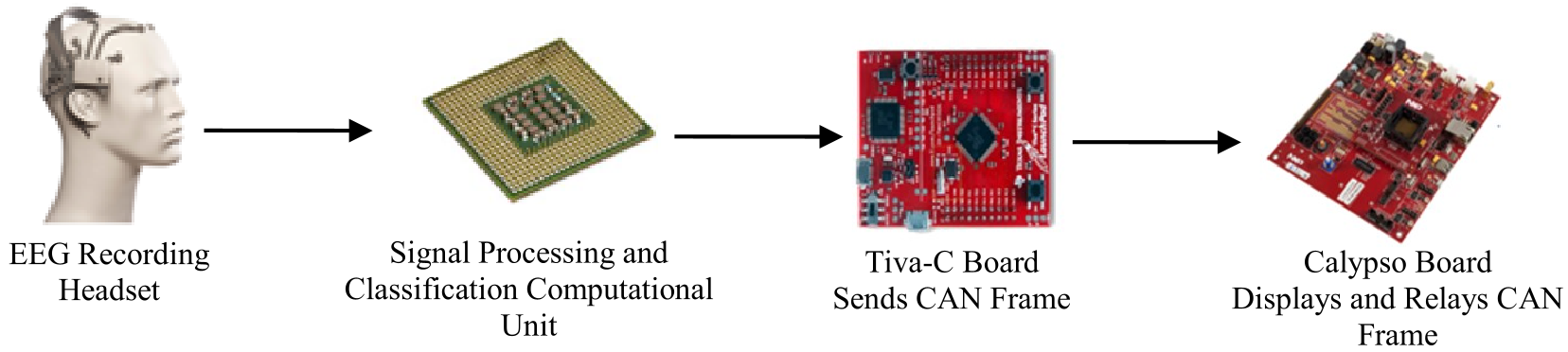 Fig. 1: The end-to-end architecture from EEG recording to AUTOSAR output.
3. The AUTOSAR Stack
Where this paper shines is the embedded integration. The identified emotion is packaged into a Controller Area Network (CAN) frame. The team implemented the full AUTOSAR CAN stack, including:
- COM Layer: Signal interface for the Run-Time Environment (RTE).
- PduR (PDU Router): Routes data between BSW modules.
- CanIf & CanDriver: Hardware abstraction and physical transmission at 500kbps.
Experiments & Results: High Accuracy and Generalizability
The study involved recording data while subjects watched emotional film clips. The results were analyzed in two ways:
A. Individual Performance Using Random Forest, the system achieved a mean accuracy of 89.7%. This demonstrates that the system is highly effective when tuned to a specific individual’s neural patterns.
B. Cross-Subject Generalization One of the most promising findings was that when pooling data from different subjects, the AdaBoost classifier reached 91.7% accuracy.
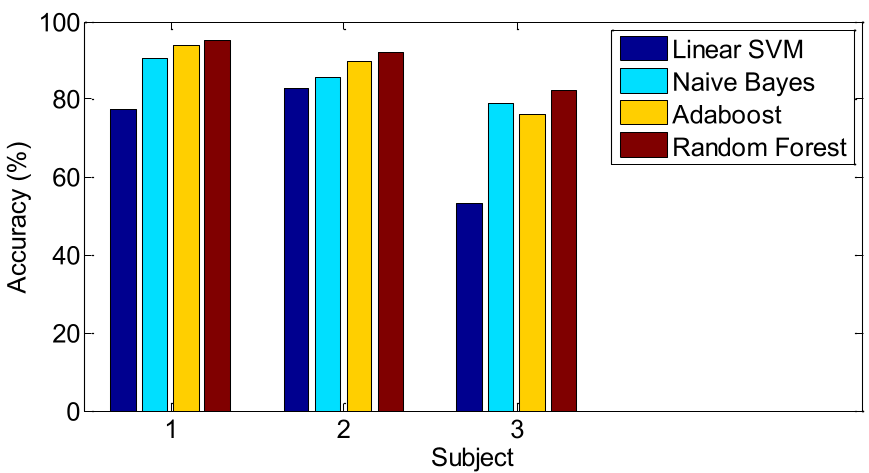 Fig. 2: Analysis of different feature extraction methods (DE vs. Asymmetry-based).
As seen in the charts, DE (Differential Entropy) consistently outperformed asymmetry-based features (DASM, RASM), confirming that the direct intensity of neural activation in specific frequency bands is a more reliable emotional indicator than the relative difference between hemispheres.
Critical Analysis & Conclusion
The "Takeaway"
The success of the cross-subject training (91.7%) is a major milestone. It suggests that a "universal" emotion recognition model could be pre-installed in vehicles, reducing the need for tedious user-specific calibration—a huge win for consumer UX.
Limitations
- Emotional Range: The study currently only distinguishes between "Happy" and "Sad." Real-world safety requires detecting "Anger" (road rage) or "Fatigue" (drowsiness).
- Hardware Constraints: Wearing an EEG headset while driving is still socially and physically cumbersome for everyday use.
Future Outlook
As EEG sensors become more "invisible" (integrated into headrests or smart hats), the "Brain-in-Car" framework provides the necessary software infrastructure to make affective computing a standard part of our daily commute, potentially reducing accidents by up to 10x by intervening before the driver even realizes they are distressed.