
Brilliant AI Doctor: Why SOTA AI Struggles in the "Wild" of Rural Healthcare
18796_"Brilliant AI Doctor" in Rural Clinics: Challenges
This paper presents a field study of an AI-powered Clinical Decision Support System (AI-CDSS) called "Brilliant Doctor" deployed in rural China. It utilizes ethnographic methods to analyze how 22 clinicians interact with SOTA AI diagnostic tools in resource-constrained environments, identifying a significant gap between "textbook" AI design and real-world clinical practice.
TL;DR
Deploying AI in healthcare isn't just a technical challenge; it's a socio-technical battle. This study examines "Brilliant Doctor," an AI-CDSS deployed in rural China, revealing that even high-accuracy algorithms fail when they clash with the "impossible volume" of rural clinics, rigid workflows, and "black box" transparency issues.
The "Impossible" Volume: Where AI Meets Reality
In the quiet halls of research labs, an AI diagnostic tool assumes a "textbook" workflow: the doctor asks a question, enters data, receives a suggestion, and decides. In rural China, this reality is shattered. Clinicians often face 75 to 150 patients per day.
The tension is visceral:
- The AI's Vision: A 10-minute "click-through" diagnostic process.
- The Doctor's Reality: A 2-minute consultation where they must multitask—typing, talking, and pulse-taking simultaneously.
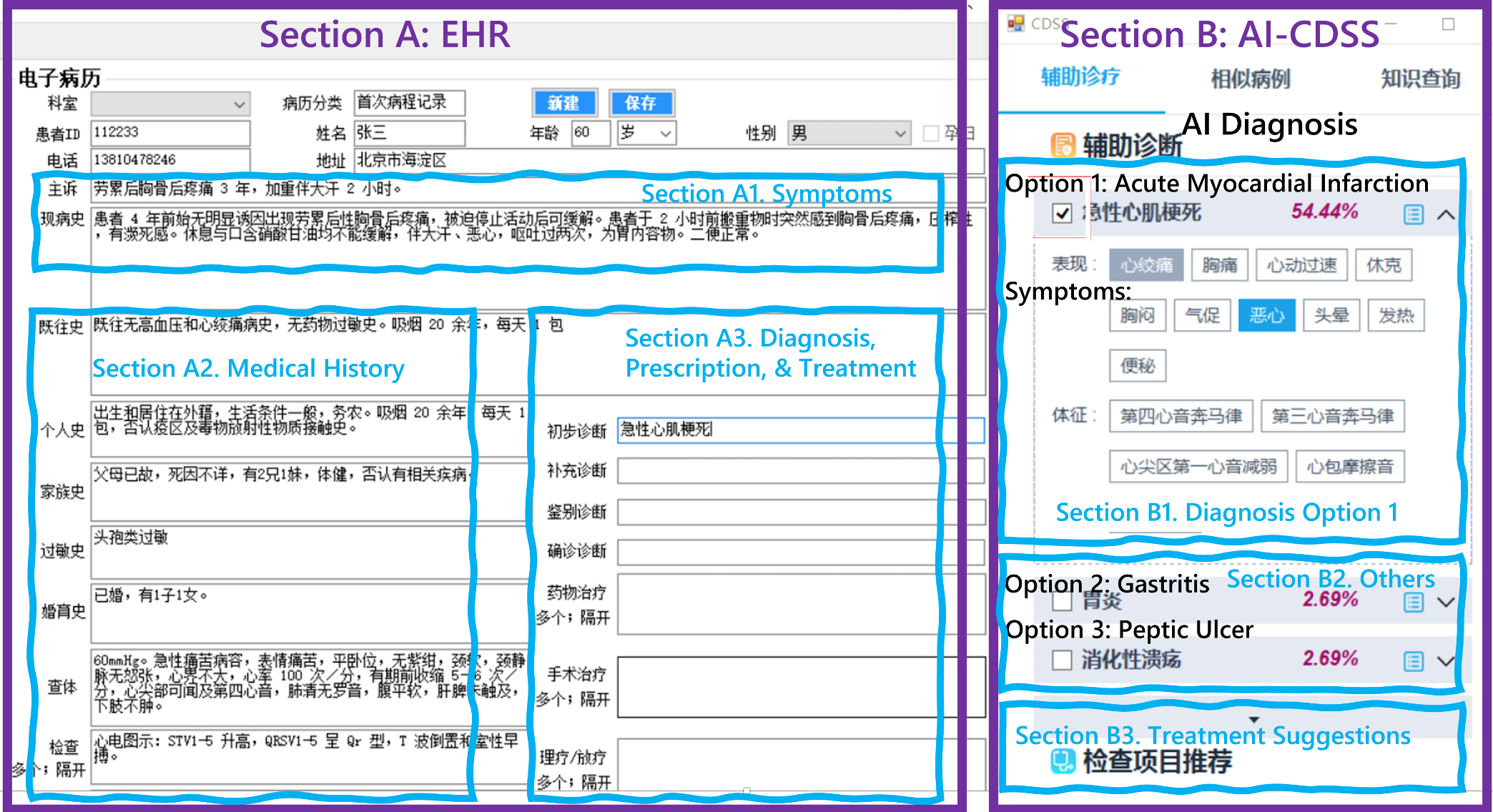 Figure 1: The dual-window setup of the EHR and Brilliant Doctor AI-CDSS.
Methodology: High-Tech Tools, Low-Tech Constraints
The researchers identified that the AI often provided "SOTA" recommendations that were practically useless because it lacked Local Context Awareness:
- Interoperability Gaps: The AI might suggest a CT scan, but the rural clinic doesn't even have a lab.
- Drug Availability: The AI recommends a specific antibiotic, but the clinic's pharmacy hasn't stocked it for weeks.
- Socio-Economic Blindness: The AI suggests an expensive treatment to a patient who has no insurance and is financially vulnerable.
Key Findings: The Trust-Autonomy Paradox
While clinicians appreciated the AI as a "reassurance" mechanism to prevent rare misdiagnoses, they fiercely guarded their Professional Autonomy.
| Insight Category | Key Observation |
|---|---|
| The Black Box | Clinicians ignored "alert" pop-ups because they didn't explain why a drug was contraindicated. |
| Multitasking | Doctors used the "Type-In" mode rather than the structured "Click-Through" mode to save time. |
| De-skilling | Fear that junior doctors might rely too heavily on the system, losing their own diagnostic "edge." |
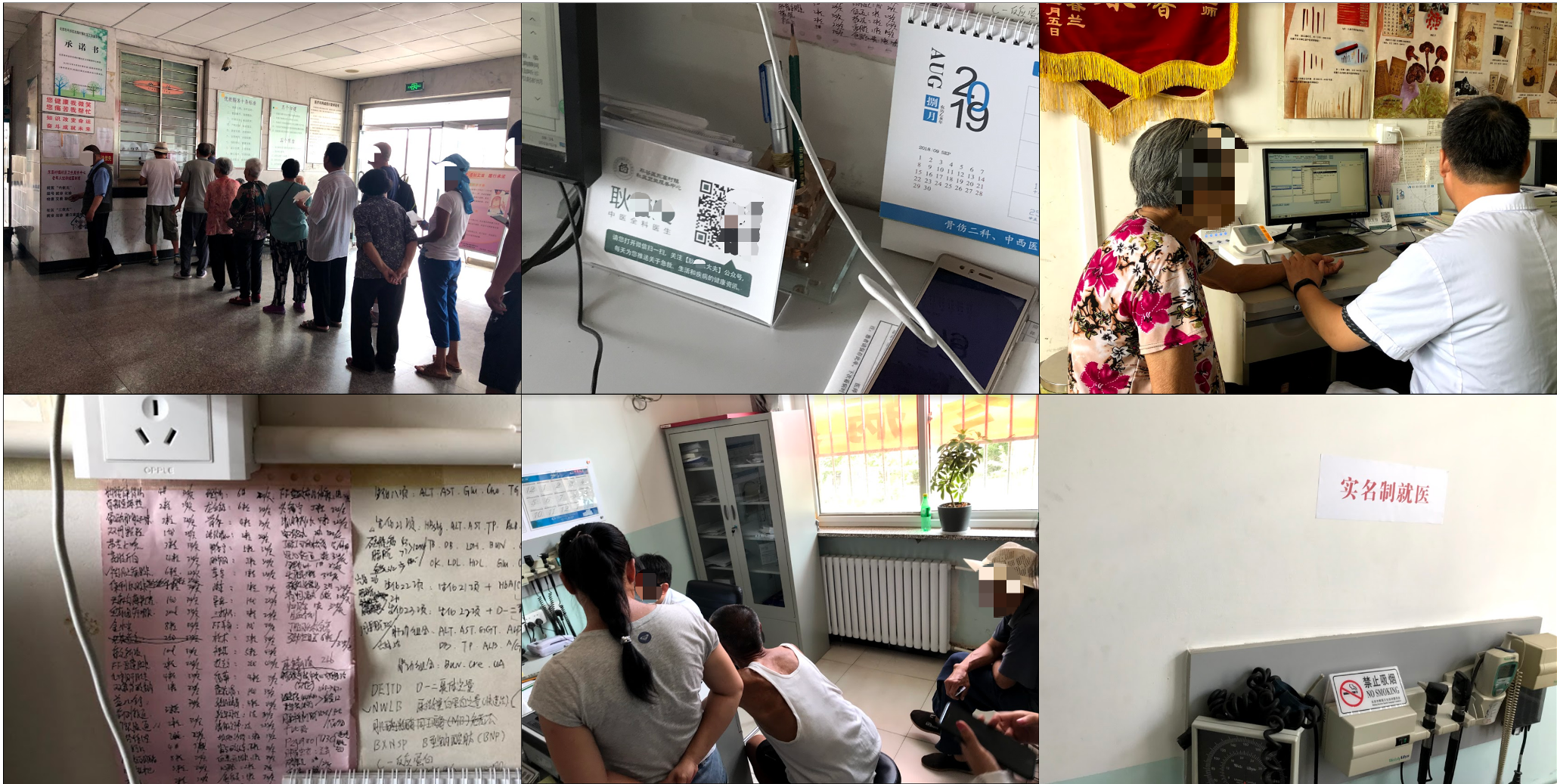 Figure 2: Real-world conditions—patients crowding offices and hand-written "cheat sheets" for available medicine.
Beyond "The Doctor in a Box": The Future of Human-AI Collaboration
The paper concludes that we must stop trying to build an "AI Doctor" and start building a "Doctor's Assistant."
Design Implications:
- Unremarkable AI: AI shouldn't be a separate window. It should leverage Speech-to-Text to transcribe conversations and populate EHRs automatically, letting doctors keep their eyes on the patient.
- Self-Serve Triage: Moving trivial cases (refills, common colds) to AI kiosks to free up specialists for complex diagnoses.
- Contextual Intelligence: AI must be fed local data (pharmacy stock, insurance policies) to ensure recommendations are actually actionable.
Conclusion
"Brilliant Doctor" serves as a cautionary tale: technical accuracy is only half the battle. To truly revolutionize healthcare in the developing world, AI must be locally-adapted, explainable, and invisible. It should support the human clinician not by replacing their logic, but by removing their administrative burden.