
ESN: Transforming Twitter into a Survival Guide via Semantic Networks
Building earthquake semantic network by mining human activity from Twitter
The paper introduces the Earthquake Semantic Network (ESN), an OWL-based collective intelligence system designed to recommend survival action patterns during disasters. It employs a self-supervised learning framework using Conditional Random Fields (CRF) to automatically mine human activities from Twitter data.
TL;DR
In the wake of a predicted 8.0 Richter scale earthquake in Japan's Tokai region, researchers have developed the Earthquake Semantic Network (ESN). This system automatically mines human activity from Twitter—treating the platform as a real-world sensor—to provide real-time recommendations for victims, such as finding evacuation centers or safe routes home.
Background & Positioning
Disaster response often fails not due to a lack of data, but a lack of structured, actionable intelligence. Following the 2011 Tohoku earthquake, Twitter became a lifeline, yet the sheer volume of unstructured tweets made it difficult for computers to "understand" and recommend specific actions. This work bridges the gap between Natural Language Processing (NLP) and Context-Aware Computing by building an automated pipeline that turns chaotic tweets into a structured OWL (Web Ontology Language) semantic network.
The Core Problem: The Noise of Disaster
Traditional methods for activity extraction struggle with:
- Syntactic Chaos: Tweets are often ungrammatical, filled with slang, and structurally varying.
- Scalability: Manual ontology creation for every disaster scenario is cost-prohibitive.
- Frequency Issues: Prior co-occurrence models (like Nilanjan et al.) fail to extract infrequent but vital activities because they rely on high-frequency keywords.
Methodology: Self-Supervised Mining
The researchers developed a dual-module architecture consisting of a Self-Supervised Learner and an Activity Extractor.
1. The Extraction Architecture
Instead of relying on human-labeled data, the system uses "seed" Japanese syntax patterns to find reliable sentences. It then uses a deep linguistic parser to identify five key attributes: Who (Actor), Action, What (Object), When (Time), and Where (Location).
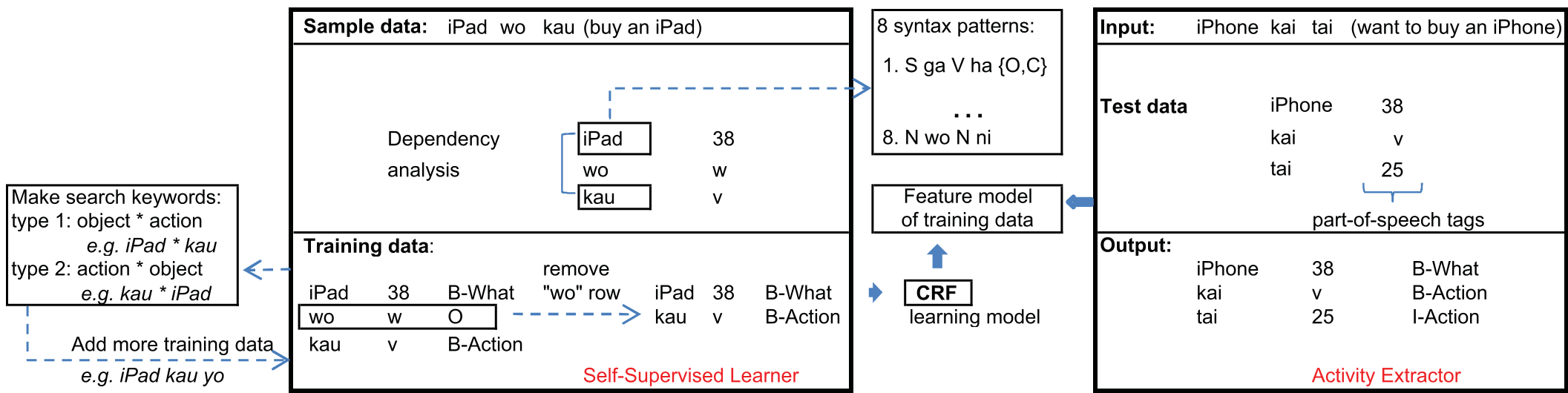 Figure 1: The self-supervised pipeline for generating training data without manual intervention.
2. Semantic Modeling with OWL
The extracted data is converted into N3 (Notation 3) format, inheriting the Geo, Time Line, and vCard ontologies. This allows the computer to reason about the data—for instance, identifying that a "Station" is a type of "Location" where a "Return Home" action might originate.
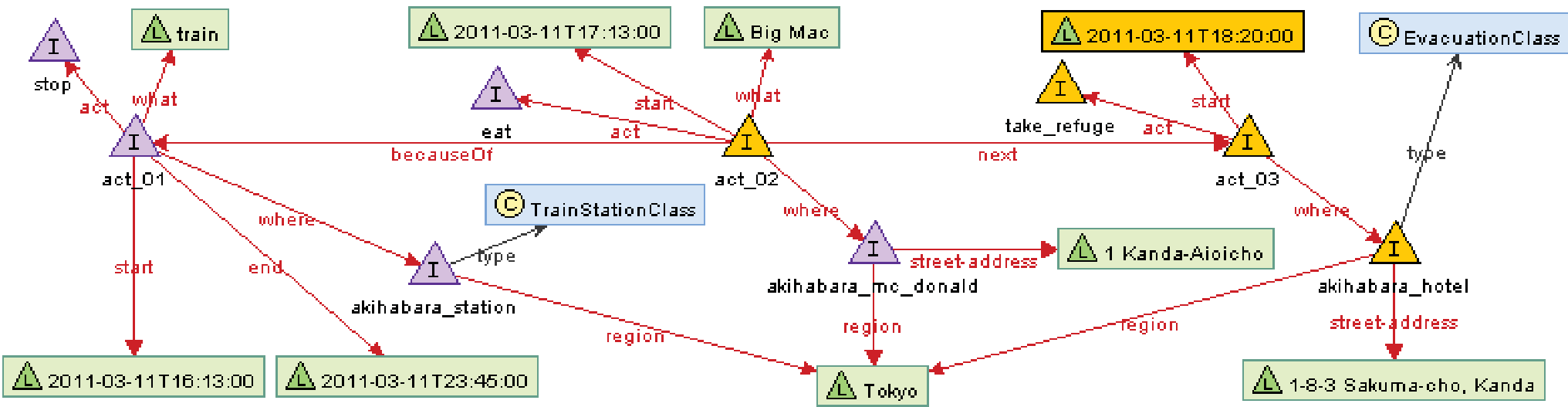 Figure 3: A directed graph representation of the Earthquake Semantic Network (ESN).
Experimental Results & SOTA Comparison
The authors compared their CRF-based model against Multi-class SVMs and previous co-occurrence methods.
- CRF vs. SVM: CRF proved superior for sequence labeling, achieving an F-measure of 69.72% for overall activity recognition, compared to 62.94% for SVM.
- Recall Breakthrough: While baseline methods reached high precision (96%+), their recall was a dismal 1.12%. The proposed approach achieved a recall of 66.54%, meaning it can actually "find" the majority of relevant activities in the Twitter stream.
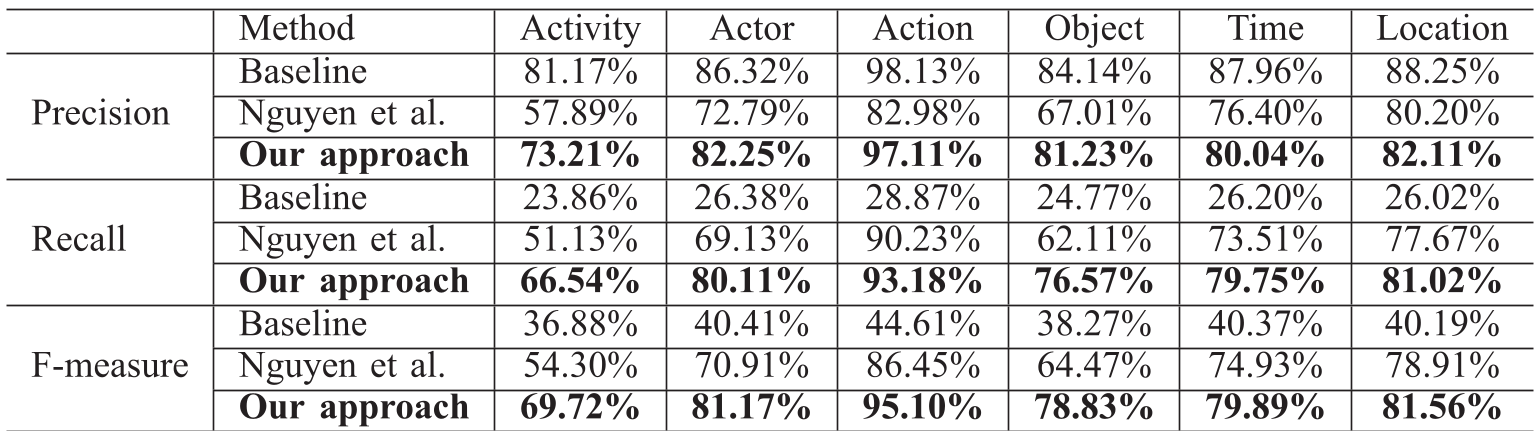 Table 2: Performance comparison showing the balance between Precision and Recall in the proposed approach.
Application: SPARQL in Crisis
The true power of ESN lies in its queryability. By using SPARQL queries, a system can instantly find an available evacuation center based on a victim's current coordinates and time. Furthermore, by analyzing "Action Patterns" (e.g., people at Station X are successfully moving to Center Y), the system can recommend the most viable path for others in the same vicinity.
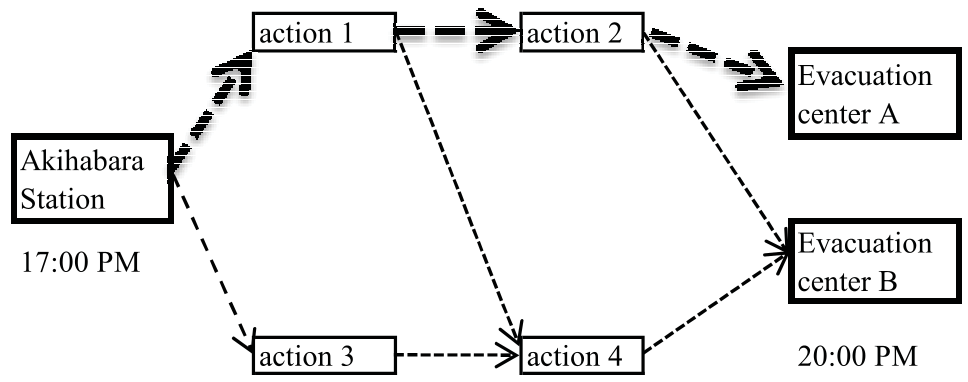 Figure 9: How the ESN recommends action sequences based on collective behavior.
Critical Insight & Conclusion
The ESN project demonstrates that Semantic Web technologies (OWL/RDF) and Self-Supervised Machine Learning are not mutually exclusive. When combined, they allow for a system that is both flexible enough to handle the messiness of human social media and structured enough for a computer to perform logical reasoning during a crisis.
Limitations: The system still struggles with highly complex sentence structures and currently focuses primarily on Japanese text. Future work involving the 2011 Tohoku data will be critical for validating the network's predictive capabilities in a real-world saturation test.