
Beyond Sensors: Leveraging Social Context to Solve Bangkok's Traffic Gridlock
Building Knowledge from Social Networks on What is Important to Drivers in Constrained Road Infrastructure
This paper presents a quantitative study on building a knowledge-based Traffic Information System (TIS) for Bangkok, focusing on identifying influential factors (IF) for congestion and the utility of social media data. It validates a context-aware framework that compensates for missing sensor data by leveraging factors like rain level, time of day, and social network feedback, achieving high reliability in urban areas with constrained infrastructure.
TL;DR
In the world's most congested cities, traditional road sensors often fail or are non-existent. This paper explores a knowledge-based Traffic Information System (TIS) that replaces missing sensor data with "context-aware" intelligence. By analyzing human perception and social media behavior in Bangkok, the authors prove that factors like rain and time-of-day, paired with crowdsourced social data, can effectively predict traffic flow when hardware fails.
The Problem: When Infrastructure Can't Keep Up
Bangkok's traffic is a legendary challenge. With over 5 million vehicles fighting for space in a city designed for 2 million, the result is chronic gridlock. While Intelligent Transportation Systems (ITS) offer a solution, they suffer from a "Hardware Dependency" trap:
- Sensor Failure: Bad weather or poor maintenance leads to "data holes."
- Incomplete Coverage: Side roads and older districts lack the budget for high-tech sensing.
- Data Uncertainty: Mobile sensors (GPS probes) are often intermittently available.
The Insight: Human Sensors and Environmental Context
The authors propose that the environment itself tells a story about traffic. If it’s 7:00 AM on a Monday and it’s raining heavily, we don’t need a sensor to know the main arteries are jammed. They categorize these Influential Factors (IF) to build an adaptive model that switches between different inference algorithms based on whatever data is available.
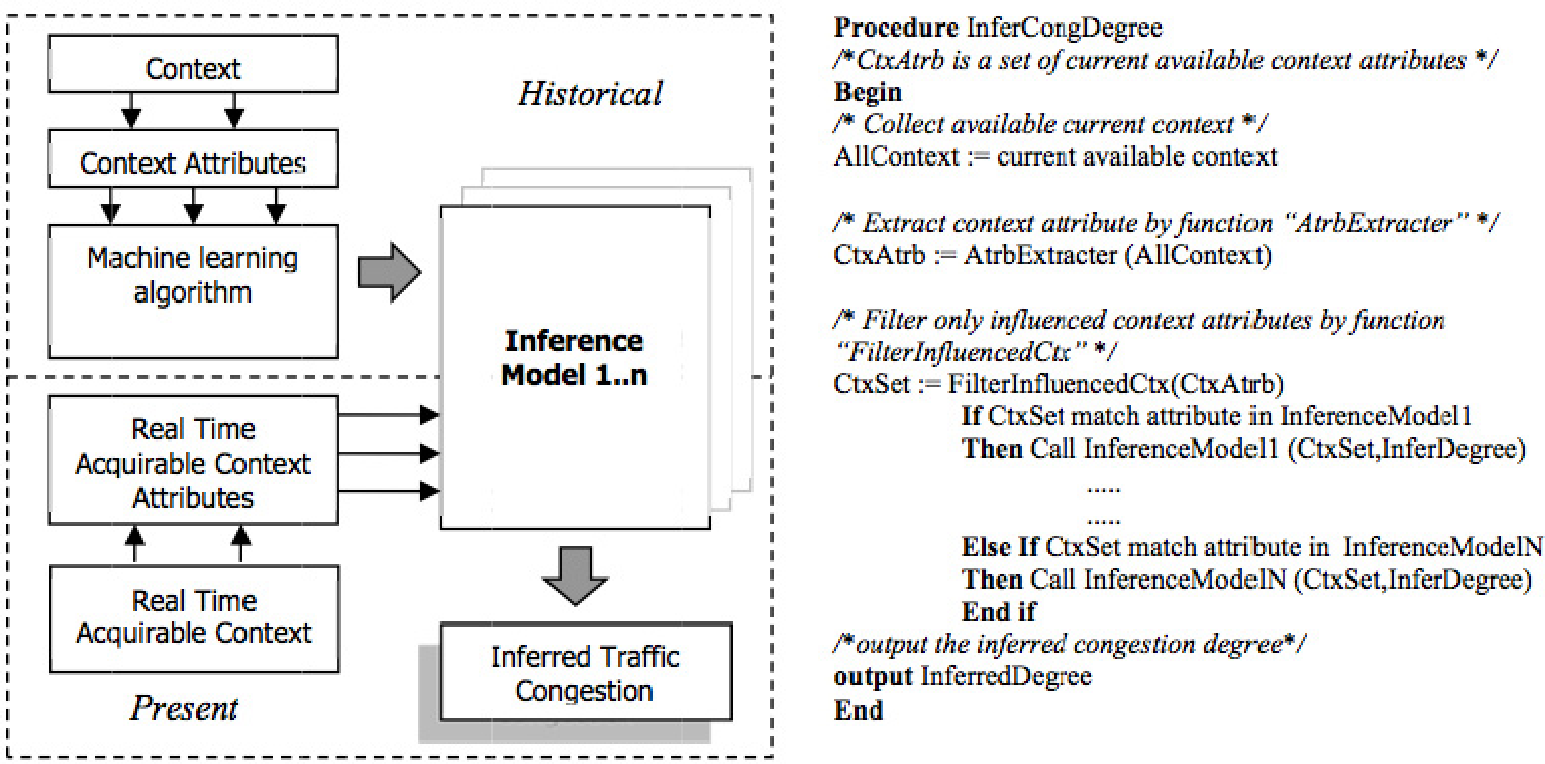 Figure 1: The Context-Aware framework adapts to missing data by selecting the best available model.
Methodology: Quantifying "The Jam"
Through a massive survey distributed to over 400,000 social media followers, the team quantified the impact of various factors using a Weighted Mean Score (WMS).
Key Findings:
- Extreme Factors: Timing (Rush hour), Rain Level, and Incidents (Protests/Accidents) are the strongest predictors.
- Correlation: There is a significant positive correlation (0.455) between Time and Day, validating their use as a combined context set for machine learning models.
- The Social Advantage: Social media isn't just for chatting. The study found that nearly 40% of drivers mention traffic condition frequently, and those who do often include Location + Time + Status—the "Holy Trinity" of traffic data.
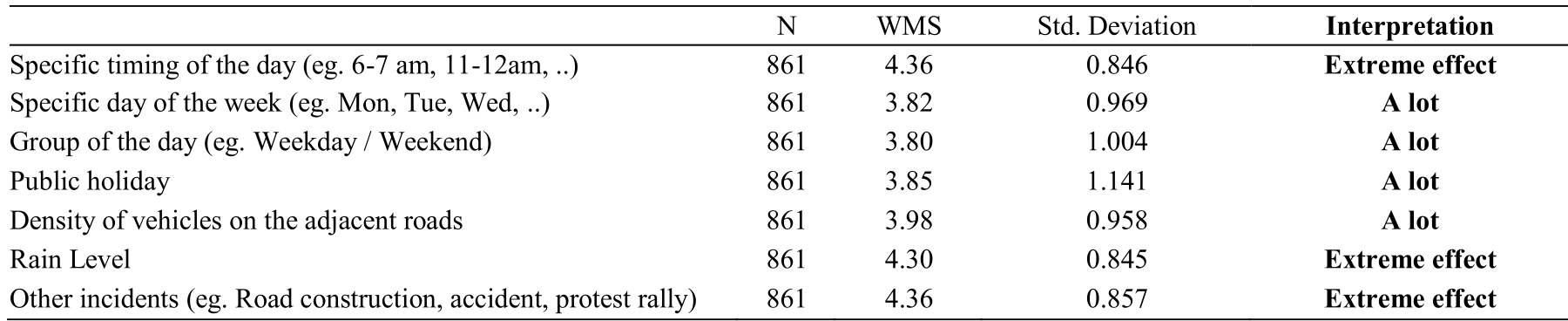 Table 1: Ranking of factors by their impact on traffic congestion.
Turning Tweets into Traffic Maps
The paper highlights a crucial shift: treating the driver as a "human sensor." However, social media data has its quirks:
- Noise: Messages are often ungrammatical.
- Latency: A tweet might be posted 15 minutes after the driver is out of the jam.
- Credibility: Not every traffic update is accurate.
The authors suggest that social network data should be used as a Confidence Factor or a secondary supporting attribute rather than the primary input. It acts as the "tie-breaker" or the "gap-filler" when physical sensors go dark.
Critical Insight & Conclusion
This work moves TIS from a purely mechanical domain into a socio-technical one. The core takeaway is redundancy through context. By understanding the physics of the city (road density) and the behavior of its residents (social media usage), we can build resilient systems that don't go "blind" just because a sensor breaks.
Limitations & Future Work:
- Language Processing: Future systems need better NLP to parse informal Thai/English used on social platforms.
- Weights: The WMS scores found in this study will eventually be used to assign "weights" to machine learning features, further refining the accuracy of automated congestion estimates.
As cities like Bangkok, Jakarta, and Manila continue to grow, this "Context-Aware" approach offers a cost-effective roadmap for the future of urban mobility.