
Decoding VGI Quality: How Multi-Layered Social Networks Reveal Trusted Maps
Building Social Networks in Volunteered Geographic Information Communities: What Contributor Behaviours Reveal About Crowdsourced Data Quality
The paper introduces a multi-layered multiplex social network framework to model contributor interactions within Volunteered Geographic Information (VGI) communities like OpenStreetMap (OSM). By analyzing various interaction layers, such as co-edition, collaboration width/depth, and spatiotemporal co-occurrence, the authors aim to identify trustworthy contributors and assess crowdsourced data quality.
TL;DR
Determining whether a crowdsourced map is accurate often requires looking at who made the map rather than just what was drawn. This paper proposes a Multiplex Social Network model for Volunteered Geographic Information (VGI) like OpenStreetMap. By tracking how users edit, correct, and build upon each other's work across multiple layers of interaction, the authors can distinguish "moderator" profiles from "untrusted" contributors, providing a robust proxy for data quality.
The "Who" Matters: The Motivation for Social Modeling
The skepticism surrounding crowdsourced data like OpenStreetMap (OSM) usually stems from its inherent heterogeneity—anyone can contribute, regardless of expertise. Traditional quality assurance relies on "Linus's Law" (many eyes make all bugs shallow), but how do we identify the authoritative "eyes"?
Prior work often treated collaboration as a flat, single-type interaction. However, social systems are multi-dimensional. A user might be a frequent editor but rarely collaborate (loner), or they might be a "gatekeeper" whose work is the foundation for hundreds of others. To capture this, the researchers argue we must move toward Multiplex Networks.
Methodology: The Architecture of Interaction
The core innovation lies in defining a sequence of graphs where the nodes (contributors) remain the same, but the edges (relationships) change based on the behavior being analyzed.
The Four Dimensions of Collaboration:
- Co-edition Layer: Connects User A to User B if A modifies a specific version created by B. This captures direct response and correction.
- Breadth & Depth Layer: Measures "collaboration width" (how many unique objects two users both worked on) and "depth" (how many times they interacted on a single object).
- Use/Trust Layer: Based on Wikipedia's norm networks, this tracks when a user chooses to keep and build upon a peer's contribution rather than overwriting it, signaling implicit trust.
- Spatiotemporal Layer: Connects users who contribute in the same area at the same time, highlighting physical-world partnerships or local mapping parties.
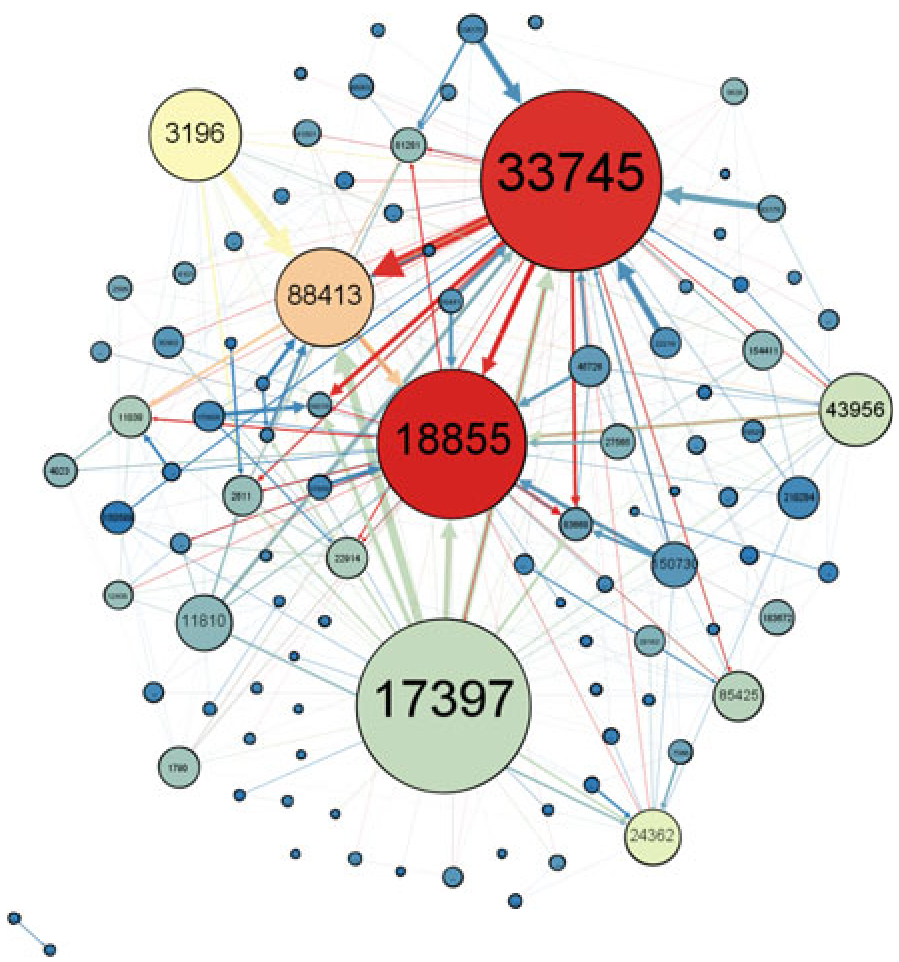 Fig 1: Width collaboration graph. Note how central nodes dominate the interaction, indicating "moderator" roles within the Paris OSM community.
Experiments: Investigating Paris OSM (2010-2015)
The authors applied their model to a five-year snapshot of OSM data in Paris. By visualizing these layers, they identified specific contributor archetypes:
- The Trusted Moderator (User #17397): This user showed high "outdegree" in the use graph (reusing others' work) but rarely had their own work corrected by others. They act as a stabilizing force in the community.
- The Unverified Contributor (User #18855): Despite contributing, this user’s edits were frequently "corrected" or overwritten by many different people (high indegree in the co-edition graph), suggesting their contributions may be less reliable.
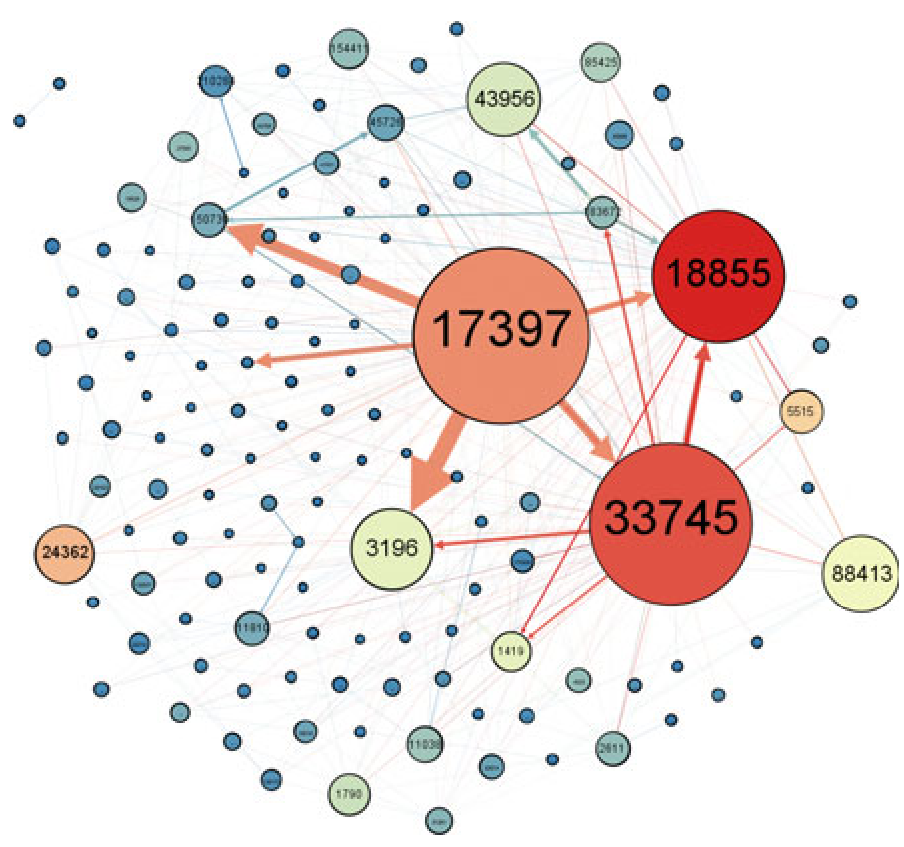 Fig 2: Co-edition graph. Thickness reveals the "intensity" of corrections—a vital metric for spotting disputed data regions.
Critical Insight: From Geometry to Topology
The true value of this work is the shift in perspective. Instead of performing expensive "ground-truthing" (comparing OSM to official government maps), we can use the Social Topology of the community as a self-correcting quality signal. If a "Moderator" node touches a piece of data, its probability of being correct increases.
Limitations and Future Work
While the multiplex approach is powerful, it is currently "analysis-heavy." The authors note that the next step is automated classification. By using clustering algorithms on these multiplex layers, we could eventually assign every contributor a "Trust Score" automatically. This would allow data consumers to filter OSM features based on the reputation of their authors, transforming VGI from a "chaotic" resource into a structured, tiered database.
Conclusion
Social behaviors in VGI are not just noise; they are the most reliable indicators of data quality we have. By treating the community as a multi-layered multiplex network, we can finally quantify the "social hierarchy" that Goodchild and Li suggested was necessary for trust in crowdsourcing.