
Beyond Reputation: Engineering Authenticity via Social Trust Communities
Building Trust Communities Using Social Trust
The paper introduces a framework for building "Trust Communities" within social networks by leveraging a dual-component Social Trust model. It proposes the novel concept of Engagement Trust (EngTrust) combined with Popularity Trust (PopTrust) to quantify social capital and drive a trust-based recommender system.
TL;DR
Social networking often operates on the flawed logic that "my friend's friend is my friend." This paper challenges that status quo by proposing a framework to build Trust Communities. By introducing Engagement Trust alongside Popularity Trust, the authors provide a mathematical foundation (using the Beta distribution) to turn passive social networks into active, high-trust environments through targeted recommendation.
The "Friend of a Friend" Fallacy
In the early days of Web 2.0, platforms like Facebook and MySpace flourished on the FOAF (Friend of a Friend) principle. However, as the authors point out, trust is rarely transitive. You might trust your best friend, but you don't necessarily trust the stranger they met at a bar last week. This "implicit trust" leads to privacy risks and a "chilling effect" where users hesitate to share honest feelings.
The core motivation here is to bridge the Trust Gap—the distance between a standard online forum and a true community where mutual respect and authenticity are guaranteed.
Methodology: The Dual-Engine Trust Model
The most significant contribution of this work is the decomposition of Social Trust into two distinct vectors:
- Popularity Trust (PopTrust): This is the "Sink" view. It measures how much the community trusts a specific member based on incoming signals like friend requests and positive feedback on posts.
- Engagement Trust (EngTrust): This is the "Source" view. It measures how much a member invests in the community through active participation (posts, ratings) and passive consumption.
Mathematically Modeling Trust
The authors use the Beta Probability Density Function to model these trust values. This choice is statistically sound because it handles uncertainty—the trust value evolves as the number of positive () and negative () interactions increases.
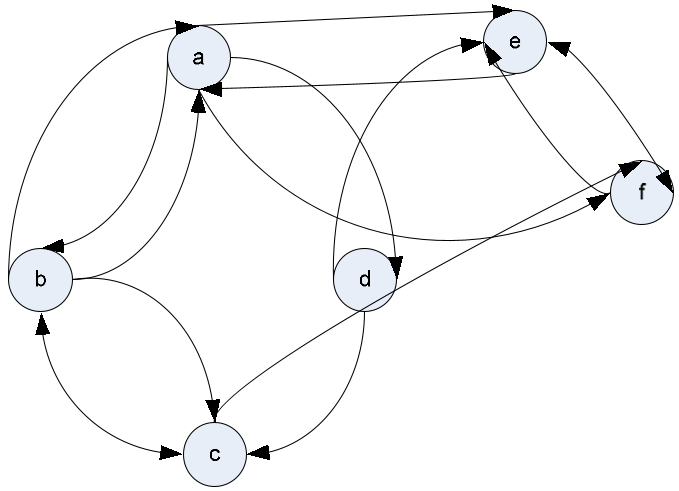 Fig 1: The interaction graph showing how edges (interactions) contribute to either the source's Engagement Trust or the sink's Popularity Trust.
The combined Social Trust score for a member is expressed as: This weighting () allows community managers to tune the system:
- At , you are measuring Reputation.
- At , you are measuring Commitment/Loyalty.
From Data to Community: The Recommender System
The paper doesn't just calculate scores; it uses them to close the loop via a Trust-Based Recommender. Unlike typical collaborative filtering which looks for "users like you," this system suggests interactions that maximize social capital.
For instance, the system recommends a "mentor" to a new user not just because they share interests, but because the mentor has high Engagement Trust (indicating a willingness to help) and high Popularity Trust in that specific context (indicating competence).
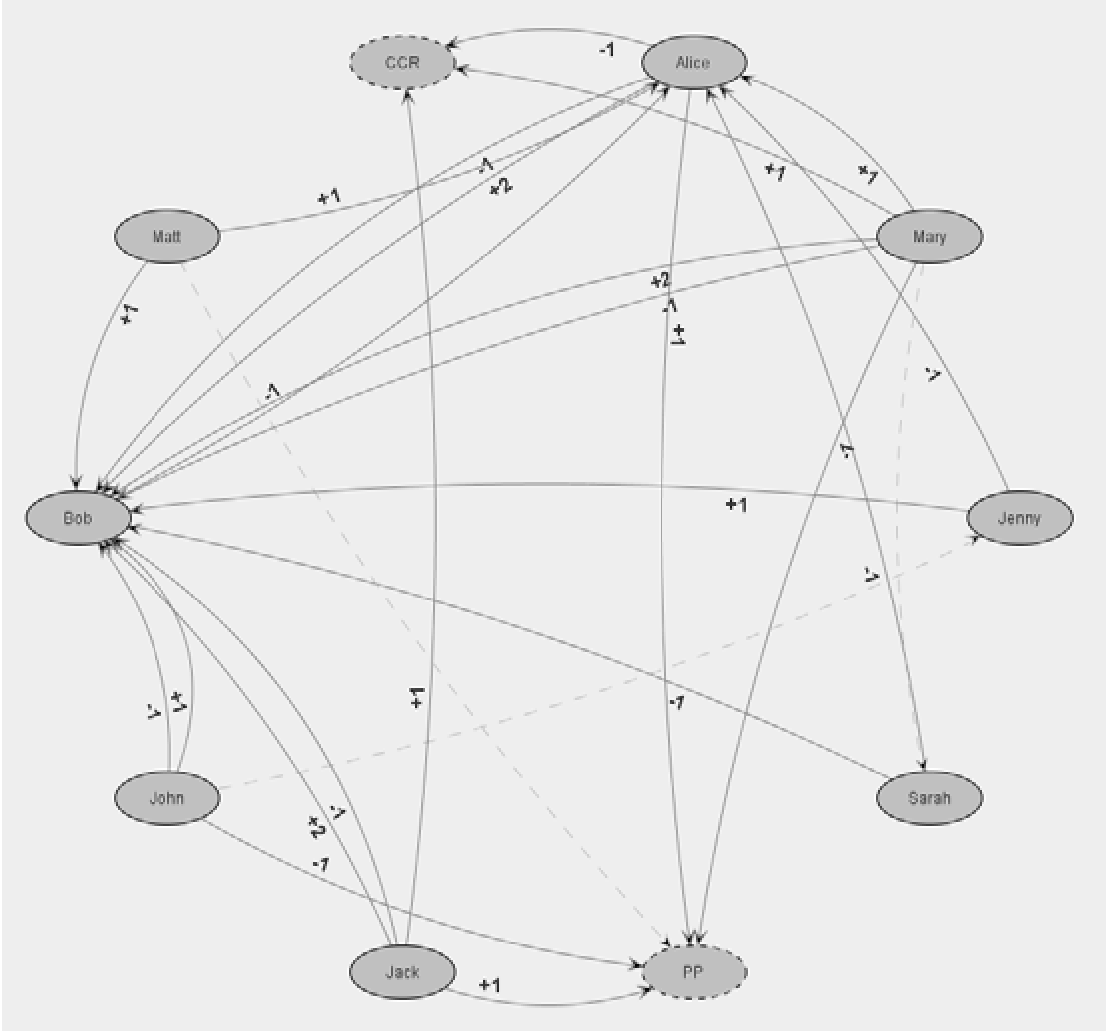 Fig 2: A global view of the trust network visualized using the JUNG framework, highlighting relationships between members and resources.
Critical Insight: Mentors vs. Leaders
A fascinating byproduct of this dual-model approach is the ability to programmatically distinguish roles:
- Leaders: High PopTrust, moderate EngTrust. They are the influencers whose opinions carry weight.
- Mentors: Extremely high EngTrust. They are the "glue" of the community, actively participating and fostering a welcoming environment for newcomers.
Conclusion & Future Outlook
While the paper provides a robust framework for maintaining trust, the authors acknowledge the Bootstrapping Problem: how do you start a community from zero trust? They suggest "Brand Equity"—leveraging the existing trust of a provider (like a government agency or a known enterprise) to seed initial participation.
As we move toward an era of AI-driven social moderation, the "Engagement Trust" metric is more relevant than ever. It provides a way to reward "good citizenship" rather than just "virality," potentially offering a blueprint for healthier digital town squares.
Key Limitation: The current model focuses heavily on active engagement. In the future, better tracking of passive engagement (the "lurkers" who consume but don't post) will be essential to accurately reflect the true social capital of a network.