
CarepariZn: Engineering Social Psychology into Weight Loss Apps
CarepariZn: Translating Social Comparison Elements into a Mobile Solution to Support Weight Loss
This paper presents the design of CarepariZn, a mobile health application grounded in Social Comparison Theory to facilitate weight loss among Generation Z. The research translates complex social psychological motives into technical features like dynamic grouping algorithms and hierarchical ranking systems, aiming to influence health-related behaviors through peer interaction.
TL;DR
CarepariZn is a research-driven mobile application that moves beyond simple step-counting. By applying Social Comparison Theory, it creates a digital environment where users (specifically Generation Z) compare their weight-loss progress with "similar others." It strategically uses upward and downward comparisons to drive both motivation and self-esteem, solving the isolation of traditional dieting.
Background: The Social Gap in Digital Health
Obesity has doubled globally since 1980, with Generation Z being particularly vulnerable. While this generation is "digital-native," their online interactions are rarely optimized for health. The authors identify a gap: existing apps often use "one-size-fits-all" leaderboards that can actually discourage users by forcing comparisons with individuals who are far more fit or have different metabolic profiles.
The Core Insight: Why "Similarity" Matters
Following Leon Festinger’s seminal work, the authors argue that humans have a natural drive to evaluate themselves, but this evaluation is only effective when done against people with similar abilities.
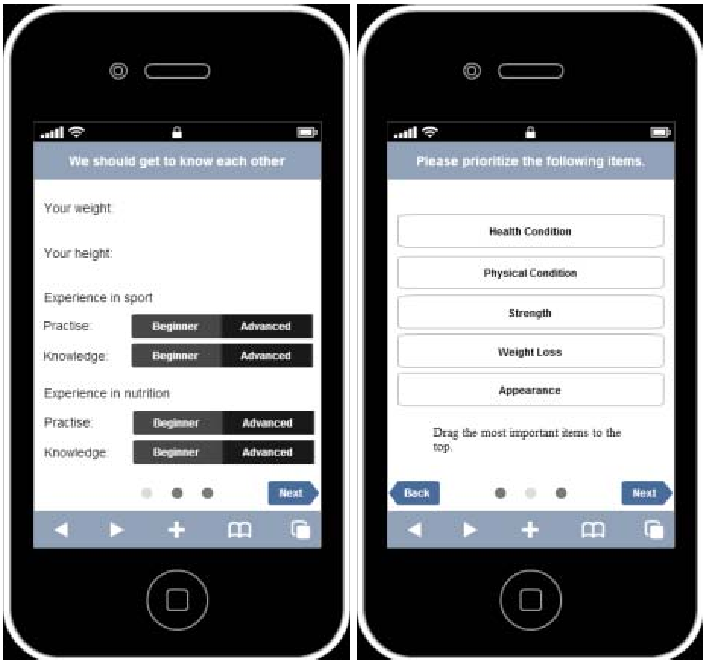
If you compare a beginner to a pro athlete, the beginner feels "threatened" (Upward Comparison). If they compare themselves to someone struggling even more, they might feel "better" but lose the drive to improve (Downward Comparison). CarepariZn strikes a balance by grouping users into "Buckets" based on:
- BMI Levels (Normal, Overweight, Obese, Heavily Obese)
- Experience (Nutrition and Sport knowledge)
- Motives (Health, Appearance, Strength)
Methodology: The CarepariZn Architecture
1. The Grouping Algorithm
The app uses an iterative algorithm to ensure users are never alone. It strives to create "buckets" of 25 members. If a subgroup (like "Heavily Obese + Advanced Nutrition") has fewer than 10 people, the algorithm intelligently merges them with the next closest group to maintain social dynamics without losing the feeling of peer similarity.
2. The Ranking & Smiley System
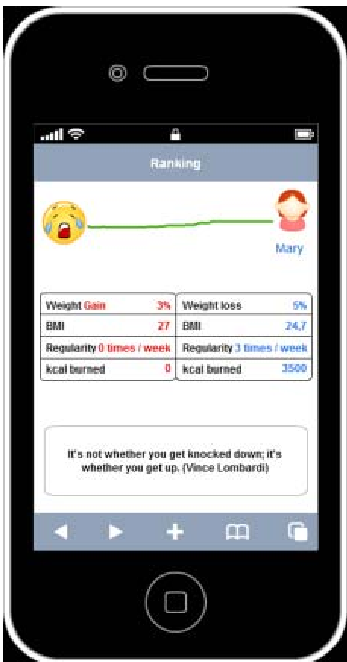
Instead of a massive list, the UI focuses on the "Dynamic Line." Users see only the person directly above and below them.
- Self-Assessment: Objective stats (Weight loss %, Kcal burned).
- Self-Verification: A 5-level "Smiley" system that maps user stats to a psychological index of "how well you are doing."
Experimental Setup
The authors opted for a Web App (using Visual Studio and MVC pattern) to ensure platform independence, recognizing that Gen Z uses various devices. They integrated with the "MyFitnessPal" API and used Metabolic Equivalent (MET) values to calculate caloric expenditure more accurately than simple movement sensors.
Experience Matrix
The study defines experience not just by "working out," but by a 2x2 matrix of Nutrition Knowledge vs. Sport Practice. This ensures that someone who knows how to eat but hasn't started training isn't grouped with a total beginner, acknowledging the complexity of weight management.
Critical Analysis & Future Outlook
Strengths:
- Theoretical Rigor: Unlike many "commercial" apps, CarepariZn is built on established social psychology.
- Ethical Guardrails: The inclusion of motivational quotes during downward comparison is a vital design choice to prevent the "I'm better than them, so I can stop" trap.
Limitations & Risks:
- The "Pro-Ana" Risk: The authors acknowledge that social pressure can lead to unhealthy extremes (like anorexia). Close monitoring of "rapid weight loss" indices is proposed as a countermeasure.
- Incentive Bias: Without compliance features, users might "cheat" on data entry to rise in rank.
Looking Ahead
The next phase of this research involves a field experiment to see if these social comparison features translate into long-term habit formation. The ultimate question for the industry remains: can an app prevent the "rebound effect" once the novelty of social competition wears off?
Conclusion
CarepariZn demonstrates that the future of mHealth isn't just better sensors, but better social engineering. By carefully curating who we compare ourselves to, tech can transform social pressure from a source of anxiety into a powerful engine for public health.