
Hybrid Cascade Networks: Uncovering Hidden Emotions in Objective News
Detect the Emotions of he Public Based on Cascade Neural Network Model
This paper introduces a hybrid Cascade Neural Network model by combining Deep Belief Networks (DBN) with a Support Vector Machine (SVM) to detect public emotional responses to objective news. By leveraging Restricted Boltzmann Machines (RBM) and the Contrastive Divergence (CD) algorithm, the model extracts high-level semantic features from text, achieving a peak F1 score of 67.4% on social news sentiment classification.
TL;DR
How do you detect anger or joy in a news report that contains zero emotional adjectives? Researchers from the Hefei University of Technology have developed a hybrid model cascading Deep Belief Networks (DBN) and Support Vector Machines (SVM). By moving beyond shallow keywords and utilizing unsupervised pre-training, the model extracts deep semantic "intuition" to predict how the public will react to objective facts.
Background: The Challenge of the "Objective" Sentiment
Most sentiment analysis tools are built for movie reviews or social media rants where words like "amazing" or "terrible" act as clear signals. But news is different. A report on a military exercise or a scientific breakthrough is often written objectively. The emotion isn't in the words; it's in the meaning.
Traditional methods (KNN, BP Networks) struggle here because they rely on surface-level statistics. This paper argues that to understand news-driven emotion, we need a model that can "read between the lines" by learning abstract data distributions.
Methodology: The DBN-SVM Cascade
The authors propose a two-stage architecture designed to transition from data reconstruction to class discrimination.
1. The Generative Foundation (RBM & DBN)
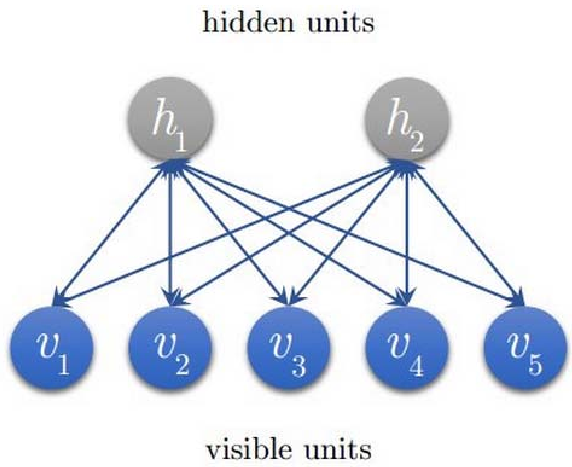
The heart of the model lies in Restricted Boltzmann Machines (RBM). These are two-layer bipartite graphs where neurons in the visible layer (input) connect to a hidden layer.
- Unsupervised Learning: Using the Contrastive Divergence (CD) algorithm, the model reconstructs the input data. If the hidden layer can successfully recreate the visible input, it means the hidden layer has captured the "essence" of the text.
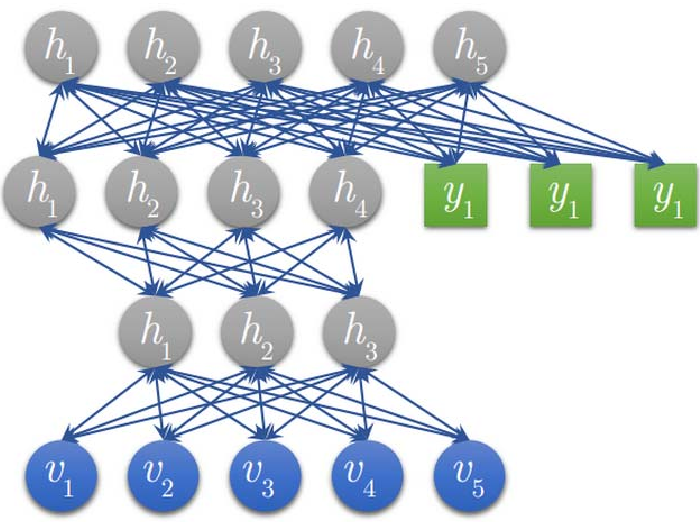
- The Stack: Multiple RBMs are stacked to form a Deep Belief Network (DBN), allowing the model to learn increasingly complex hierarchies of features.
2. The Discriminative Finisher (SVM)
Once the DBN has abstracted the text into a compact feature vector, the authors replace the standard neural network output layer with an SVM. SVMs are known for their ability to find the "maximum margin" between categories, making them more robust than simple softmax layers for small-to-medium datasets.
Experiments and Insights
The researchers tested their model on a unique dataset of Yahoo Social News, where labels were derived from actual reader votes (e.g., "Touching," "Angry," "Happy").
Key Findings:
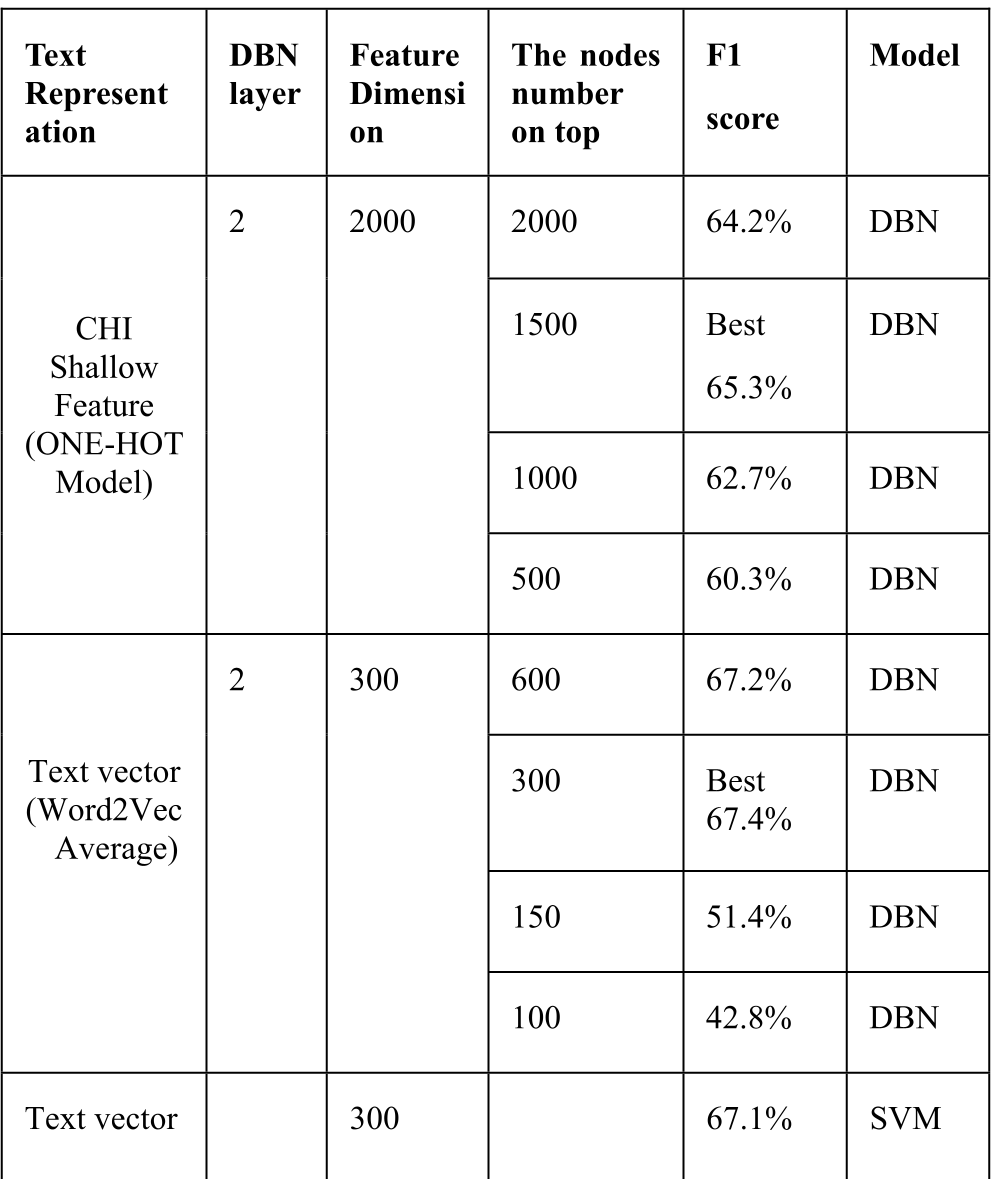
- Shallow to Deep: When feeding the model raw word-frequency features (CHI), the DBN successfully "upgraded" these features, boosting SVM's performance from 61% to 65.3%.
- The Power of Embeddings: Using Word2Vec (the precursor to many modern LLM embeddings) as an input yielded the best result of 67.4%. Interestingly, when the input was already a highly dense semantic vector (Word2Vec), the further benefit of DBN abstraction was marginal. This suggests that DBNs are most valuable when the initial data is "raw" or "noisy."
- The Multi-Emotion Problem: The study noted that objective news often creates a distribution of emotions. While 80% of readers might feel "Angry" about a certain event, 20% might feel "Boring." This inherent human variance provides a natural ceiling for classification accuracy.
Critical Analysis & Future Outlook
This work serves as a bridge between the era of feature engineering and the era of pure deep learning. By using DBNs to "clean" and "abstract" text features, the authors proved that deep learning can find signals in objective text that humans often overlook.
Limitations: The model relies on a single-label classification (one news = one emotion). In reality, news often triggers mixed emotions. Future iterations could benefit from multi-label probability distributions.
Conclusion: The DBN-SVM cascade remains a classic example of how generative pre-training (understanding the data) can significantly aid discriminative tasks (classifying the data), a principle that still governs how we train the massive Transformers of today.