
Scaling Botanical Expertise: A Crowdsourcing Approach to the Brazilian Flora
A Case study of the collaborative work edition of the Brazilian Flora checklist
This paper presents a Crowdsourcing-based Virtual Research Environment (VRE) designed to build the "List of Species of the Brazilian Flora." Utilizing the Mix4Crowds framework, the system successfully coordinated over 600 pre-qualified taxonomists to catalog 45,811 plant species, establishing a dynamic SOTA knowledge database for biodiversity.
TL;DR
Building a comprehensive list of a nation's flora is a Herculean task that defies traditional centralized data management. This paper details how the Rio de Janeiro Botanical Garden (JBRJ) moved from static spreadsheets to a Virtual Research Environment (VRE). By leveraging a restricted crowdsourcing model, they coordinated 600 taxonomists to catalog over 45,000 species, creating a "living" database that serves as a global benchmark for biodiversity conservation.
The "Data Silo" Problem in Taxonomy
Taxonomy—the science of naming and classifying organisms—is inherently dynamic. New species are discovered, names are synonymized, and geographic distributions shift as climates change. Historically, this data was trapped in isolated institutional repositories or personal Excel files.
The core challenge was fragmentation. Prior to 2009, Brazil lacked a unified, accessible platform where researchers could collaborate in real-time. This led to:
- Unnecessary Duplication: Researchers often repeated work already performed by others.
- Stale Information: Static lists could not reflect the daily updates required by taxonomic revisions.
- Scale Limits: No single institution has the expertise to cover all plant groups across Brazil's immense biomes.
Methodology: The Mix4Crowds Framework
The researchers didn't just build a website; they designed a collaborative ecosystem. They utilized the Mix4Crowds framework, which analyzes four critical dimensions of a crowdsourcing strategy:
1. The Participant Layer (Profile)
Unlike Wikipedia, where anyone can edit, the Brazilian Flora checklist uses a Restricted Call. Participants are pre-qualified taxonomists. This ensures data integrity—a critical requirement for scientific work.
2. Hierarchical Collaboration
The system reflects real-world social structures through a 4-layer model:
- Managers/Council: Strategic decisions and final policy.
- Group Coordinators: Experts responsible for specific families (e.g., Angiosperms). They act as the "gatekeepers" of quality.
- Flora Researchers: The "crowd" of 600 investigators who input, validate, and update data.
- Partners: Collaborative institutions like Kew Gardens and Missouri Botanical Garden.
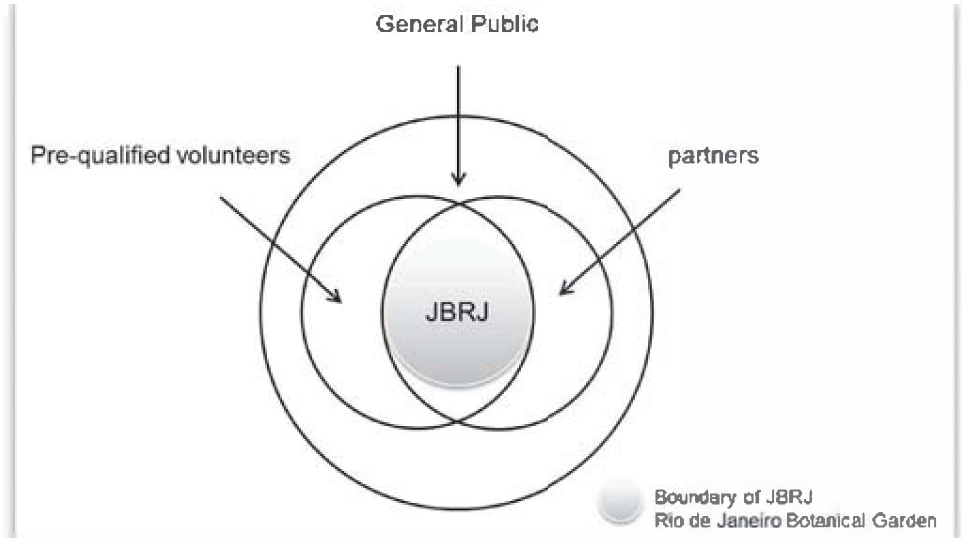 Figure 1: The layered approach to managing participants within the VRE infrastructure.
System Architecture & Technical Implementation
The platform, part of the REFLORA Program, was built using a Model-Driven Architecture (MDA) approach (specifically the MDArte framework) over a PostgreSQL database. This allows the system to remain flexible as the taxonomy evolves.
Key Features for Scientists:
- Taxonomy Editor: A specialized interface for updating name nomenclature, life forms, and substrates.
- Geographic Information System (GIS): Visualizing species distribution across Brazil's 27 states and phytogeographical domains (Amazon, Savanna, etc.).
- History & Accountability: Every change is logged, allowing for conflict resolution when two taxonomists disagree on a classification.
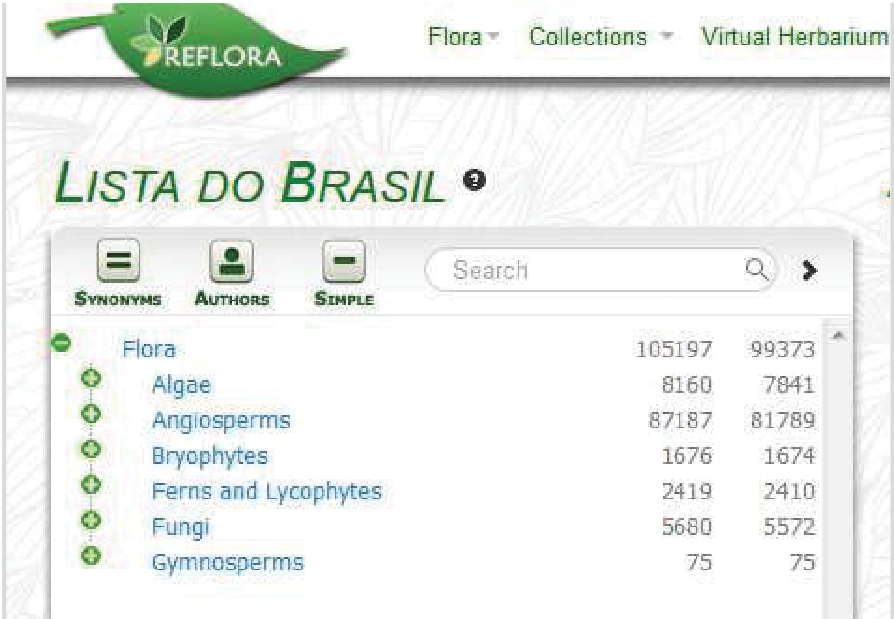 Figure 2: The administrative interface allowing researchers to edit specific taxonomic branches.
Results: A National Inventory Realized
Through this web-based crowdsourcing effort, the project successfully cataloged:
- Total Records: Over 93,000.
- Recognized Species: 45,811 (including 32,694 Angiosperms and 5,652 Fungi).
- Active Experts: ~600 researchers working simultaneously.
| Species Group | Coordinators | Achievement |
|---|---|---|
| Angiosperms | 117 | Largest group covering 261 families |
| Fungi | 02 | Rapidly growing catalog |
| Algae | 03 | Comprehensive baseline established |
Critical Analysis & Future Outlook
The success of the Brazilian Flora VRE proves that Domain-Specific Crowdsourcing is viable for high-stakes scientific infrastructure. The primary driver of success was not just the technology, but the incentive structure: taxonomists were motivated by scientific recognition and the "mutual benefit" of accessing others' validated data.
Limitations: The system currently lacks synchronous awareness (knowing who else is editing the same taxon in real-time). Furthermore, it heavily relies on volunteer motivation, which requires constant institutional support and funding to sustain.
Future Work: The authors suggest incorporating "Citizen Science" elements, where the general public could report sightings of invasive species, further expanding the "crowd" beyond the 600 experts.
Final Takeaway
This paper serves as a blueprint for transforming traditional scientific workflows into collaborative, web-scale environments. It highlights that in the age of big data, the bottleneck isn't just storage—it's the coordinated human intelligence required to curate that data.