
Twitter Bot Identification: Are They Still a Problem?
A Case Study in Twitter Bot Identification: Are They Still a Problem?
This paper presents an automated bot identification framework applying seven multi-dimensional criteria (CR1-CR7) to a massive dataset of 25 million tweets from Melbourne. By leveraging Cloud-based infrastructure and filtering "active users," the study evaluates the current prevalence of bots in the post-cleanup era of social media.
TL;DR
In this case study, researchers from the University of Melbourne analyzed over 25 million tweets to determine if the "bot apocalypse" is still a reality. By applying a 7-point heuristic check (from GPS stability to retweet ratios), they found that while bots now make up a tiny fraction of total users (0.06%), a concentrated group of "active" bots still wields significant influence through coordinated amplification.
Problem & Motivation: The Evolution of the Bot
Historically, Twitter was a "Wild West" for automation. In 2017, nearly 15% of accounts were suspected to be non-human. Since then, the platform has undergone massive purges. However, the motivation for bots remains high: influencing elections, manipulating stock prices, and spreading misinformation.
The authors argue that the difficulty now lies in precision. Modern bots aren't just "spam-bots"; they are "cyborgs" or coordinated families that mimic human behavior. The study aims to build a scalable, cloud-based pipeline to see if we can still catch these sophisticated actors using geographic and behavioral metadata.
Methodology: The 7-Point Bot Filter
The system architecture, built on the NeCTAR Research Cloud, captures data via Twitter's APIs and stores it in CouchDB for multi-stage filtering.
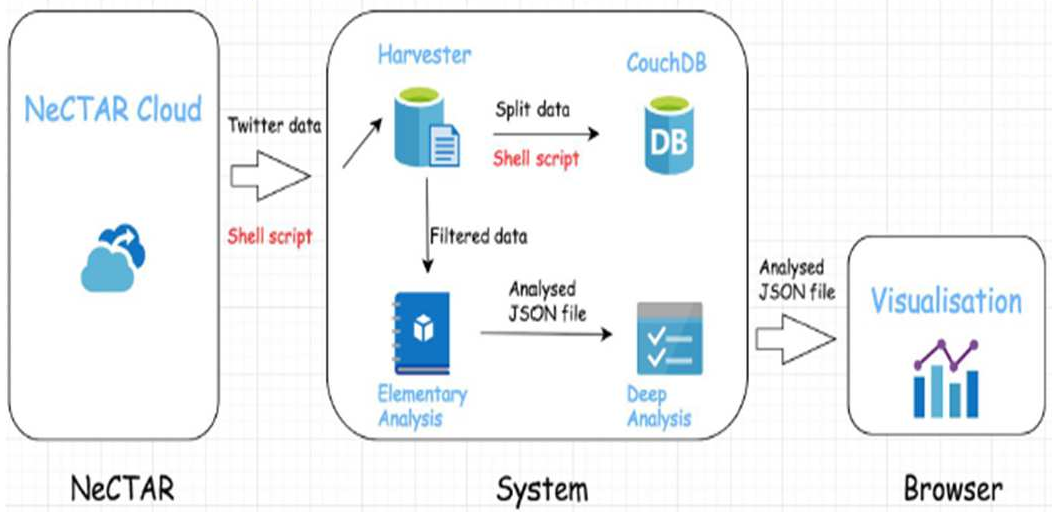
The researchers used two levels of "filters" to catch the culprits:
1. Elementary Criteria (The "Low-Hanging Fruit")
- CR1 (Coordinates): Bots often post from fixed servers. If the distance between tweets is consistently < 5 meters, it’s a red flag.
- CR2 (Follower Ratio): Bots follow thousands but have few followers (Follower/Followee < 0.1).
- CR3 (Retweet Ratio): If you retweet 10x more than you write original content, you’re likely an amplification node.
2. Deeper Analysis (The "Coordinated Mesh")
The study found that CR1-CR3 alone produced many false positives. They added:
- CR4-CR6: Minimum activity thresholds (at least 1 tweet/day) and limited original content (< 10 original tweets).
- CR7 (Orchestration): If a single tweet is retweeted by more than 10 suspicious accounts, it indicates a coordinated bot family.
Experiments & Results
Out of 3.1 million users in the Melbourne dataset, only 11,876 were "active" (averaging 1 tweet/day).
The results reveal a fascinating divergence:
- Active User Perspective: Among the most active users, 16.44% showed highly suspicious bot-like behavior.
- Global Perspective: When looking at the entire user base, only 0.06% were bots.
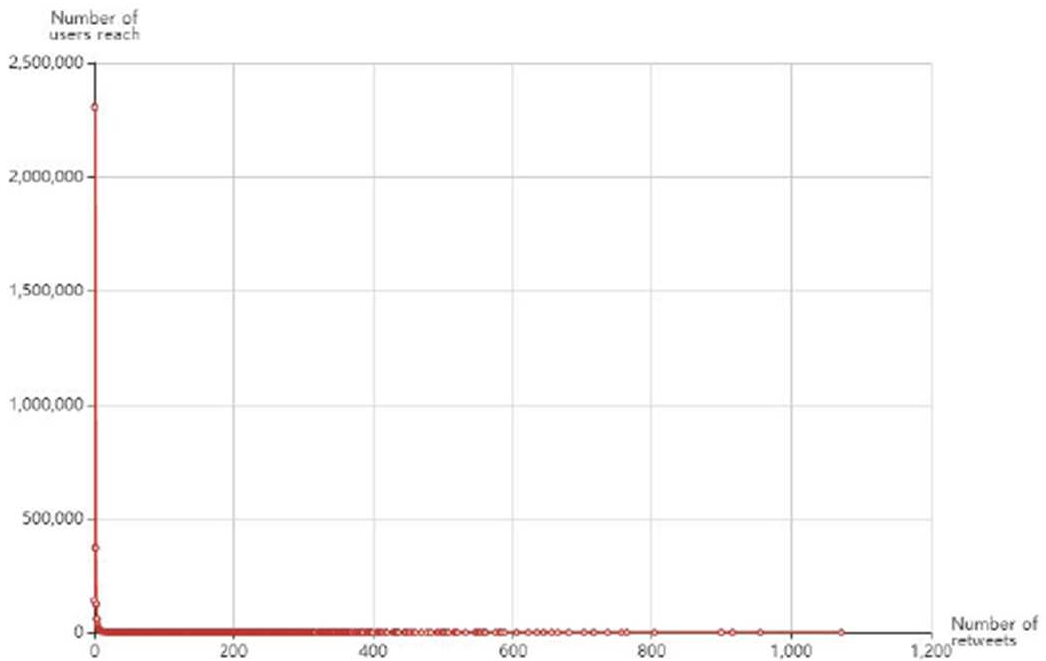
The researchers notably identified one cluster where 788 bots were dedicated to retweeting just 25 original tweets from 5 "owner" accounts, including an eBay store using automation for constant advertisement.
| Filtering Stage | # Suspicious Bots | # Unique Tweets Targeted |
|---|---|---|
| Before Filtering (Broad Meta) | 3790 | 2172 |
| After Filtering (Coordination-based) | 788 | 25 |
Critical Analysis & Conclusion
Takeaway
The study proves that while the "quantity" of bots has plummeted due to better platform enforcement, the "quality" of coordination remains. 0.06% might sound negligible, but a single bot family can generate thousands of retweets in minutes, potentially skewing "Trending" topics or public perception.
Limitations
- GPS Data Scarcity: Only 0.57% of tweets contained coordinate data, making CR1 (location stability) a weak predictor in isolation.
- The "Human" Factor: "Retweet obsessives"—humans who spend all day amplifying a specific political party—are mathematically indistinguishable from bots in this framework.
Future Outlook
The next frontier is AI-generated content. As bots begin to use LLMs to write "original" tweets, CR4 (low original tweet count) will become obsolete. Future research must focus on Stylometry (analyzing unique writing patterns) and Graph Theory to detect the hidden hands behind orchestrated "digital armies."