
CAST a Database: Exploiting Small-World Networks for Rapid Big Data Acquisition
CAST a database: Rapid targeted large-scale big data acquisition via small-world modelling of social media platforms
This paper introduces CAST (Cost-efficient Audio-visual Acquisition via Social-media Small-world Targeting), a pipeline for rapid, large-scale data acquisition from social media. It achieves SOTA-level efficiency in building behavioral datasets (e.g., coughing, screaming) by combining small-world graph modeling of YouTube recommendations with semi-supervised active learning.
TL;DR
To address the massive data hunger of "End-to-End" deep learning models, researchers have introduced CAS2T (Cost-efficient Audio-visual Acquisition via Social-media Small-world Targeting). By treating YouTube as a complex graph and integrating active learning, the system automates the discovery, segmentation, and labeling of rare human behaviors (like sneezing or threatening speech) from the vast ocean of social media.
The "Data Hunger" Crisis in Affective Computing
In the era of deep learning, the performance of a model is often a direct function of the volume and variety of its training data. However, for specialized fields like behavioral analysis and affective computing, data is a scarce resource. Manually finding and labeling 1,000 hours of "intoxicated speech" or "natural coughing" is an operational nightmare.
The authors identify three main obstacles:
- Relevance: How do you find the right signal in the noise of 400 hours of video uploaded every minute?
- Segmentation: How do you isolate the specific event (the cough, the scream) from a 20-minute vlog?
- Labeling: How do you annotate thousands of clips without bankrupting the research project?
Methodology: The "Small-World" Advantage
The core innovation of the CAS2T system lies in its three-stage pipeline that minimizes human intervention.
1. Complex Network Analyser Component (CNAC)
Instead of simple keyword searches, the authors exploit the internal logic of YouTube's recommendation engine. By treating videos as nodes and recommendations as edges, they construct a graph . This graph exhibits small-world properties, where relevant videos form tight "cliques." By calculating the Local Clustering Coefficient (LCC), the system identifies the most "central" and relevant content clusters for a given query.
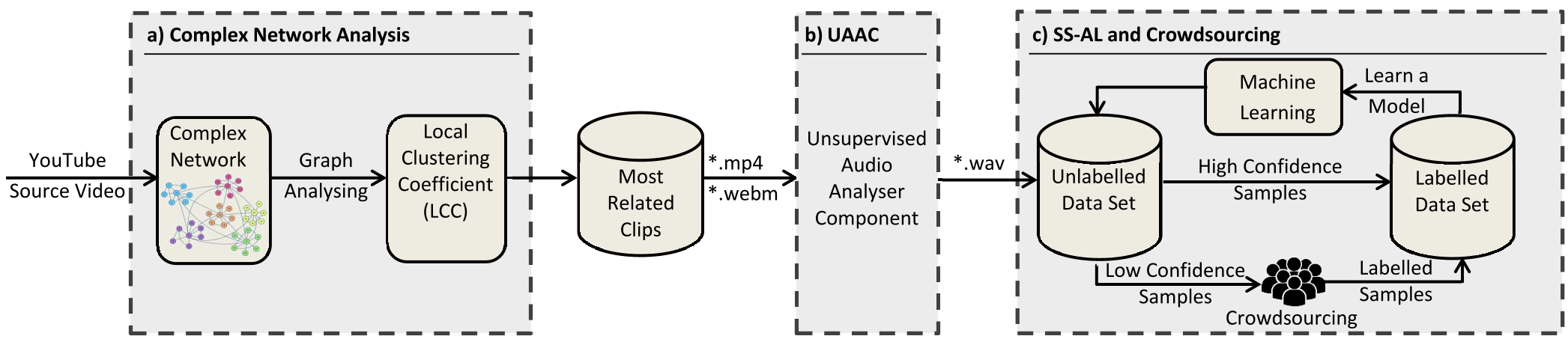 Figure 1: The CAS2T workflow, from small-world targeting to active learning.
2. Unsupervised Audio Analyser (UAAC)
Once the videos are downloaded, the system uses two distinct unsupervised methods to find "events":
- Energy-based: For high-SNR events like coughing (detecting spikes against a quiet floor).
- Spectrum-based: For complex styles like "threatening speech," using cepstral vectors and clustering to find spectral coherence.
3. Semi-Supervised Active Learning (SS-AL)
This is where the labeling efficiency happens. A small initial set is labeled via crowdsourcing (iHEARu-PLAY). A model is trained, and it then predicts labels for the rest of the pool.
- High Confidence? The machine labels it automatically.
- Low Confidence? It’s sent to a human. This loop allows the system to grow the dataset exponentially while only requiring humans to look at the "hardest" cases.
Experiments & Real-World Results
The researchers tested the system on six "in-the-wild" tasks: Freezing, Intoxication, Screaming, Threatening, Coughing, and Sneezing.
The Active Learning Payoff
As seen in the "Threatening" task results, the model’s Unweighted Accuracy (UA) jumped from 51.14% to 73.26% by adding over 600 samples, of which 80% were labeled entirely by the machine.
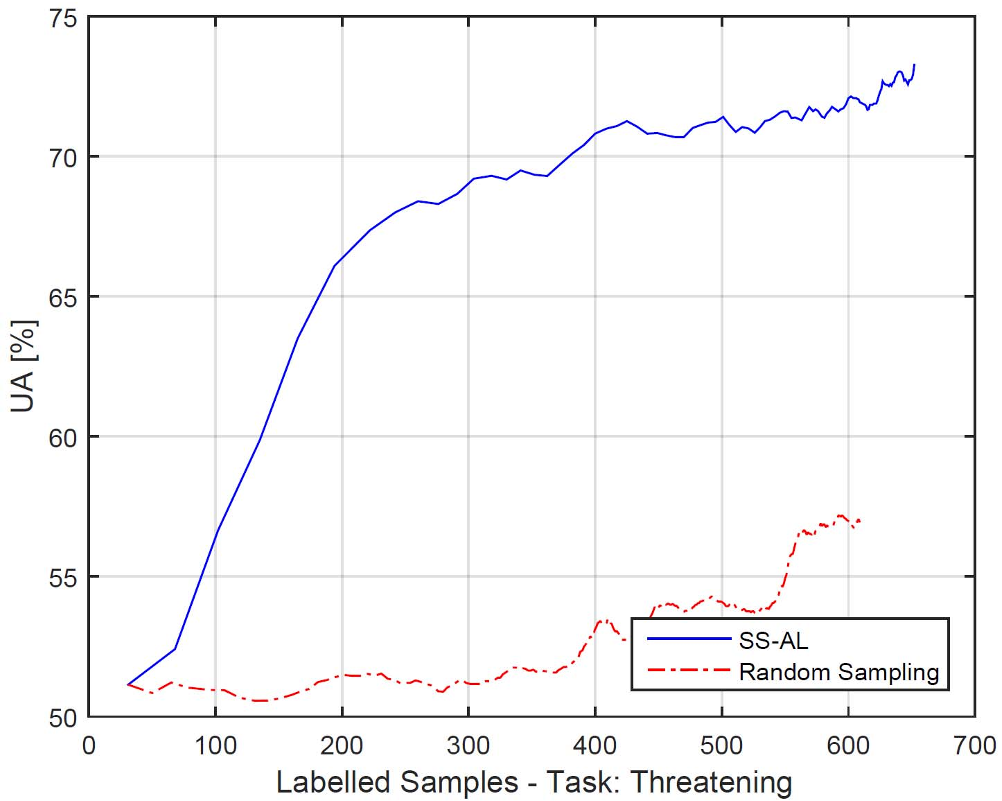 Figure 2: SS-AL (Green) versus Random Sampling (Red). The efficiency gain is undeniable.
Performance Benchmarks
Using Support Vector Machines (SVM), Bag-of-Audio-Words (BoAW), and CNNs, the authors achieved impressive results:
- Coughing: 97.58% UAR.
- Screaming: 96.98% UAR.
- Threatening: 73.82% UAR (a highly subjective and difficult task).
Critical Insight & Conclusion
The true value of this work isn't just the 97% accuracy on coughing; it’s the framework for scalability. By modeling recommendation spaces as small-world networks, the authors have provided a blueprint for "targeted big data."
Limitations: The system currently relies heavily on YouTube’s black-box recommendation logic. If the platform changes its API or algorithm, the LCC strategy might require recalibration. Furthermore, "in-the-wild" data brings intrinsic noise that might confuse more sensitive deep learning architectures (as seen in the CNN's mixed performance).
Future Outlook: The move toward Deep Zero-Resource Processing and multi-platform expansion suggests a future where AI systems are "self-gathering," constantly hunting for new data across the web to refine their own behavioral understanding.