
The Silence of the Hashtag: Why #MeToo Failed to Ignite in Bangladesh
Understanding the Challenges for Bangladeshi Women to Participate in #MeToo Movement
This paper presents a socio-technical study of why Bangladeshi women largely refrained from participating in the global #MeToo movement despite high social media literacy and prevalent experiences of sexual harassment. Using a mix-method approach (n=180 survey, n=30 interviews), it identifies the cultural and systemic barriers to digital feminist activism in South Asia.
TL;DR
In 2017, #MeToo became a global phenomenon, yet in Bangladesh—a country where 94% of women report harassment in public transport—the hashtag remained largely silent. This research explores why technological access does not equate to social agency, revealing how patriarchy, cultural taboos, and a profound distrust in legal systems transform a "tool of empowerment" into a "source of social risk."
Background: Theoretical vs. Actual Freedom
In Western discourse, social media is often viewed through the lens of Negative Freedom: the absence of barriers to posting. However, for Bangladeshi women, the primary obstacle is the lack of Positive Freedom: the actual ability to speak without severe social retaliation. The paper argues that we cannot understand "non-use" of technology without understanding the socio-cultural power structures that monitor and "school" women on proper digital behavior.
The "Why Not": Deep-Seated Barriers
The researchers identified four critical pillars of silence that prevented women from participating in #MeToo:
- Cultural Incompatibility: In the Indian subcontinent, "sex" and "harassment" are taboo topics. Publicly discussing them is seen as an act of immodesty, not just by men, but by the women themselves who fear being labeled "shameless."
- Social Resistance & Surveillance: Women’s digital lives are closely monitored by "guardians"—fathers, brothers, and in-laws. The study recounts instances where women were overtly instructed to delete "feminist" posts to protect family honor.
- Perceived Futility: Unlike in the West, where shaming led to legal or professional consequences (e.g., Harvey Weinstein), Bangladeshi women expressed a "lack of hope." They believed that social shaming would not affect harassers who often "boast" of their actions, especially when law enforcement is perceived as ineffective.
- The Class & Support Gap: The global #MeToo was criticized as elitist. For Bangladeshi textile workers or rural women, the risk of losing livelihood or facing physical violence far outweighs the cathartic benefit of a Facebook post.
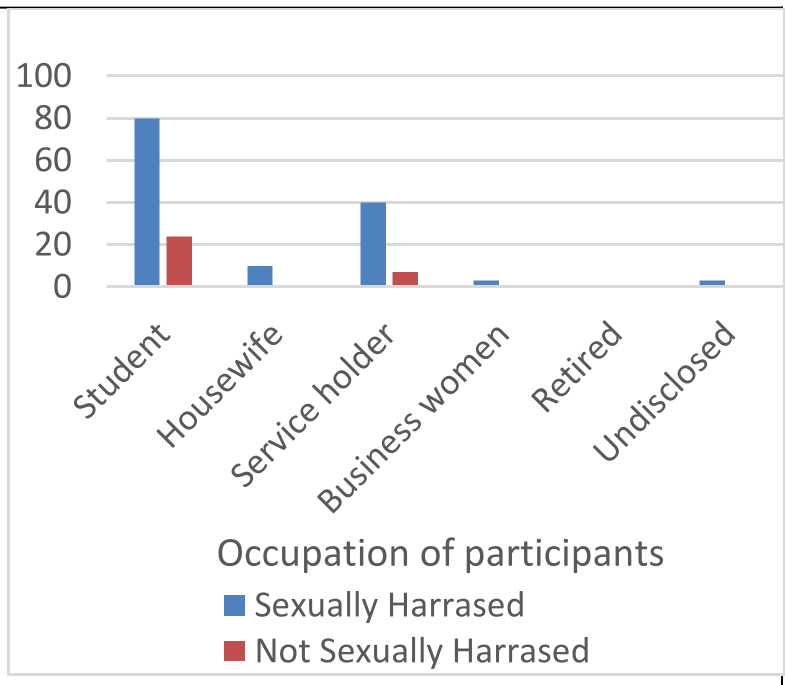 Fig 1: Distribution of participants reporting sexual harassment. Despite high prevalence across all ages, the vast majority chose not to share online.
Methodology: Looking Beyond the "Empty" Data
The authors used Grounded Theory to analyze interviews with 30 women and surveys from 180. A key technical insight for researchers is that the absence of data is data in itself. If a dataset shows no harassment reports in a region known for high crime, it indicates a failure of the platform's social architecture, not an absence of the problem.
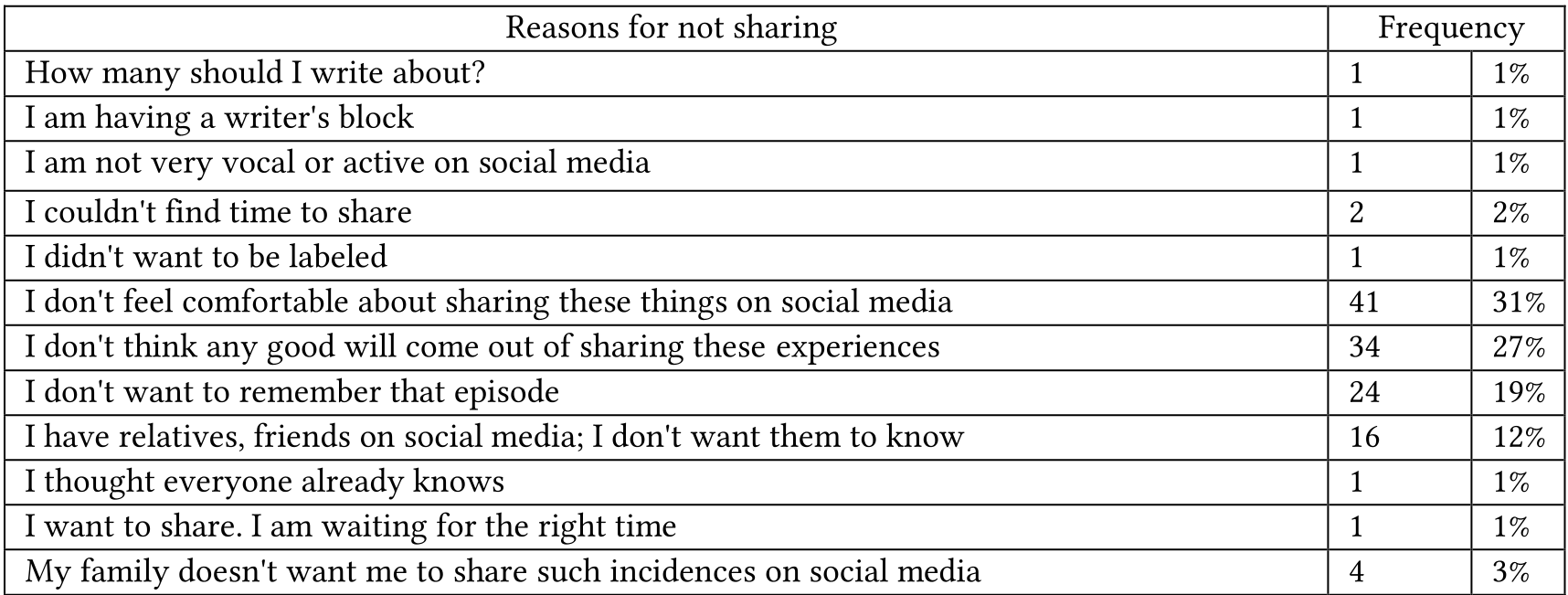 Table 1: The quantitative breakdown of silence. 31% cited discomfort, while 27% cited the futility of the action.
Critical Insight: The Failure of Anonymity
Earlier interventions like Protibadi (an anonymous reporting app in Bangladesh) failed because anonymity was used as a shield by attackers to troll and harass victims further. The authors suggest that Social Media Movements must be grounded in offline movements.
Meaningful change in these contexts doesn't come from a hashtag; it comes from:
- Safe Online Spaces: Closed, moderated groups where trust is established.
- Grassroots Integration: Connecting digital voices to local legal aid and NGOs.
- Socialization Alternatives: Focusing on long-term education within the family unit rather than public confrontation.
Conclusion: Toward Postcolonial Computing
This study is a powerful reminder for HCI designers that Context is King. A technology designed with Western assumptions of "freedom of speech" can become a tool of oppression in a society where speech is high-risk. Designing for the Global South requires a "transnational feminist" approach—accepting that the most effective "protest" might not be a viral tweet, but a quiet, sustained shift in local social values.
Takeaway: We must stop designing for the "Global Sisterhood" and start designing for the "Local Reality."