
AI in Vietnamese Education: Beyond the Hype of Grassroots Innovation
Challenges and opportunities for digital learning resource development: An analysis of AI application in Vietnamese general education
This study investigates the integration of Artificial Intelligence (AI) in developing Digital Learning Resources (DLRs) within Central Vietnam's general education. Using a mixed-methods approach (N=454), it identifies a surge in generative AI tools like ChatGPT for content creation alongside significant systemic stagnation in advanced AI adoption.
TL;DR
A comprehensive study in Central Vietnam reveals that while teachers are eagerly adopting tools like ChatGPT to reduce workloads, the true potential of AI in education is being throttled by a "systemic vacuum." The research highlights that in developing contexts, infrastructure and policy frameworks aren't just "influencers"—they are absolute gating factors that override individual teacher enthusiasm.
Background Positioning
This paper serves as a critical reality check in the global AI discourse. While Silicon Valley discusses "Agentic Workflows" and "Personalized Tutors," this study situates AI within the socio-economic constraints of Central Vietnam. It acts as a Contextual Corrective to mainstream Technology Acceptance Models (TAM), arguing that structural realities effectively "veto" educator agency.
The Problem: The "Dual Burden" of the Modern Educator
The research identifies a widening gap between Vietnam’s ambitious "National Digital Transformation Program" and the classroom reality. Educators in non-metropolitan hubs (like the mountainous districts of Hue or Da Nang) face two simultaneous pressures:
- Innovation Mandates: Top-down pressure to use AI and DLRs.
- Resource Scarcity: Obsolete computer labs, unstable internet, and a total lack of guidelines on data privacy and academic integrity.
Teachers are essentially left in a "policy vacuum," forced to self-train via YouTube while navigating the ethical minefield of AI-generated content on their own.
Methodology: A Multi-Layered Analysis
The authors employed a sequential explanatory strategy, ensuring that the quantitative data (the "What") was explained by qualitative interviews (the "How" and "Why").
The Adoption Dichotomy
The data presents a stark contrast:
- High Adoption: Foundational resources like PowerPoint (84.5%) and ChatGPT (54%).
- Negligible Adoption: AI image generators like DALL-E (2.6%) and innovative VR/AI resources (45.2% have zero experience).
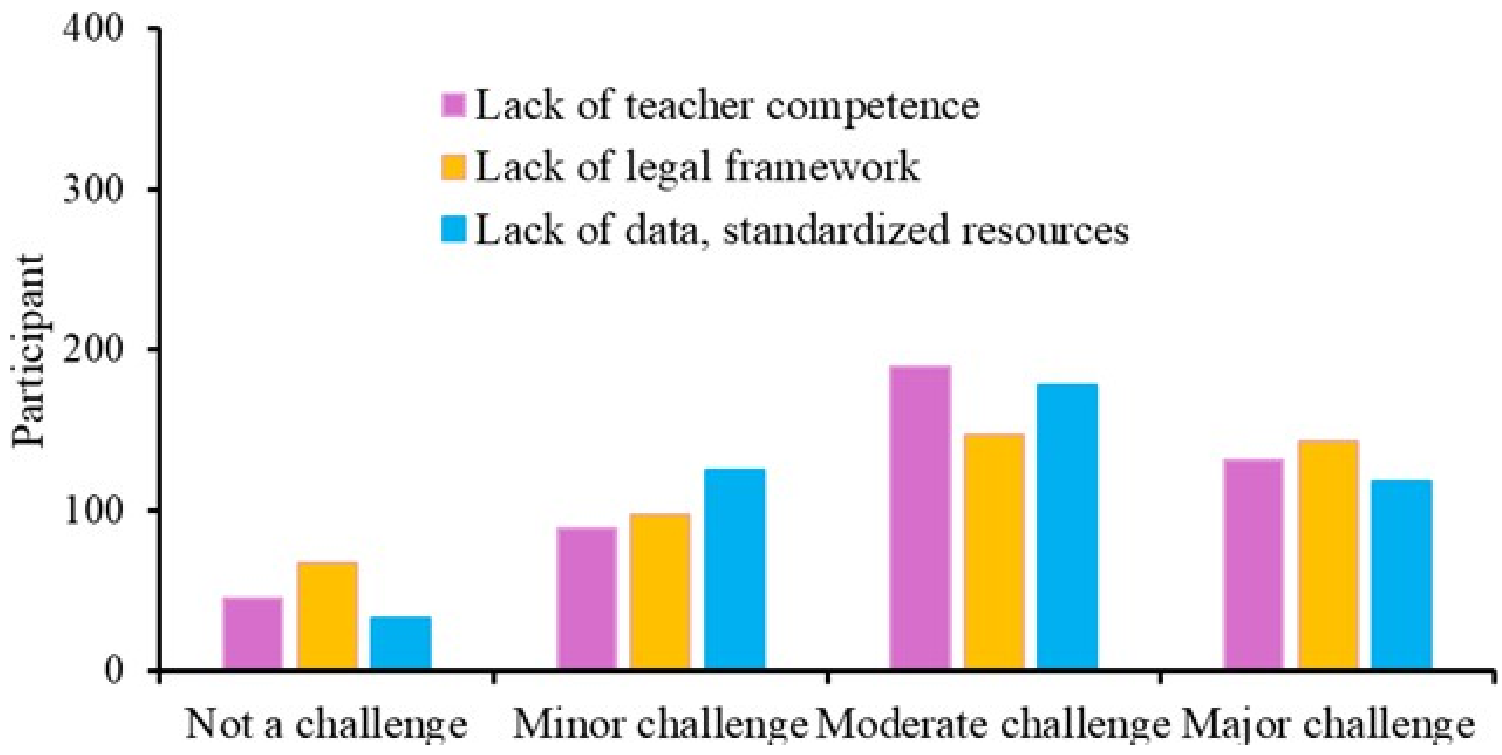 Figure 1: Comparison of challenges across different regions, showing the heightened barrier in mountainous areas.
Key Insight: Infrastructure as a Veto Power
The study’s most significant theoretical contribution is the re-evaluation of UTAUT (Unified Theory of Acceptance and Use of Technology). Unlike in developed nations where "Perceived Usefulness" is the primary driver, in Central Vietnam, "Policy and Technological Infrastructure" was rated as the most critical factor by 60.8% of respondents.
If the network is down and there is no legal framework for student data, even the most "useful" AI tool remains inaccessible. This suggests that in resource-constrained environments, structural factors are foundational, not supplementary.
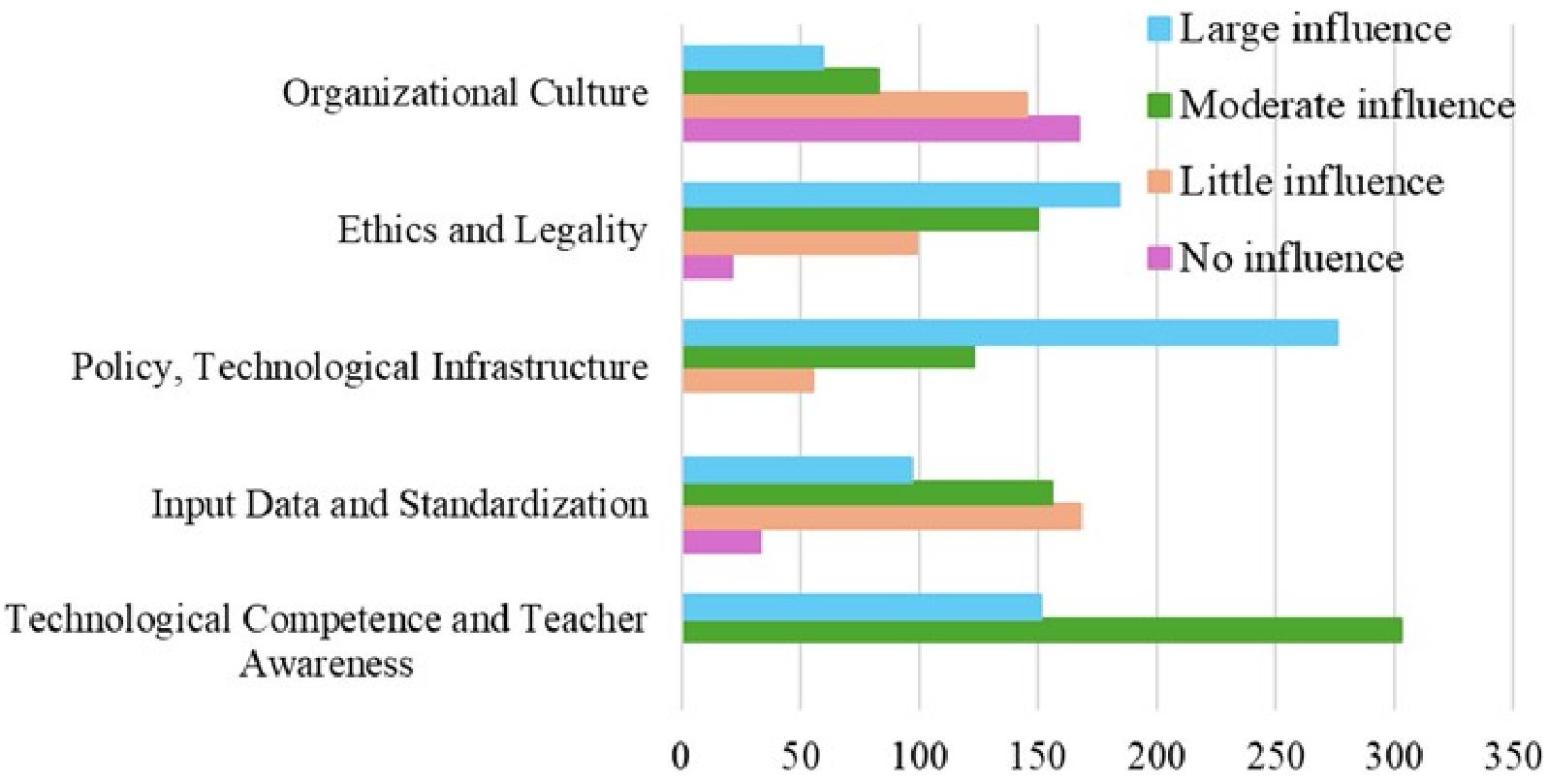 Figure 2: Distribution of factors influencing AI application, highlighting Policy and Infrastructure as dominant.
Experiments and Results: The Equity Gap
The research used a Chi-square test () to prove that geography dictates competency. Teachers in rural and mountainous areas reported a "Lack of Teacher Competence" as a major challenge significantly more often than their urban counterparts ().
Perceived Benefits vs. Reality: The top benefit cited was "Accelerated compilation of materials" (selected by 100% of benefit-identifiers). This confirms that AI is currently a survival tool for teachers to manage heavy workloads, rather than a pedagogical tool for improving student learning outcomes.
Critical Analysis & Conclusion
Summary (Takeaway)
The paper concludes that Vietnam's digital future depends not on the "flashiness" of AI tools, but on the resilience of the support ecosystem.
Limitations
- Self-Reporting Bias: Teachers might overstate their usage of "trending" tools like ChatGPT to appear innovative.
- Geographical Scope: While Central Vietnam is a great proxy for developing regions, it doesn't represent the hyper-investment seen in Hanoi or Ho Chi Minh City.
Future Outlook
The authors suggest a shift toward "Critical AI Literacy." Professional development must move beyond "how to prompt" to "how to evaluate" for bias, accuracy, and ethics. For policymakers, the message is clear: Stop the mandates until the infrastructure and legal frameworks are built.
Final Thought: This research reminds us that while the "Intelligence" in AI is global, its "Application" is profoundly local.