
Beyond the Snapshot: Revolutionizing Migrant Network Analysis via Timescapes and Mixed Methods
Changing times: Migrants’ social network analysis and the challenges of longitudinal research
This paper explores migrant social networks through the lens of the "sociology of time," proposing a mixed-methods Social Network Analysis (SNA) approach. It introduces the "timescapes" framework to capture the dynamic interplay of micro-biographical, meso-relational, and macro-structural dimensions in longitudinal migration research.
TL;DR
Migration is a process, not a state. This paper argues that traditional Social Network Analysis (SNA) often misses the "pulse" of migration by capturing only static snapshots. By integrating the sociology of time and visual sociograms, the authors provide a framework to see how relationships breathe, weaken, or strengthen across borders and decades.
The "Snapshot" Trap: Why Static Data Fails
Most migration studies treat time as a "neutral medium"—a simple calendar link between point A and point B. This "commodification of time" ignores the reality that a migrant's experience of five years in a new country is not linear. Relationships are fluid; a "close friend" in a 2006 survey might be a "distant memory" by 2014, not just because of distance, but because the migrant's own identity has shifted.
The authors argue that we must reach a meso-level of analysis—bridging the gap between the individual (micro) and the global political economy (macro).
Methodology: The Power of the "Visual Narrative"
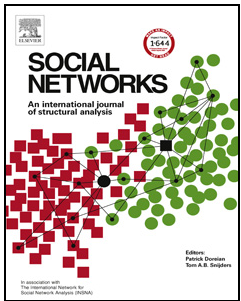
The core of this work is the participant-aided sociogram. Instead of a software-generated graph, migrants are asked to draw their own networks. This turns the sociogram from a data output into an analytical tool.
1. The Target Sociogram
Using concentric circles to represent emotional closeness, researchers prompt "talk around the sociogram." This reveals the process of ranking and "relegating" ties.
2. Capturing Timescapes
The concept of "timescapes" allows researchers to weave together:
- Micro: Personal biographies and changing identities (e.g., "I feel more British now").
- Meso: Generational shifts and relational dynamics within community groups.
- Macro: Structural changes like EU enlargement or the "marketization" of the non-profit sector.
Experimental Insights: Polish and Kurdish Case Studies
The paper draws on two decades of fieldwork:
- Polish Migrants in London: Repeated interviews showed a "gradual weakening" of non-family ties in the home country. The sociogram acted as a catalyst for memory, prompting participants to reflect on why they shifted from being "Polish" to being "tourists" in their own land.
- Kurdish Organizations: Whole-network mapping revealed that ties between organizations are often "tactical." Organizations might claim to be connected to everyone to secure funding, but longitudinal observation reveals these ties disappear once the project ends.
 Above: Comparison of Kurdish organizational networks between 2006 (Fig 2) and 2011-2013 (Fig 1) showing the disappearance of certain cross-group links due to shifting international political struggles.
Critical Insight: The "Death of Distance" is a Myth
A key takeaway is the interrogation of the "death of distance" discourse. SNA shows that place still matters. Relationships are not just "deterritorialized" in a digital void; they are sustained in specific physical and social "timescapes." The ability to maintain transnational ties is often dictated by macro factors like mobility rights and legislative frameworks (e.g., Brexit).
Conclusion & Future Work
The paper concludes that to truly understand migration, researchers must embrace the recursive nature of social science. We need:
- Reflexive Visualization: Using images to provoke dialogue, not just to represent counts.
- Multidimensional Triangulation: Blending the structure of the "whole network" with the subjective "ego" perspective.
The limitation remains the difficulty of tracking transient populations over long periods, but by "taking time seriously," we can move toward a more human-centric, relational sociology.