
Livecast: Revolutionizing Mobile Personal Livecast with Edge-Assisted Intelligence
Characterizing User Behaviors in Mobile Personal Livecast: Towards an Edge Computing-assisted Paradigm
This paper introduces Livecast, an edge computing-assisted paradigm for Mobile Personal Livecast (MPL). It leverages a novel "Stable Matching with Migration" (StableM-M) algorithm to collaboratively utilize core-cloud and edge resources, achieving SOTA performance in reducing end-to-end latency.
TL;DR
The explosion of Mobile Personal Livecast (MPL) apps like Periscope and Inke has pushed centralized cloud architectures to their breaking point. This paper proposes Livecast, a paradigm shift that offloads video ingesting and transcoding to the network edge. Using a sophisticated Stable Matching with Migration algorithm, the system achieves a 35% reduction in latency and a 40% reduction in costs by exploiting the "geographic locality" of live content.
Background: The Scalability Crisis in Live Streaming
Unlike traditional social media (Twitter/Facebook), MPL requires real-time interactivity. A delay in chat or "gifts" breaks the user experience. Currently, MPL platforms rely on expensive core-cloud data centers. This creates three critical bottlenecks:
- Latency: High upload distances from mobile broadcasters to centralized servers lead to stuttering.
- Cost: Transcoding thousands of concurrent high-def streams in the cloud is financially unsustainable.
- Backbone Congestion: Massive video traffic clogs the core network even when the viewers are physically near the broadcaster.
The Core Insight: Geographic Locality
The authors performed a large-scale measurement of Inke (a leading MPL app) and discovered a crucial "physical intuition": Most broadcasters are locally popular.
- 48% of broadcasts have all viewers in the same region.
- Locally popular broadcasts consume 45% of total computation resources.
Wait—if the producer and the consumer are in the same city, why route the data to a cloud server thousands of miles away?
Methodology: The Livecast Framework
The paper proposes a two-stage scheduling mechanism to move processing closer to the user.
1. Geo-Popularity Prediction
Using social features (followers, historical patterns) and early session data, the system predicts if a broadcast will be "Globally Popular" or "Locally Popular." Global sessions go to the Cloud; local ones stay at the Edge.
2. Stable Matching with Migration (StableM-M)
To solve the NP-hard problem of assigning thousands of broadcasters to hundreds of edge "cloudlets," the authors use Game Theory:
- Phase 1 (Matching): Broadcasters and Edge Regions "rank" each other based on latency and cost. A Stable Matching (Deferred Acceptance) algorithm ensures no pair has an incentive to deviate.
- Phase 2 (Migration): To prevent load imbalance, a migration rule allows broadcasters to move between regions until a Nash Equilibrium is reached, optimizing the system-wide response time.
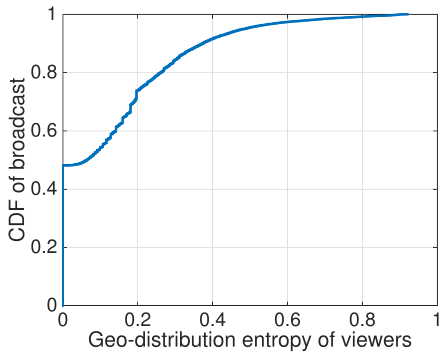 Figure 1: Comparison between Pure Cloud vs. Edge-Assisted Architectures.
Experimental Performance
The researchers tested their algorithm against standard baselines (Random, Nearest, Greedy Knapsack).
- Latency Reduction: Livecast achieved the lowest end-to-end latency, outperforming the "Nearest" server strategy because it considers both the broadcaster's upload and the viewer's download conditions.
- Cost Efficiency: By offloading to cheaper edge resources, operational costs plummeted by 40%.
- Scalability: The system remained stable even as the capacity of edge regions was varied, proving it can handle the bursty nature of viral live events.
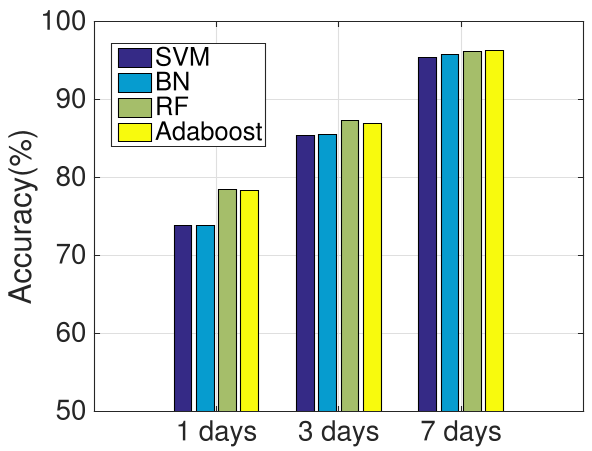 Figure 2: Normalised latency reduction of the StableM-M algorithm.
Critical Insight & Future Outlook
This work is a seminal move toward Distributed Transcoding. It proves that the "Edge" isn't just a cache for CDNs; it's a powerful computational tier.
Limitations: The study assumes a centralized scheduler has global knowledge of edge resources. In a real-world multi-provider scenario (e.g., edge nodes owned by different ISPs), decentralized coordination would be needed.
Takeaway: For any developer building real-time interactive systems—whether for gaming, live commerce, or the Metaverse—locality is your best friend. Designing systems that "stay local" is the only way to scale QoS without scaling the bill.