
Preserving the Logic of the Past: The CBI Reprint Series and the Architecture of Computing History
3572_The Charles Babbage Institute Reprint Series for the History of Computing.
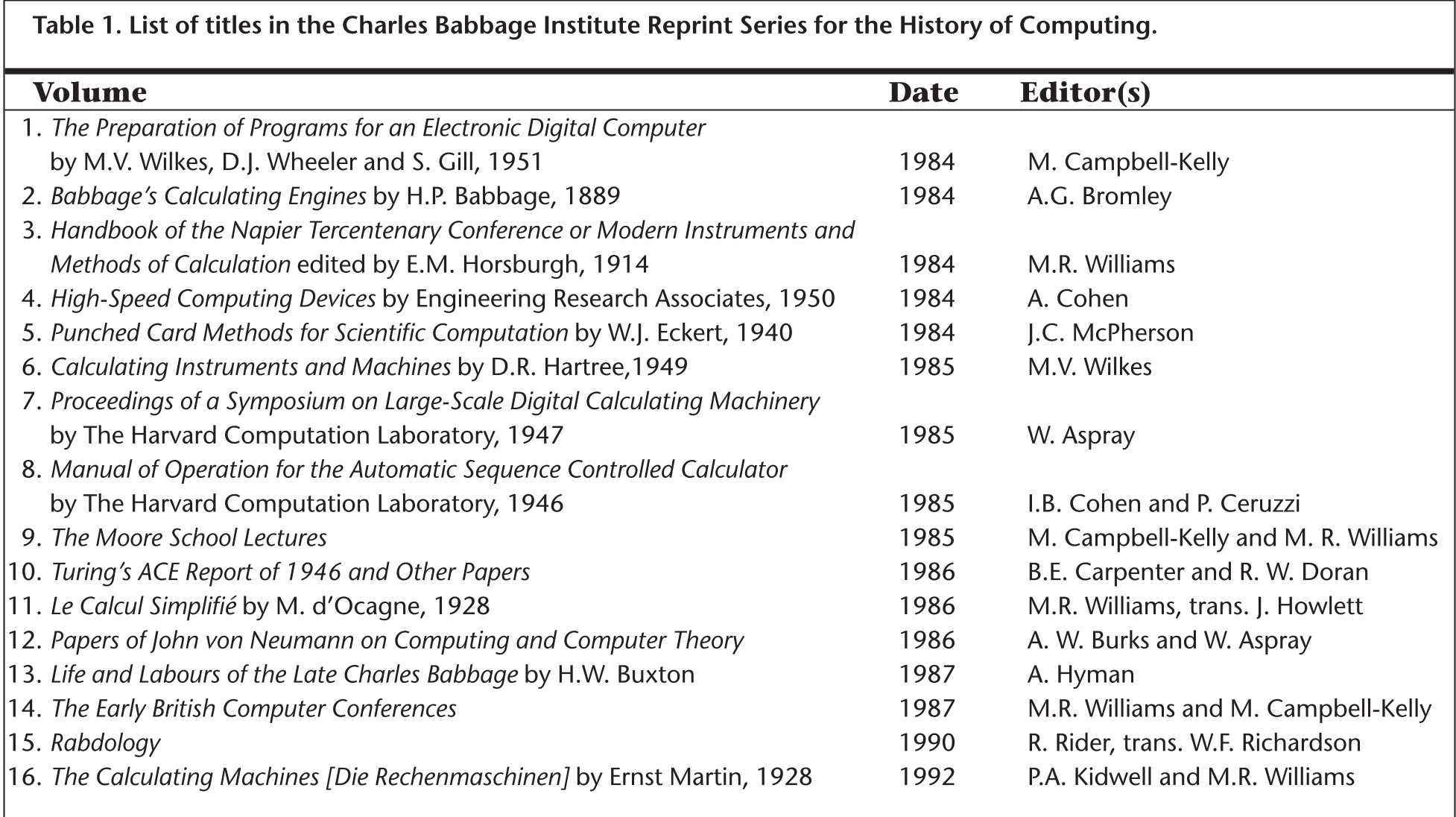
This article chronicles the development of the Charles Babbage Institute (CBI) Reprint Series, a project initiated in 1981 to republish seminal works in the history of computing. Led by Editor-in-Chief Martin Campbell-Kelly and benefactor Erwin Tomash, the series produced 16 high-quality volumes that transformed rare, inaccessible documents into a foundational scholarly collection.
TL;DR
The Charles Babbage Institute (CBI) Reprint Series was a landmark effort to rescue the primary artifacts of computer science from obscurity. Between 1981 and 1992, a board of distinguished historians and pioneers curated 16 volumes of "lost" classics—from Turing's ACE report to Babbage's original designs—setting the gold standard for how the history of technology should be preserved and contextualized.
The "Dark Ages" of Computing Literature
In 1981, the history of computing was a nascent field facing a massive physical bottleneck. Critical documents that defined the transition from analog calculating machines to electronic stored-program computers were scattered and rare. If you wanted to study the Moore School Lectures of 1946 (the seminal summer school that spread the gospel of the computer), you would find that only a couple of original copies existed globally.
Existing libraries focused on modern academic journals, while the foundational technical reports of the 1940s and 50s were decaying in private basements or specialized archives. The "pain point" was clear: scholars couldn't cite what they couldn't read.
Methodology: More Than Just a Photocopy
The CBI board, led by Martin Campbell-Kelly and Brian Randell, rejected the idea of a simple "facsimile reprint." Their methodology for the series was defined by three core pillars:
- Accessibility: Converting rare mimeographed reports into high-quality hardbound books.
- Scholarship: Every volume required a "Model Introduction" written by a peer-reviewed historian or an original participant.
- Balance: The board developed a taxonomy of computing (Calculating Machines, Punched Card Methods, Analog, etc.) to ensure the collection reflected the entire evolution of the field, not just the "winners" of the electronic age.
The Curated Corpus
The series was meticulous in its selection, as shown in the timeline and editorial list below:
From Tomash to MIT Press: A Scaling Success
The series initially struggled with a mail-order model under the independent Tomash Publishers. Erwin Tomash, a visionary benefactor, recognized that for the series to have a global impact, it needed the distribution "horsepower" of a major university press.
The transition to MIT Press professionalized the production, though Campbell-Kelly notes a certain "handcrafted appeal" was lost compared to the original maroon linen and gold-blocked volumes of the Tomash era. This move, however, ensured that these 1,000-copy print runs reached the shelves of international university libraries, where they remain today.
Impact and Reflection: The Citation Test
The true success of the Reprint Series is found in the bibliography of any modern work on computer history. Prior to this series, citations of works by Hartree, Wilkes, or Von Neumann were often second-hand. Today, these works are accessible primary sources.
Campbell-Kelly notes that in his own research on the British ACE computer, he cited 7 of the 16 volumes directly. The "two-foot shelf of books" serves as a physical monument to the logic that built our digital world.
Critical Insight & Legacy
What makes the CBI Reprint Series unique is its Value-Added Editing. For example, the Moore School Lectures were entirely reset and corrected, with missing lectures restored. This wasn't just archiving; it was restorative engineering.
While the digital age makes "access" feel trivial today, the CBI project reminds us that curation and contextualization are what separate a pile of old documents from a scholarly foundation. The limitation of the series—its focus only on works prior to the mid-1950s—was a deliberate choice to ensure historical perspective, leaving the "recent" history of the silicon age for the next generation of bibliophiles.
Editor's Note: For those interested in the raw materials of computing history, the files and manuscripts for this series are now preserved in the Charles Babbage Institute archives.