
Decoding Smiles: Predicting User Satisfaction via Facial Biometrics and ML
Classification of User Satisfaction Using Facial Expression Recognition and Machine Learning
This paper proposes a framework for classifying final user satisfaction using Facial Expression Recognition (FER) and machine learning. By utilizing soft biometrics such as age, gender, and time-series facial data, the system achieves a SOTA accuracy of up to 86% in predicting subjective user experience (UX) levels.
TL;DR
Understanding how a user truly feels about a product is the "Holy Grail" of design. This paper introduces a framework that uses a standard webcam to track facial expressions and uses machine learning to translate those muscle movements into a 1-to-5 star satisfaction rating. By combining deep learning for emotion detection and SVMs for classification, the researchers achieved an 86% accuracy in predicting user satisfaction—all without asking the user a single question.
The "Questionnaire" Problem
UX researchers have long struggled with the limitations of self-reported data. When a user fills out a survey, their answers are filtered through:
- Memory Decay: Forgetting how they felt at the start of the experience.
- Social Bias: Feeling embarrassed to give a negative review.
- Exaggeration: Overstating feelings to influence the researcher.
The authors suggest that facial expressions are the most expressive and honest channels for human communication. If we can "read" these expressions automatically, we can measure UX objectively and continuously.
Methodology: The Three-Step Framework
The proposed system bridges the gap between raw video frames and high-level satisfaction scores through a structured pipeline:
1. Data Acquisition and Emotional Feature Extraction
The system captures video while a user interacts with a product or watches a movie. Using a CNN-based FER system (Facial-Expression-Keras), it converts video frames into a numeric array representing seven emotional states: Happy, Disgust, Fear, Surprise, Sad, Angry, and Neutral.
2. Feature Consolidation
The raw frame-by-frame emotion scores are sampled and combined with "soft biometrics" (Age and Gender). This creates a temporal feature set that maps the journey of a user's emotions over time.
3. Machine Learning Classification
The researchers tested several algorithms, including K-Nearest Neighbor (KNN), Logistic Regression, and Multi-Layer Perceptrons. Because specific satisfaction scores (like 1-star or 5-star) might appear less frequently in a dataset, they employed SVM-SMOTE (Synthetic Minority Over-sampling Technique) to balance the data.
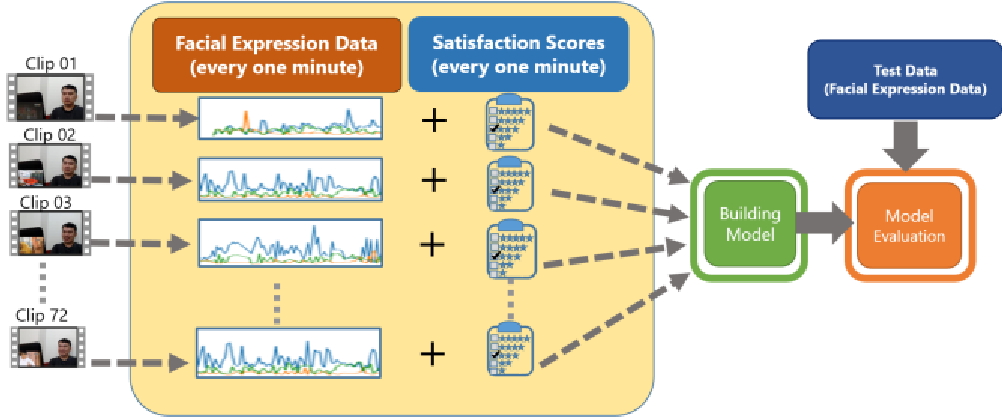 Figure 1: Overall architecture of the satisfaction classification experiment.
Experimental Insights
In a preliminary trial where a participant watched a 104-second comedy clip, the "Happiness" line showed dramatic spikes corresponding to funny moments, while "Sadness" remained flat. This confirmed the physical expression was indeed tracking the intended user experience.
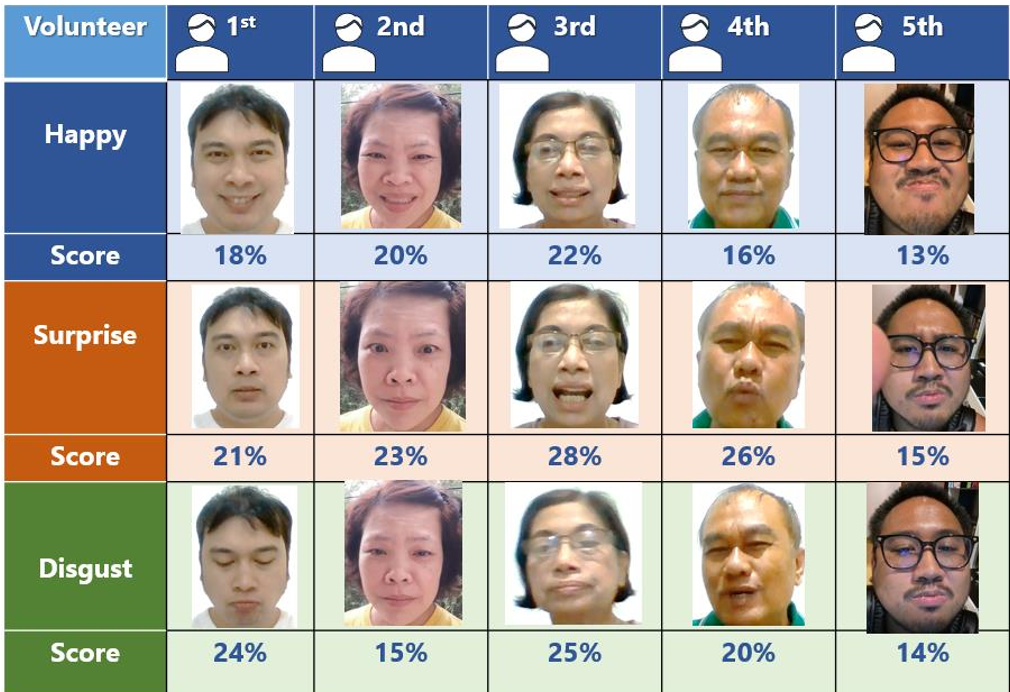 Figure 2: Time change of facial expression scores showing the increase in happiness during a comedy movie.
In the final evaluation, the SVM with a Polynomial Kernel outperformed other methods when combined with oversampling techniques.
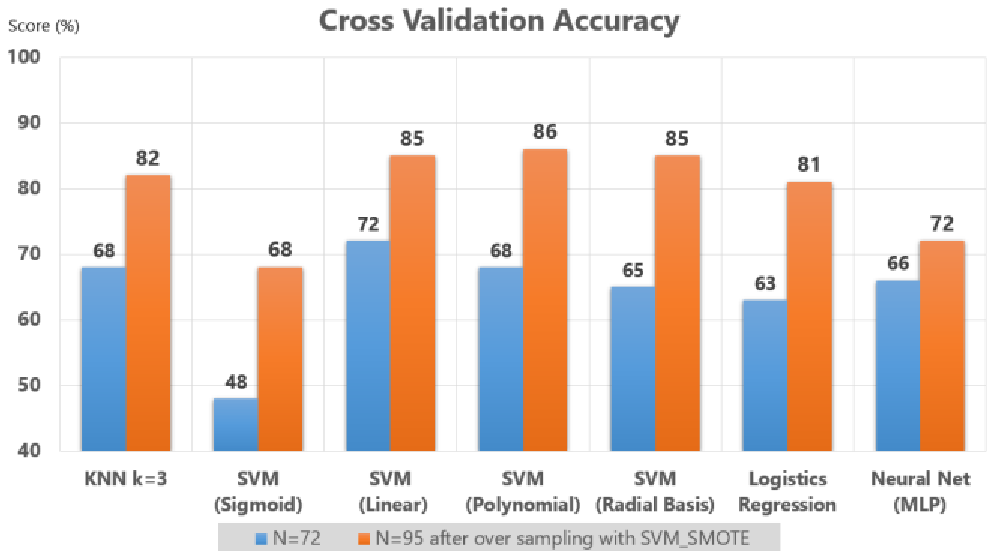 Figure 3: Cross-validation accuracy comparison showing SVM-SMOTE (Polynomial) as the winner at 86%.
Critical Analysis & Future Outlook
While the 86% accuracy is impressive for a preliminary study, there are notable limitations:
- Sample Size: The preliminary experiments involved a limited number of participants.
- Context Sensitivity: A "neutral" face in a horror movie may mean the user is bored, whereas in a productivity app, it may mean they are focused. The model needs to be context-aware.
- Ethical Privacy: Capturing facial data "without users' consciousness" raises significant privacy concerns that must be addressed via transparent consent and edge computing (processing data locally on the device).
Conclusion: This research proves that user satisfaction isn't just a subjective feeling—it's a measurable physiological response. By automating the classification of these responses, designers can receive continuous, unbiased feedback, paving the way for products that truly resonate with their users.