
MML: Bridging the Semantic Gap in Social Image Classification via Multi-Modal Integration
Classify social image by integrating multi-modal content
The paper introduces a Multi-Modal Learning (MML) framework for social image classification by seamlessly integrating heterogeneous visual and textual features. It utilizes a joint linear classification model combined with -norm regularization to select critical features and reduce noise, achieving SOTA performance on PASCAL VOC'07 and MIR FLICKR datasets.
TL;DR
With the explosion of social media, images are no longer just pixels—they are accompanied by rich, albeit noisy, textual tags. This paper proposes a Multi-Modal Learning (MML) framework that doesn't just "mix" text and images but forces them to learn from each other through a joint optimization model. By utilizing -norm regularization to filter out noise and a mutual-reinforce loop, MML achieves superior classification accuracy across major benchmarks.
Problem & Motivation: The Heterogeneity Hurdle
In the realm of social media analysis, we face two major roadblocks:
- The Semantic Gap: Visual similarity (color, texture) doesn't always equal semantic similarity. Two images of "Architecture" might look visually distinct but share the same label.
- Modality Heterogeneity: Visual features and textual tags inhabit different mathematical spaces.
Previous "Early Fusion" (concatenating vectors) leads to the curse of dimensionality, while "Late Fusion" (averaging scores) ignores the vital correlation between what we see and what users tag. The authors' intuition was simple: If a tag says 'Tiger' and the pixels look like 'Stripes', the model should be penalized if the two classifiers reach different conclusions.
Methodology: Mutual Reinforcement and Sparsity
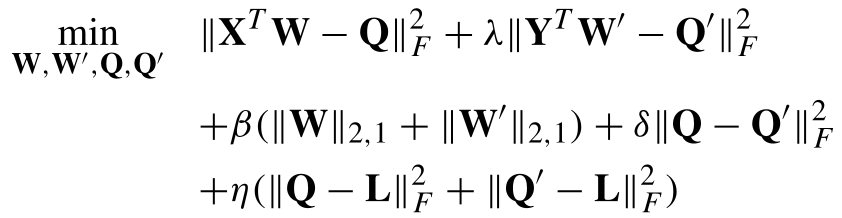
The core of the MML method lies in its joint objective function. Instead of treating modalities as independent silos, it creates a "feedback loop."
1. Robust Feature Selection
Social images are represented by high-dimensional vectors (e.g., 1634-D visual, 2000-D textual). Much of this is noise. The authors apply -norm regularization on the weight matrices and . This achieves "row-sparsity," effectively performing feature selection by identifying which dimensions are universally important across all classes.
2. The Joint Learning Objective
The framework minimizes a complex energy function that balances five components:
- Visual/Textual Loss: Ensuring individual classifiers fit the data.
- Regularization: Enforcing sparsity.
- Consistency Term (): This is the "secret sauce." It minimizes the distance between the labels predicted by the visual branch () and the textual branch ().
- Supervision Term (): Keeping both branches anchored to the ground truth label matrix ().
Experiments & Key Insights
The authors tested MML on the PASCAL VOC'07 and MIR FLICKR datasets.
MML vs. Baselines
MML outperformed both Early Fusion (like Multiple Kernel Learning) and Late Fusion (like InfR). A crucial finding was shown in the "Mean Average Precision" (mAP) comparisons: MML consistently maintained a lead, especially as the volume of training data increased.
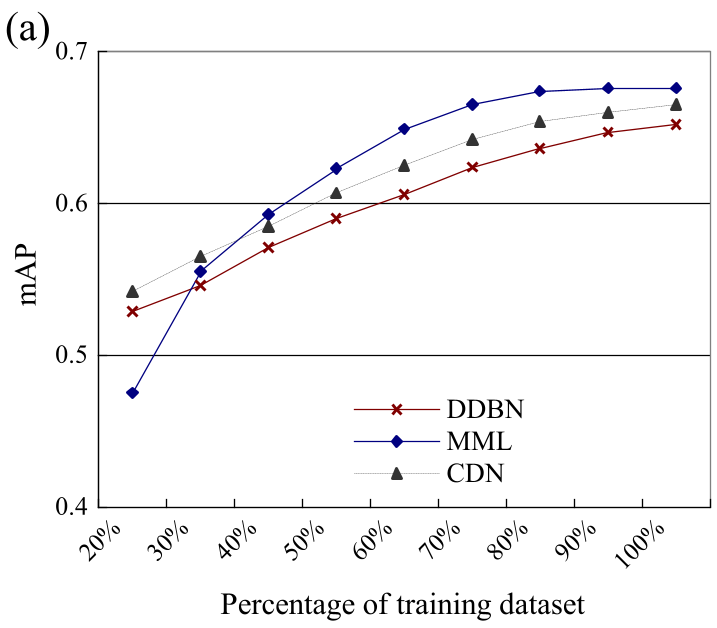 Fig 1: Effect of feature correlation on PASCAL VOC’07 and MIR FLICKR.
The "Text Dominance" Effect
An interesting takeaway from the parameter sensitivity analysis (Fig 5 in the paper) is the value of . The model performed best when was set higher than 1 (specifically around 4), suggesting that textual tags are often more reliable indicators of semantics than visual content in the context of user-uploaded social images.
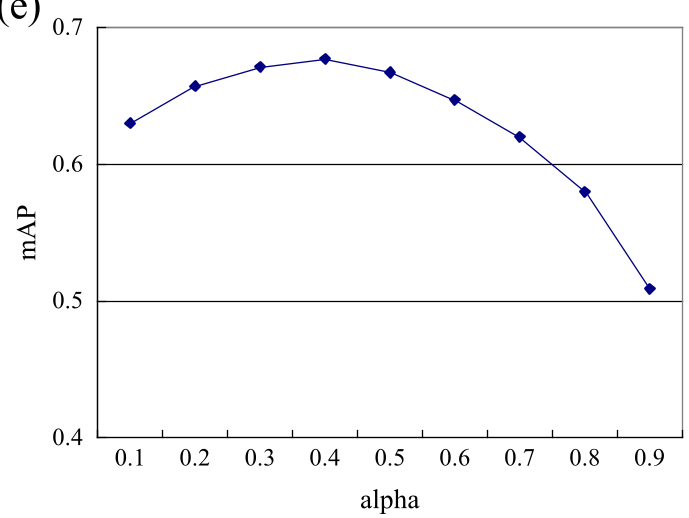 Fig 2: Sensitivity analysis for parameters .
Critical Analysis & Conclusion
While MML provides a robust mathematical framework for fusion, it was developed just as Deep Learning was beginning to dominate the field. Today, while we might use Transformers (like CLIP) to project modalities into a shared latent space, the core principle of MML—enforcing consistency between multi-modal predictions—remains a foundational concept in modern "Contrastive Learning."
Limitations
- Linearity: The model relies on linear classifiers, which may not capture complex non-linear relationships as well as deep neural networks.
- Scalability: The iterative optimization involves matrix inversions (), which can be computationally expensive for extremely large feature dimensions.
Final Thought
This paper serves as a masterclass in using structured regularization () and joint optimization to solve the multi-modal alignment problem. For researchers, it underscores that the best way to handle "noisy tags" isn't to ignore them, but to force them into a mutually-reinforcing agreement with visual data.