
Cloud-SNA: Overcoming the Graph Bottleneck with BSP and Cloud Computing
Constructing a Cloud Computing Based Social Networks Data Warehousing and Analyzing System
This paper introduces a cloud-based social network data warehousing and analysis system designed to handle large-scale Web 2.0 data. The core methodology leverages the Bulk Synchronous Parallel (BSP) model via Apache Hama, outperforming traditional MapReduce in graph-intensive social network analysis tasks.
TL;DR
Social Network Analysis (SNA) at a global scale is a computational nightmare due to messy web data and high-dimensional matrix operations. This paper proposes a cloud-based data warehouse that swaps traditional MapReduce for the Bulk Synchronous Parallel (BSP) model (via Apache Hama), demonstrating a near 2x performance gain in large-scale data tasks over standard Hadoop implementations.
Background & Positioning
In the era of Web 2.0, social data isn't just large—it's dense and relational. Traditionally, SNA was a manual or small-group task. However, as we move toward "Big Social Data," the infrastructure must evolve. This work positions itself as a structural bridge between Cloud Computing and SNA, moving away from "what" to analyze toward "how" to build a scalable engine for metrics like centrality, density, and structural holes.
The "MapReduce" Problem in SNA
While MapReduce is the "gold standard" for distributed data processing, it has a fatal flaw for social graphs: State Sensitivity.
- MapReduce is functional and stateless; to perform iterative graph calculations, it must pass the entire graph state from one step to another, creating massive I/O overhead.
- The Insight: Social networks are essentially mathematical graphs. The authors argue that the BSP (Bulk Synchronous Parallel) model, which uses "supersteps" and synchronized communication, is naturally aligned with the way graph algorithms (like PageRank or Centrality) operate.
Methodology: The Three-Tier Architecture
The proposed system organizes the complexity of SNA into three distinct layers:
- Front-end Collection: Distributed crawlers targeted at platforms like Facebook and Plurk, storing raw data in HDFS (Hadoop Distributed File System) for reliability through block replication.
- Intermediate Processing Engine: The heart of the system. It uses a Master/Worker architecture where Apache Hama (BSP) handles data cleaning, relationship matrix transformation, and SNA metric calculation.
- Result Production: A cross-platform API and Web interface that allows users to query raw data or visualized social graphs (Ineroperability).
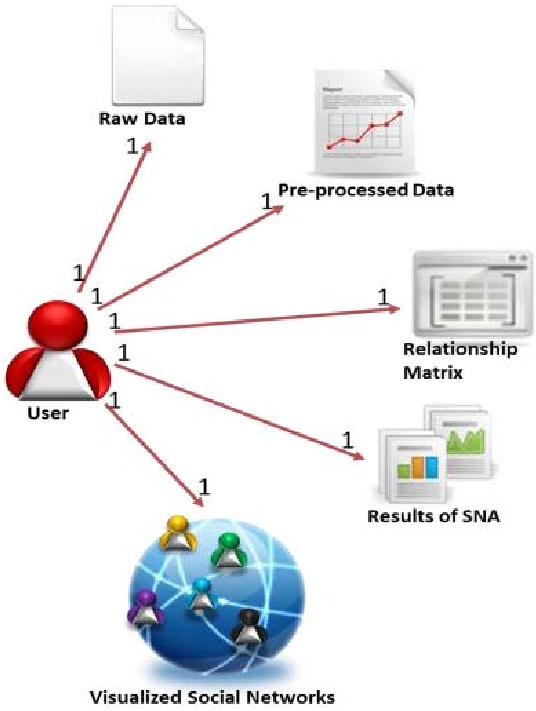 Figure 1: The proposed Cloud-SNA System Architecture.
Performance Battle: Hama BSP vs. Hadoop MapReduce
The researchers conducted a head-to-head experiment using a crawling and processing task across four nodes. The metric was simple: Execution time vs. the number of URLs.
| Scale (URLs) | Hama BSP (ms) | MapReduce (ms) |
|---|---|---|
| 100 | 217,511 | 120,458 |
| 1,000 | 920,010 | 1,486,860 |
| 10,000 | 9,077,645 | 15,606,370 |
Key Findings:
- The Overhead Threshold: For very small datasets (100 URLs), MapReduce is faster because the synchronization overhead of BSP outweighs its processing benefits.
- Scalability Champion: As the workload increases to 10,000 URLs, the efficiency of BSP becomes undeniable, completing the task roughly 42% faster than MapReduce.
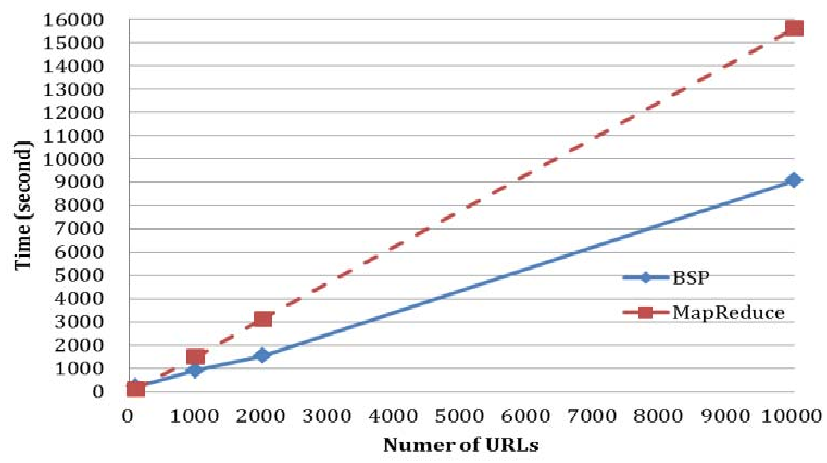 Figure 2: Execution time comparison showing BSP's superior scaling.
Critical Insight & Conclusion
The primary takeaway for architects is that architecture follows data structure. Because social networks are inherently recursive and relational, the linear pipeline of MapReduce is suboptimal. The adoption of BSP (Apache Hama) represents a shift toward "Graph-Aware" cloud computing.
Limitations: While the paper proves efficiency in data collection and warehousing, it primarily focuses on the crawling phase. The real "stress test" for the BSP model would be the actual computation of Betweenness Centrality on a billion-node graph, which involves more intensive "superstep" synchronization than the experiments shown here.
Future Outlook: As we look toward 2026 and beyond, this work lays the foundation for real-time social sentiment and terrorist detection systems by proving that cloud-based graph processing isn't just possible—it's significantly faster when using the right parallel model.