
Intelligent Guidance: Leveraging Clustering Algorithms for Entrepreneurship
Innovation and entrepreneurship guidance system based on clustering algorithm
This paper presents an innovation and entrepreneurship guidance system leveraging Data Mining and Cluster Analysis. It specifically focuses on an improved Hierarchical Clustering algorithm combined with the Analytic Hierarchy Process (AHP) to classify and guide professional entrepreneurial ventures.
TL;DR
To bridge the gap between "information overload" and "actionable wisdom" in entrepreneurship, this paper introduces a guidance system based on an optimized Hierarchical Clustering algorithm. By analyzing entrepreneurial data through a scientific data mining lens, the system provides a standardized classification model that simplifies the decision-making process for new innovators.
Background & Motivation: The Paradox of Information
The modern entrepreneur is "flooded by information but thirsty for knowledge." While there is no shortage of books and mentorship on innovation, most guidance is either too generalized or too focused on abstract psychology. This paper identifies a critical need for Scientific Data Mining to extract the "latent laws" behind successful entrepreneurship.
The authors argue that the fundamental challenge is transforming a high-dimensional Data Matrix (rows of entrepreneurs, columns of attributes) into a Knowledge Representation that is easy for humans to understand and act upon.
Methodology: Beyond Simple Grouping
The core of the proposed system lies in its rigorous approach to Cluster Analysis, an unsupervised learning method that groups data based on intrinsic similarities without prior labels.
1. Data Standardization
Because entrepreneurial variables (e.g., capital, team size, market reach) have different scales, the authors emphasize Standardization (Z-score or Maximum Value) to ensure no single attribute disproportionately biases the distance calculation.
2. The Clustering Pipeline
The system follows a three-stage data mining process:
- Data Preparation: Transforming raw data into a Difference Matrix.
- Algorithm Execution: Using a bottom-up (agglomerative) hierarchical strategy where each data point starts as its own cluster.
- Distance Metrics: The paper explores several distance functions, including Euclidean distance for orthogonal variables and Cosine similarity to focus on the "shape" of the entrepreneurial profile rather than its absolute magnitude.
 Figure 1: The standard three-stage workflow from database to knowledge expression.
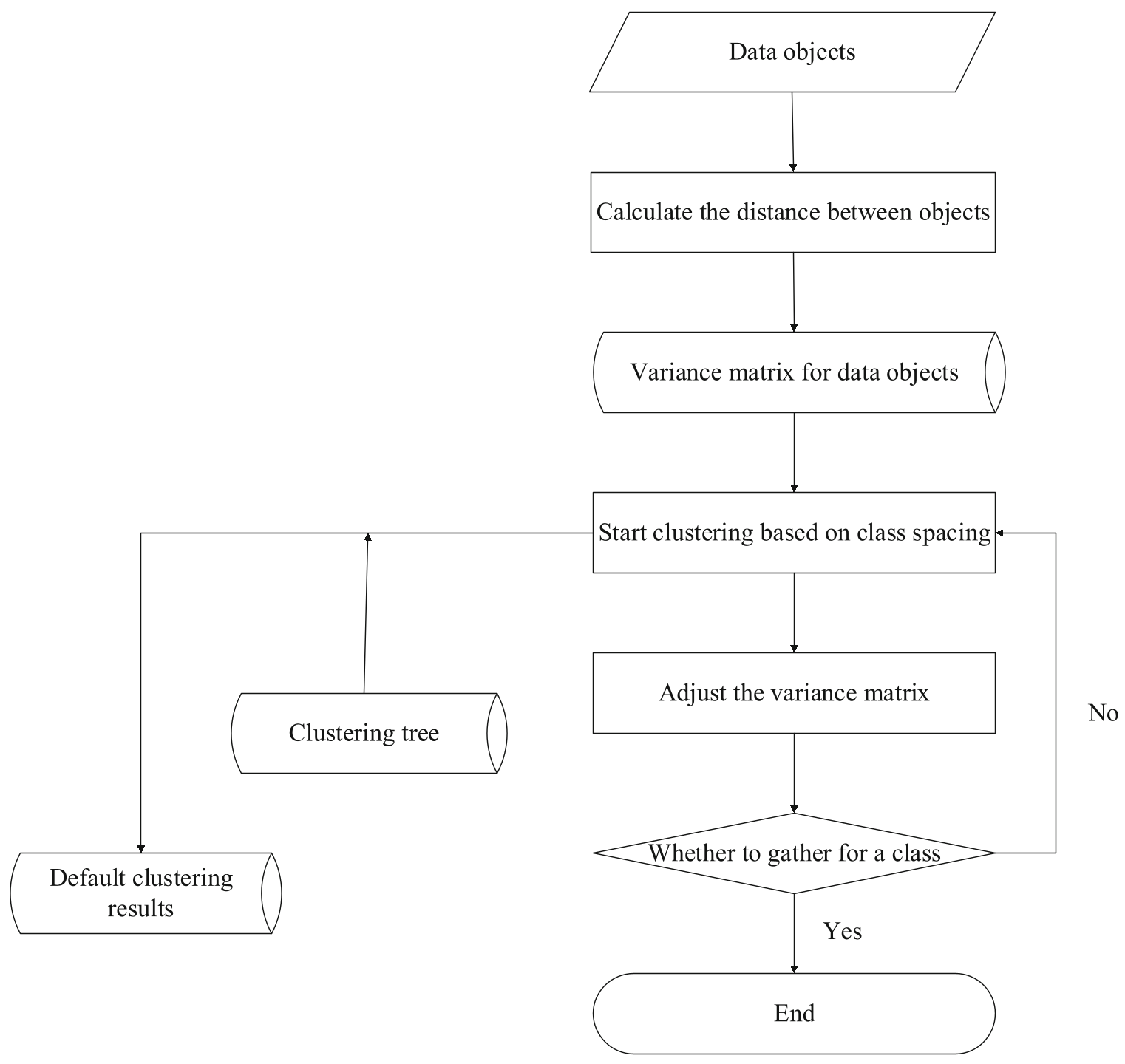 Figure 2: The tree-like structure of hierarchical clustering, moving from individual points to a unified group.
Experiments and Insights
The researchers tested three cluster spacing methods to determine which most accurately reflects the "innovation landscape":
- Nearest Neighbor Method: Tended to create a "chaining effect" where one giant cluster swallowed others, making it useless for guidance.
- Furthest Neighbor Method: Provided cleaner separations but occasionally grouped unrelated objects together.
- Distance Mean Method: Found to be the most balanced approach for generating professional categories that entrepreneurs can actually use to find their niche.
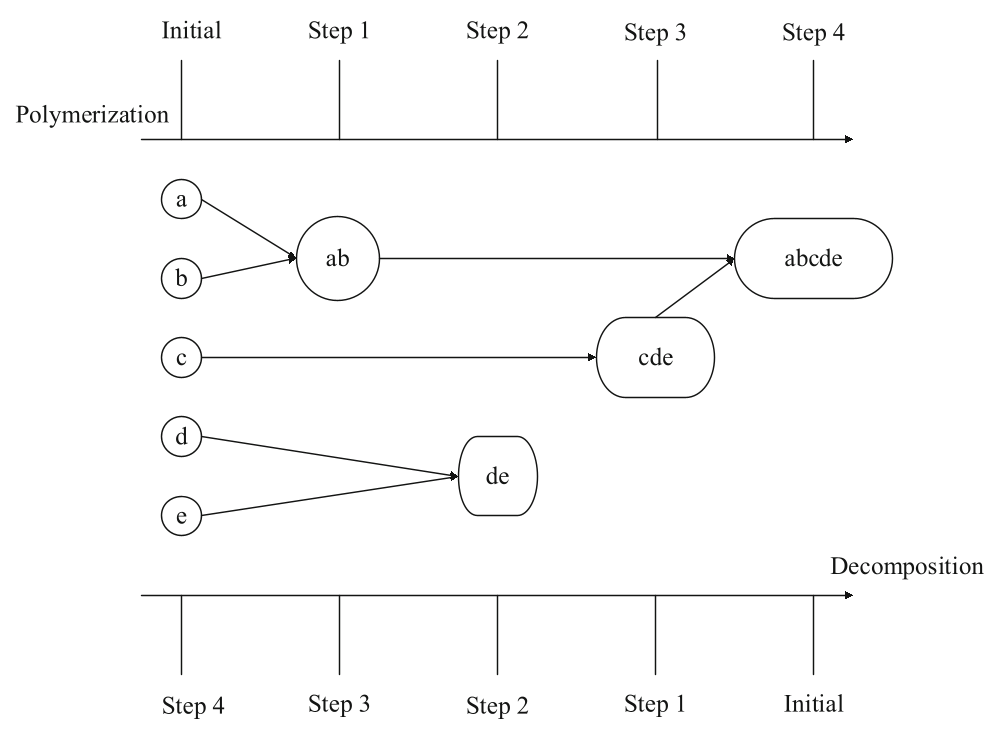 Figure 3: The iterative loop used to update the difference matrix and merge clusters.
Critical Analysis & Conclusion
By treating entrepreneurship as a data mining problem rather than a purely qualitative one, this paper provides a roadmap for automated guidance systems.
Takeaway: The "fusion" of hierarchical analysis with flexible distance metrics allows the system to be dynamic. As the entrepreneurial environment changes, the model can be re-run to discover new "knowledge rules."
Limitations: While the clustering is robust, the paper relies on traditional distance metrics. Future work might benefit from integrating Deep Embedding Clustering (DEC) or using Large Language Models (LLMs) to handle the qualitative text often found in business plans, which simple interval numeric attributes cannot fully capture.