
Intelligent Maternity Care: Using Clustering to Map the Journey of Pregnancy
Clustering-based Approach for Categorizing Pregnant Women in Obstetrics and Maternity Care
This paper presents a clustering-based Data Mining approach to categorize pregnant women at the Centro Hospitalar of Porto. Utilizing algorithms like K-Means, EM, and FarthestFirst on real-world Electronic Health Records (EHR), the study identifies distinct patient profiles to optimize clinical decision-making and maternity care pathways.
TL;DR
Researchers at the University of Minho have developed a Data Mining framework that categorizes pregnant women into distinct clinical profiles using unsupervised clustering. By analyzing real data from the Centro Hospitalar of Porto, they achieved a silhouette score of 0.65, providing a scientific basis for predicting patient "routes" through maternity units to prevent medical complications and optimize costs.
Background: Beyond Simple Records
In modern obstetrics, the sheer volume of Electronic Health Records (EHR) can overwhelm clinical staff. While systems like SAPE (support for nursing) and AIDA (interoperability) collect data, they don't inherently "understand" the patient's risk profile. The researchers' intuition was that pregnant patients are not a monolith; by identifying recurring patterns in factors like age, gestation weeks, and delivery motives, hospitals can move toward a more personalized, evidence-based care model.
Methodology: The CRISP-DM Approach
The study followed the CRISP-DM (Cross Industry Standard Process for Data Mining), moving from business understanding to deployment.
The Analytical Framework
The researchers tested 15 different models (5 scenarios across 3 algorithms). They utilized:
- K-Means: For partitioning patients into N distinct groups based on Euclidean distance.
- Expectation-Maximization (EM): To find maximum likelihood estimates in data with latent variables.
- Silhouette Method: Critical for validating how well-separated the clusters are.
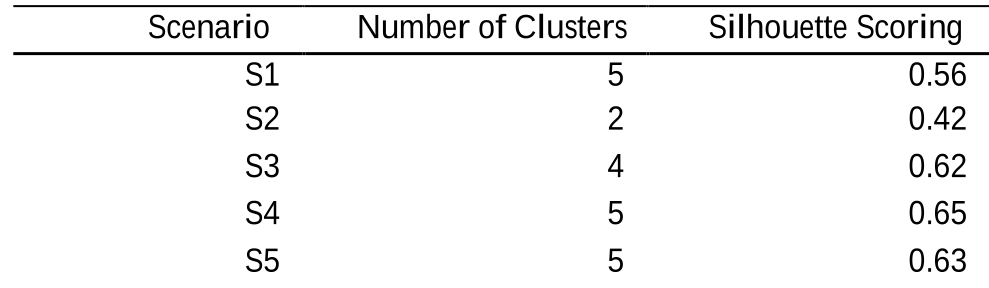 Table: Scenario comparison showing Scenario 4 (S4) reaching the peak Silhouette score of 0.65.
The Winning Variables (Scenario 4)
Surprisingly, the most effective scenario for categorization wasn't just about biometrics like height or weight. Scenario 4 focused on:
- Age
- Gestation Type (Singular vs. Multiple)
- Grav170 (Normal delivery vs. Unexpected events)
- Programmed (Planned vs. Emergency)
Experiments & Results: Identifying the Patient "Route"
The evaluation phase proved that clinical "motives" and "programming status" were the strongest differentiators.
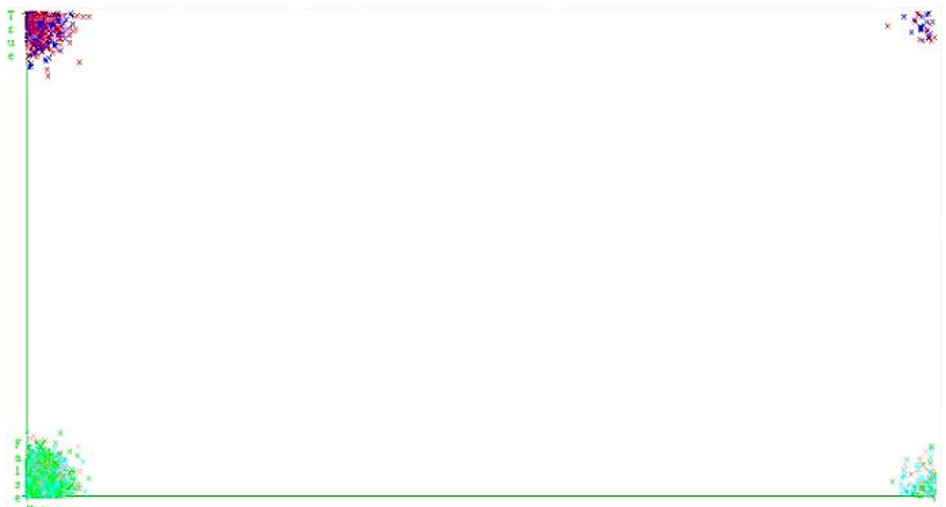 Figure: Clustering distribution showing how patient characteristics align across different clinical groups.
Key Findings:
- Risk Indicators: Cluster 2 in the final model specifically isolated patients aged 30-38 with non-programmed pregnancies and intercurrences, marking them as a high-alert group.
- Efficiency: Biometric data like BMI and Blood Pressure, while important, were found to be secondary in the initial categorization of patient routes compared to the "motive" for the visit.
Deep Insights & Conclusion
Takeaway
The study proves that clustering is not just a statistical exercise; it is a viable clinical tool. By integrating these models into Business Intelligence platforms (like CMIN's current setup), hospitals can automatically flag high-risk admissions before a human doctor even reviews the chart.
Limitations & Future Work
The study is focused on a specific hospital in Portugal, utilizing data up to 2015. To advance this today, the model would benefit from:
- Real-time streaming data (e.g., continuous CTG monitoring).
- Broader datasets including gynecological (non-pregnant) patients to improve overall maternity ward efficiency.
- Deep Learning (e.g., Deep Embedded Clustering) to handle non-linear relationships in more complex medical scenarios.
Ultimately, this work serves as an essential stepping stone toward the "2020 Vision" of high-value maternity care—where technology acts as a silent sentry for both mother and child.