
GAM: Achieving 94.3% Accuracy in Social Interest Prediction via Hybrid Soft Computing
Clustering based interest prediction in social networks
This paper introduces the GAM model, a hybrid approach combining Gaussian Mixture Models (GMM) and Markov Chain Models (MCM) for interest prediction in social networks. By dynamically switching between these models based on message volume, the researchers achieved a record-breaking prediction accuracy of 94.3% on a Sina Weibo dataset.
TL;DR
Predicting what a user is interested in on social media is the "Holy Grail" for recommendation engines. This paper introduces GAM, a hybrid selection logic that combines Gaussian Mixture Models (GMM) and Markov Chain Models (MCM). By simply looking at the number of posts a user has, the system picks the best algorithm, resulting in a state-of-the-art 94.3% accuracy on real-world Sina Weibo data.
Problem & Motivation: The "Sparse Data" Trap
Most social network interest prediction models fail because they are either too simple (relying only on profiles) or too rigid (using one algorithm for all users).
- The Content Problem: Gaussian models need lots of text to find patterns. If a user only posts five times, GMM fails.
- The Complexity Problem: Markov models are great at tracking state transitions but can be computationally expensive () and "noisy" when dealing with large-scale data.
The authors' insight was simple but powerful: The volume of user activity should dictate the method.
Methodology: The GAM Framework
The GAM model functions as a "smart switch." It uses a threshold ( messages) to decide which logic to apply:
- GMM (Content-Based): Applied when . It treats user interests as a mixture of multiple Gaussian distributions. It's fast and excellent at splitting boundaries between categories like "Finance" vs. "Sports."
- MCM (Status-Based): Applied when . It focuses on the transition between interest states. Even with fewer posts, the transition matrix can stabilize to provide a reliable "next-step" prediction.
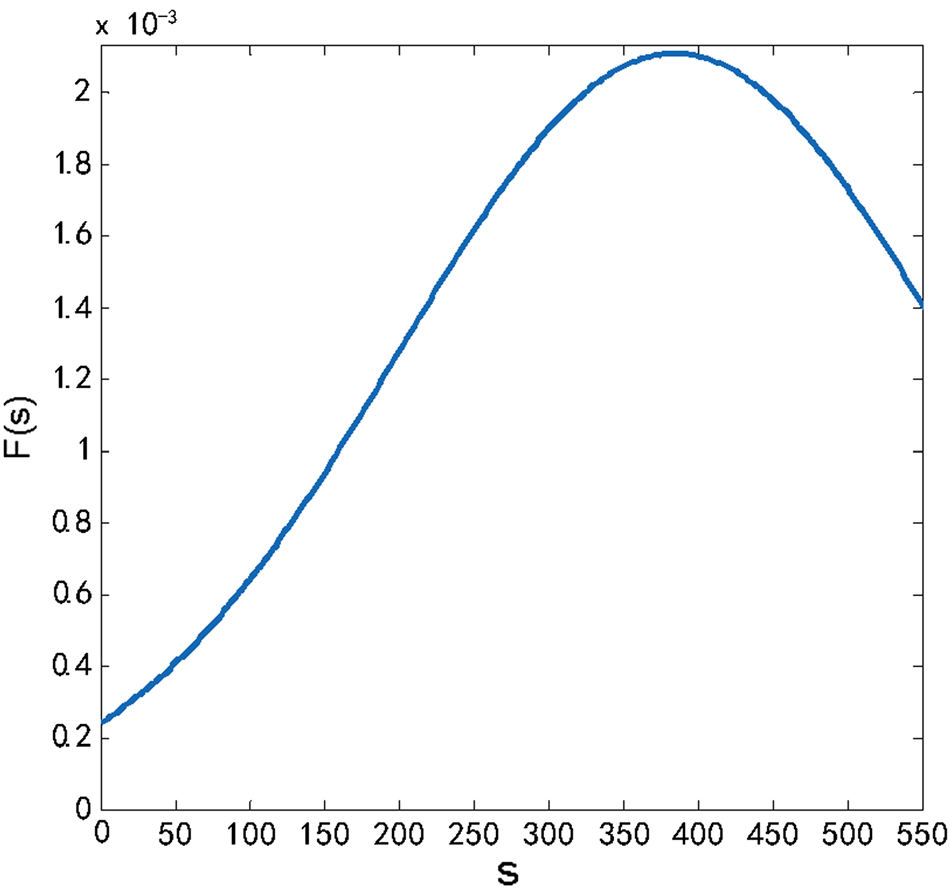 Figure 1: The overall architecture of the GAM solution, from feature extraction to the selection of clustering logic.
Mathematical Intuition
The authors proved (Theorem 1) that GMM accuracy is a monotonic increasing function of the number of messages. As (posted messages) grows, the probability becomes more representative of the true interest, justifying the shift to GMM for high-volume users.
Experiments & Results
The researchers crawled 17 million messages from over 30,000 Sina Weibo users.
Clustering Quality
As shown in the comparison below, GMM provides much cleaner separation of interest categories after denoising. MCM tends to be more scattered but serves as a vital fallback.
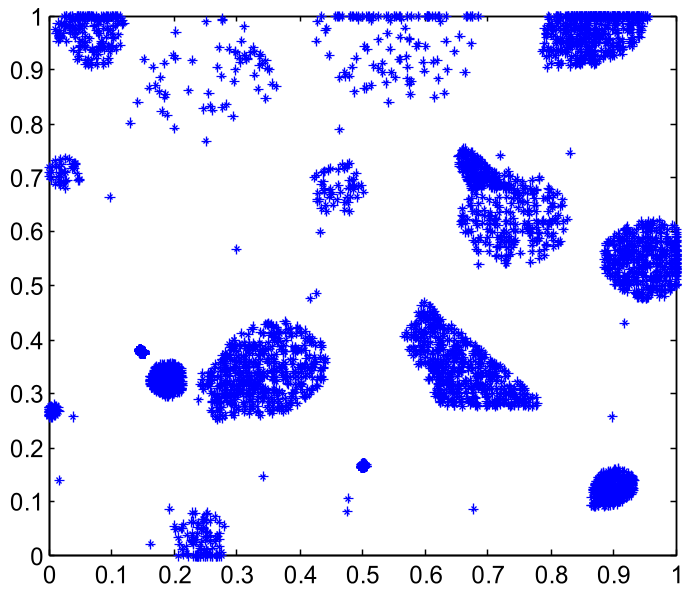 Figure 2: Clustering visualization. GMM (Left) shows distinct boundaries, while MCM (Right) is used for its robust availability in low-data scenarios.
Performance vs. Baselines
The hybrid GAM outperformed every other classic classifier:
- GAM (Proposed): 94.3% Accuracy
- GMM alone: ~90%
- MCM alone: ~87%
- LibSVM: 84.9%
- K-Means: 83.8%
The efficiency gains were also notable; GMM is nearly 16 times faster than MCM, so by using GMM for the majority of "normal" users, the system remains highly scalable.
Critical Analysis & Conclusion
Takeaway
The GAM model proves that the "Number of Posted Messages" is the most critical metadata for model selection in social networks. By creating a compromise between accuracy (Gaussian) and availability (Markov), we can overcome the inherent noise of social multimedia.
Limitations & Future Work
While the 94.3% accuracy is impressive, it was achieved after "noise filtering" (removing swing users who have no clear interest). Predicting interests for these erratic users remains an open challenge. Future work could integrate deep learning (like Deep Belief Networks) to further refine the feature extraction from multimedia content (images/video) which were filtered out in this study.
Final Verdict: This is a landmark result for soft computing in social media, providing a practical, high-performance blueprint for modern recommendation systems.