Decoding the Turkish Digital Soul: A Clustering Approach to Personality Prediction
Clustering based personality prediction on turkish tweets
This paper introduces a language-specific framework for predicting Big Five (OCEAN) personality traits from Turkish tweets using a clustering-based approach. By integrating 48 linguistic features with Word2Vec embeddings, the model identifies personality clusters and validates them against a ground truth dataset of volunteer surveys.
TL;DR
Researchers from METU have developed a specialized framework to predict the Big Five (OCEAN) personality traits from Turkish tweets. By moving beyond simple text analysis to include Part-of-Speech (PoS) tags, emoticon usage, and temporal patterns, the study provides an unsupervised clustering methodology that achieves high accuracy even when ground-truth labels are scarce.
Problem & Motivation: The Language Barrier in Psychometrics
While personality analysis is a mature field in English-speaking data science, Turkish presents unique challenges. As an agglutinative language with high morphological complexity, standard NLP pipelines often fail to capture the nuances of "how" someone speaks—their writing style.
Prior works often neglect the cultural and linguistic indicators specific to non-English users. The authors identified a gap: how do we build a predictive model when we have millions of tweets but only a handful of verified personality survey results? Their answer lies in clustering-based feature engineering.
Methodology: The Fusion of Style and Semantics
The core innovation of this paper is its dual-path feature construction pipeline.
1. Linguistic Stylometry (The "How")
The authors extracted 48 distinct features categorized into:
- Morphological Tags: Using the Zemberek library to identify the frequency of Past Tense, Imperatives, and Conditionals.
- Temporal Circularity: A clever two-hot encoding strategy for timestamps (Morning, Afternoon, Evening, Night) to ensure Euclidean distance correctly measures the proximity of night to morning.
- Emoticon Analysis: Segregating emojis into 12 categories (Smiling, Negative, Romantic, etc.) to capture emotional variance.
2. Semantic Embedding (The "What")
Top terms identified by TF-IDF were fed into a Word2Vec model. This 38-dimensional vector captures the latent meaning of the user's content, which is then concatenated with the 20 most discriminative linguistic features.

Experiments & Results: Finding the "Sweet Spot"
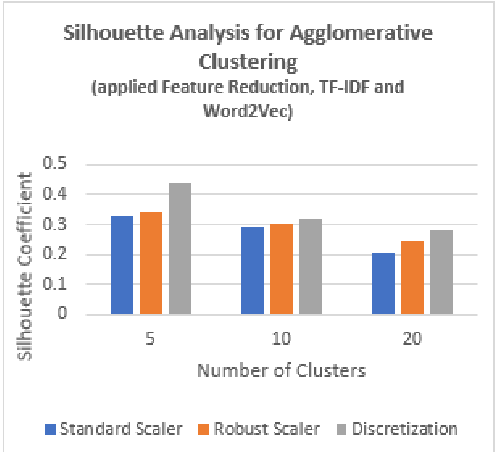
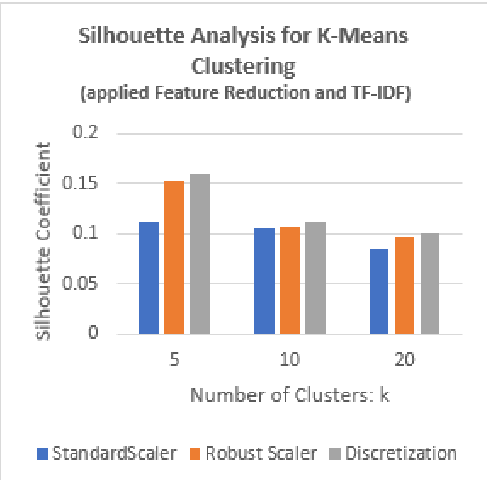
The study compared K-means and Agglomerative Clustering. A critical step was variance-based feature reduction. By plotting the distribution of all 1000 users, they eliminated low-variance features that didn't help in distinguishing users, such as certain rare emoji types.
- The Winner: K-means combined with Word2Vec representations significantly outperformed basic TF-IDF models in terms of clustering quality (Silhouette Coefficient).
- Accuracy: Using 40 "base users" who took the ACTUAL Big Five survey, the model's error rates were remarkably low, particularly in the "Conscientiousness" and "Extraversion" dimensions.
Critical Insight: Why This Works
The success of this approach highlights a fundamental truth in social media analysis: Content is king, but Context is the kingdom. By accounting for when a person tweets (temporal) and how they structure their sentences (PoS), the model captures personality signals that raw word counts miss. The transition from high-dimensional linguistic features to a condensed cluster model allows researchers to categorize the "silent majority" of Twitter users who haven't taken a psychological survey.
Conclusion & Future Outlook
This framework serves as a blueprint for language-specific social media analysis. While effective, the authors acknowledge the hardware and data limitations of 2019/2020.
Looking forward:
- Transformers: Replacing Word2Vec with Turkish-specific BERT (BERTurk) could further capture context.
- Multimodal: Incorporating image analysis from shared photos would complete the OCEAN profile.
For companies and sociologists, this work proves that you don't need a million labels to understand your audience; you just need the right linguistic features.