
Beyond the Black Box: Co-designing Conversational AI Exhibits for Children
Co-designing a conversational interactive exhibit for children
This paper presents a co-design methodology for an AI-powered conversational exhibit at the Catavento Science Museum, designed to teach children aged 9-14 fundamental AI concepts. The authors leveraged role-playing and "Datathons" with museum staff to develop a multi-robot quiz show experience that demystifies how AI learns from human data.
TL;DR
Researchers from IBM and the University of São Paulo have developed a framework for creating interactive AI exhibits at science museums. By involving museum guides in "Datathons" and role-playing exercises, they transformed the abstract concept of Machine Learning into a hands-on "Robot Quiz Show" where children teach robots to answer science questions.
The Challenge: AI in the Wild
Most Conversational AI (CUI) is designed for quiet, one-on-one interactions (think Siri or Alexa). Bringing this technology into a bustling science museum like Catavento introduces chaos:
- Physical Constraints: Noise, crowds, and limited attention spans.
- Conceptual Gap: How do you explain "Confidence Scores" or "Training Data" to a 10-year-old?
- The Cold Start Problem: AI needs data to work, but where do you get 1,000+ questions that sound like they actually came from a child?
The authors argue that the solution isn't just better algorithms, but a co-design process that treats museum staff as essential technical partners.
Methodology: The Co-Design Engine
The research centered on a "Robot Quiz Show" where three AI systems (represented by robotic heads) compete. When the robots fail, children use touchscreen stations to "teach" them.
1. The Role-Playing Phase
To understand the flow, the team didn't just code; they acted. Curators and designers simulated the exhibit, experimenting with robot personalities. This led to a crucial insight: the robots needed distinct "characters"—Funny, Patronizing, and Intelligent—to keep children engaged.
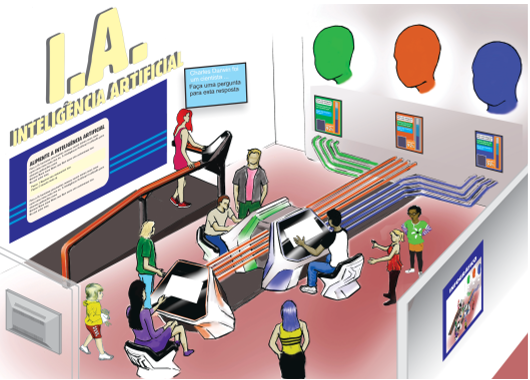 Figure 1: Initial conceptual sketch of the multi-station training exhibit.
2. The Datathon: Crowdsourcing Intelligence
The team held five "Datathons" with 111 museum guides. Why guides? Because they are the "interface" between science and children every day.
- The Process: Guides wrote down real questions they’ve heard from kids, then traded those "cards" to provide varied answers and rephrasings.
- The Context Shift: A key finding was that when guides moved from a boring conference room to the actual museum floor, the quality of their data spiked. Being near the exhibits (Insects, Evolution, Earth) triggered more natural, colloquial questions.
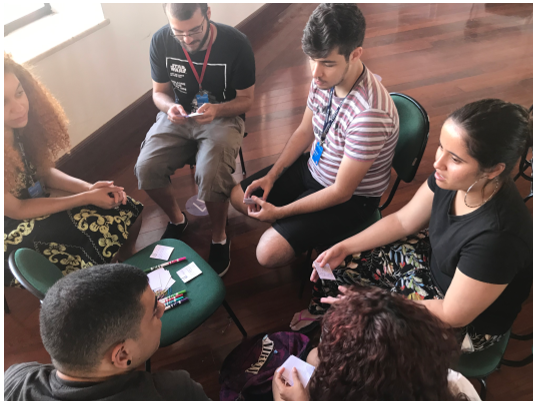 Figure 2: Museum guides collaborating to generate and refine the AI's training dataset.
Key Results & Insights
- Data Volume: The team collected 1,099 questions across 11 themes.
- Social Learning: The exhibit successfully moved AI from a "solo screen" experience to a social game, where a human guide mediates the interaction between the robots and the children.
- AI Literacy: By showing the robots making mistakes and then improving after "training," children witness the fundamental loop of AI development: Data -> Training -> Improved Performance.
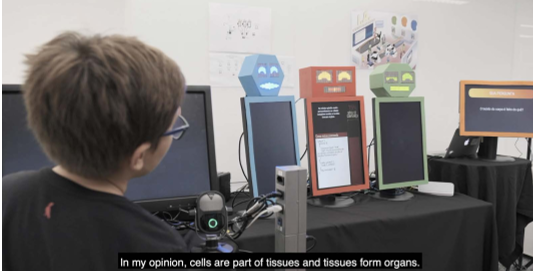 Figure 3: Laboratory prototype showing robots displaying their confidence levels during a quiz.
Technical Takeaways & The Path Forward
The "black box" of AI is often its biggest barrier to education. This paper demonstrates that Participatory Design isn't just a "feel-good" exercise; it is a technical necessity for high-stakes, public-facing AI.
Limitations: The study primarily focused on the design phase with staff. The true test—how children respond over long-term deployments—remains the next frontier.
Future Work: As we move toward Large Language Models (LLMs), the "Datathon" approach might evolve into "Prompting Workshops" for educators, ensuring that even the most advanced AI remains grounded in the specific pedagogical needs of the classroom or museum.