
Deciphering Coastal Dynamics: Fuzzy System Modeling for Chlorophyll Forecasting
Coastal Environmental Management by Fuzzy Svstem Modeling J
This paper presents a Takagi-Sugeno (TSK) fuzzy system modeling approach for coastal environmental management, specifically focusing on forecasting chlorophyll-a concentrations as a bioindicator. By utilizing longitudinal ecological data from the Cabo Frio upwelling zone, the authors demonstrate that fuzzy logic can effectively capture non-linear relationships between physical-chemical parameters and algal growth while maintaining linguistic interpretability for decision-makers.
TL;DR
Researchers have developed a fuzzy-logic-based framework to predict algal growth in the Cabo Frio upwelling region of Brazil. By utilizing Takagi-Sugeno (TSK) models, the study successfully forecasts chlorophyll-a concentrations—a key bioindicator—outperforming traditional linear regressions while providing a "readable" set of rules that experts can validate for environmental management.
Background & Motivation: The Coastal Conflict
Coastal zones are high-stakes environments where industrial development (like oil drilling) meets recreational tourism and ecological conservation. Managing these areas requires a deep understanding of trophic status—essentially the "health" of the water.
The core challenge is that ecological data is messy. Phytoplankton populations react rapidly to nutrient shifts (Nitrogen, Phosphorus) and physical changes (Temperature, Salinity), creating non-linear patterns that standard statistical tools struggle to map. Current SOTA machine learning methods might provide accuracy, but they are often "black boxes." In environmental management, stakeholders need to know why a model predicts a bloom, not just that it will happen.
Methodology: The Power of TSK Fuzzy Logic
The authors opted for the Takagi-Sugeno (TSK) Fuzzy Model. Unlike classic Mamdani fuzzy systems, TSK models are particularly efficient for identification via numerical data.
1. Conceptual Framework
The model correlates factors like water column stability, solar irradiance, and nutrient availability (Nitrate, Nitrite, Ammonia) to evaluate phytoplankton incidence.
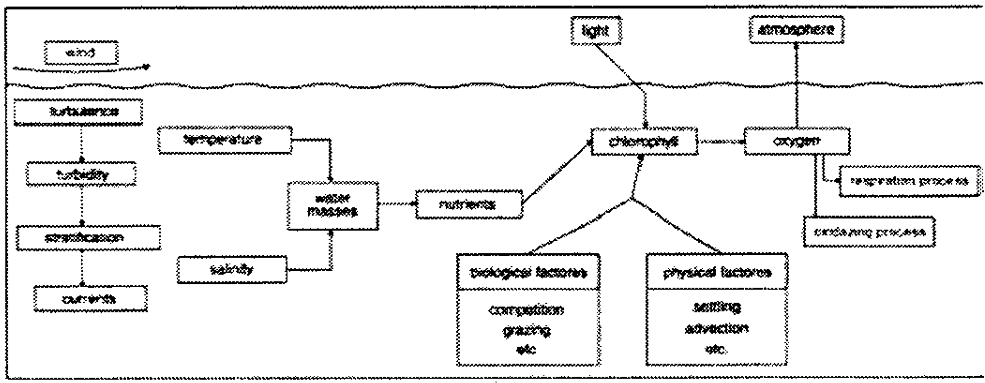
2. The Mathematical Core
The system uses rules in the form: If is , then (Zero-order) If is , then (First-order)
By using triangular-shaped membership functions, the researchers partitioned variables like Temperature and Salinity into linguistic categories (e.g., "Low," "Medium," "High"). This allowed the model to be solved as a linear optimization problem using the pseudo-inverse of the Regressors Matrix ().
Experiments and Results
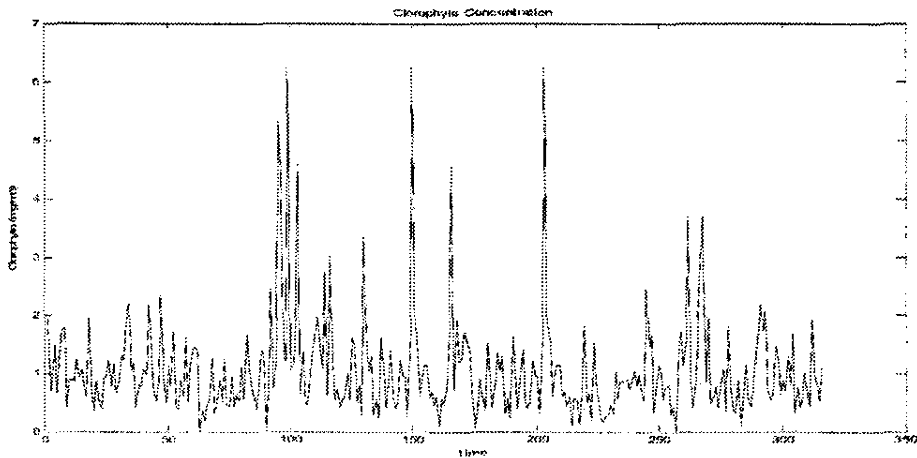
The study utilized a dataset spanning from 1994 to 2001. The researchers tested several configurations, including linear baselines and varying counts of fuzzy sets (3 vs. 5).
SOTA Comparison
The results demonstrated a clear advantage for fuzzy logic:
- Linear Model: Test MSE 0.0360
- TSK0-3 (Fuzzy): Test MSE 0.0271
The fuzzy model reduced prediction error significantly while using a manageable number of rules (9 to 27), which were then cross-verified by human experts to ensure the "logic" matched biological reality.
Key Metrics (Table III/IV Highlights)
| Model Type | Parameters | MSE (Test) |
|---|---|---|
| Linear | 5 | 0.0360 |
| TSK0-3 (Selected) | 27 | 0.0271 |
| TSK1-3 | 18 | 0.0292 |
Critical Insight & Conclusion
The true value of this work lies in Transparent SOTA. While a deep neural network might achieve a slightly lower MSE, it wouldn't allow a coastal manager to see the specific rule: "If Temperature is Low and Ammonia is High, then Chlorophyll is X."
Future Outlook
The authors acknowledge a limitation: the fuzzy set boundaries were fixed manually. The next frontier in this research involves using Genetic Algorithms (GAs) to automatically optimize the membership functions and perform automated feature selection, potentially lowering the error rates further without sacrificing the model's inherent "readability."
For the coastal management community, this research proves that we don't have to choose between accuracy and understanding.