
Beyond the Facts: How Cognitive Dissonance Shapes User Behavior in Reversal Events
Exploring Cognitive Dissonance on Social Media
This paper presents a pilot empirical study on cognitive dissonance among social media users by analyzing a "reversal event" on Sina Weibo. Using statistical hypothesis testing for power-law distributions and semantic analysis, the study demonstrates that original followers exhibit abnormal behavior and attitude-maintenance mechanisms when faced with facts that contradict their initial beliefs.
TL;DR
When the truth changes, our minds often don't. This research investigates "reversal events" on social media—specifically a famous Chinese celebrity's academic scandal—to prove that cognitive dissonance leads to measurable behavioral anomalies. Instead of following the facts, many users engage in mental gymnastics to maintain their original stances.
Background: The Psychological Friction of Social Media
Cognitive dissonance, a theory proposed by Festinger in 1957, describes the mental discomfort of holding two conflicting beliefs. In the era of social media, where "reversal events" (where a public narrative is suddenly flipped by new facts) are common, understanding how users resolve this discomfort is crucial for predicting public opinion and managing information security.
Problem: Why "Prior Work" Falls Short
Existing literature has largely treated social media analysis as a data-mining task—predicting what will happen. However, they often ignore the why—the internal psychological pressure for consistency. Most psychological studies on this topic are confined to lab settings with small groups, making it difficult to understand how thousands of users react to a real-world crisis in real-time.
Methodology: Statistical Signatures and Semantic Maps
The authors analyzed 94,548 posts on Sina Weibo related to actor "Z" and his "postdoc" scandal. They divided the timeline at (the moment the fraud was revealed).
1. Statistical Detection of Anomaly
By modeling post frequencies as power-law distributions, the researchers used a log-likelihood ratio test to compare followers' behavior before and after the truth came out.
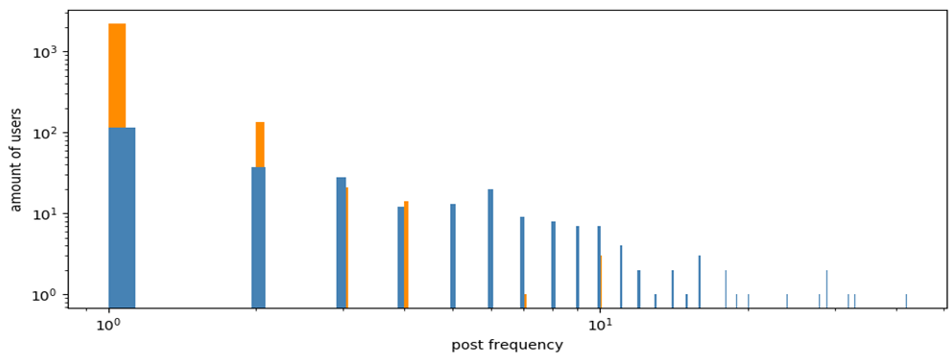 Figure: The followers (left) showed a massive shift in post distribution, while general users (right) remained consistent, indicating a psychological shock unique to the follower group.
2. Semantic Analysis of Defense Mechanisms
The study categorized users based on how they resolved the dissonance:
- Trivialization: Treating the new information as unimportant ("I don't care about his degree, just his acting").
- New Cognitions: Blaming the messenger ("Critics are just jealous").
- Attitude Change: Only a tiny minority actually flipped their stance to oppose the actor.
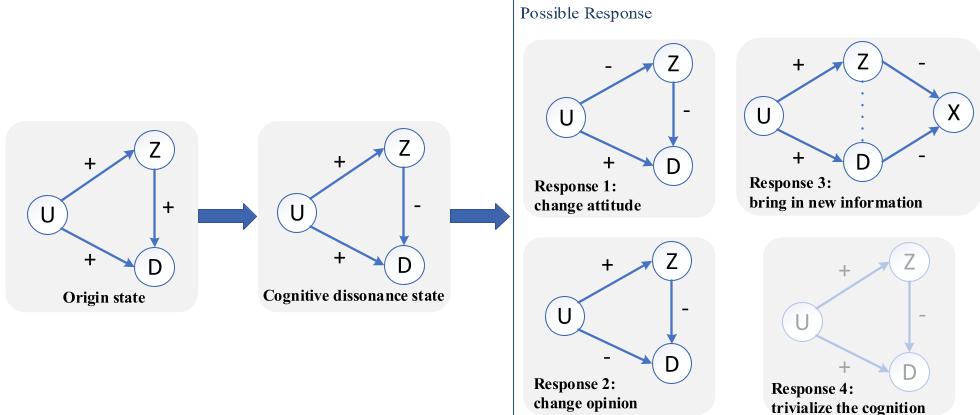 Figure: The theoretical paths users take to resolve the tension between their support for User (U) and the negative facts about Identity (D).
Experiments & Results: The "Belief Echo"
The statistical tests were definitive. For followers, the change in behavior was massive (), indicating a state of dissonance. Interestingly, the semantic analysis revealed a "Status Quo Bias":
| Response Type | Attitude | Focus |
|---|---|---|
| Change Opinion | Support | Shift focus to talent over degrees |
| New Info | Support | Blame critics/schools |
| Trivialize | Neutral | Passive news sharing |
| Change Attitude | Oppose | Moral integrity concerns |
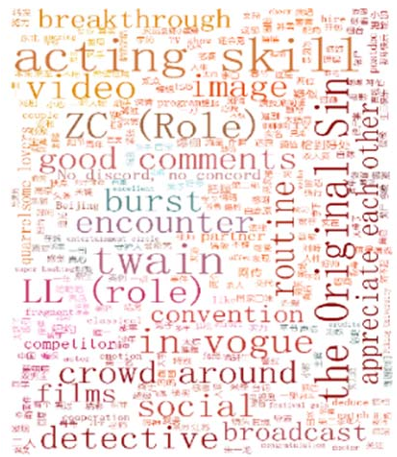 Figure: Post frequency histograms demonstrating the power-law shift in the follower group.
Critical Insight & Future Outlook
The core takeaway is that previous behavior is the best predictor of future stance, even in the face of contradictory evidence. Users who originally focused on the actor's "Doctor" identity were more likely to remain active and defensive compared to those who only liked his acting.
Limitations
- Sample Bias: The study focused on a single celebrity event; different types of reversals (political vs. entertainment) might trigger different dissonance intensities.
- Silent Majority: A significant number of users went silent after . While the authors infer they experienced dissonance, silent data is inherently harder to model.
Future Work
This research lays the groundwork for Mental Inference-based Stance Prediction. By understanding the psychological state of a user group, platforms and authorities can better predict where "echo chambers" will form and how false information might persist despite being debunked.