
eMUSE: Bridging the Gap Between Social Media and Collaborative Learning
Providing collaborative learning support with social media in an integrated environment
The paper introduces eMUSE (empowering MashUps for Social E-learning), an integrated social learning environment that aggregates multiple Web 2.0 tools (wikis, blogs, microblogging) into a single interface. Tested in project-based learning (PBL) contexts, it achieves SOTA-level engagement by providing centralized tracking, visualization, and automated quantitative grading.
TL;DR
The paper presents eMUSE, a platform that integrates popular Web 2.0 tools (Blogger, Wiki, Twitter) into a unified learning environment. By using mashup technology to track "tacit" social actions, it provides instructors with a control panel for monitoring student progress and provides students with a motivational dashboard to compare their contributions with peers.
Background & Positioning
Published during the peak of the Web 2.0 revolution in education, this work moves beyond the "single-tool case study" phase. It positions itself as a niche integrator—not replacing the Learning Management System (LMS), but augmenting it with a social layer that tracks student activity across the various platforms they actually use.
The Problem: The "Fragmentation" Tax
The author identifies a critical pain point in modern pedagogy:
- Instructor Overload: Teachers wanting to use blogs, wikis, and social bookmarks simultaneously must manually check dozens of different URLs to grade students.
- Digital Native Paradox: While students are "digital natives," the lack of structure in open social media can lead to "learning chaos" and a lack of community cohesion if not centralized.
Methodology: The Power of Mashups
The eMUSE architecture is built on the principle of loose coupling. Instead of building a "fake" blog inside a school portal, it connects to real tools (Blogger, Twitter, etc.) via APIs and RSS.
Core Components:
- Centralized Access: A single portal for all course-related social accounts.
- Activity Tracking: Every "tweet," "wiki revision," or "blog comment" is recorded in a MySQL database with a timestamp.
- Visual Analytics: Transforming raw logs into bar and pie charts using the JS Charts library.
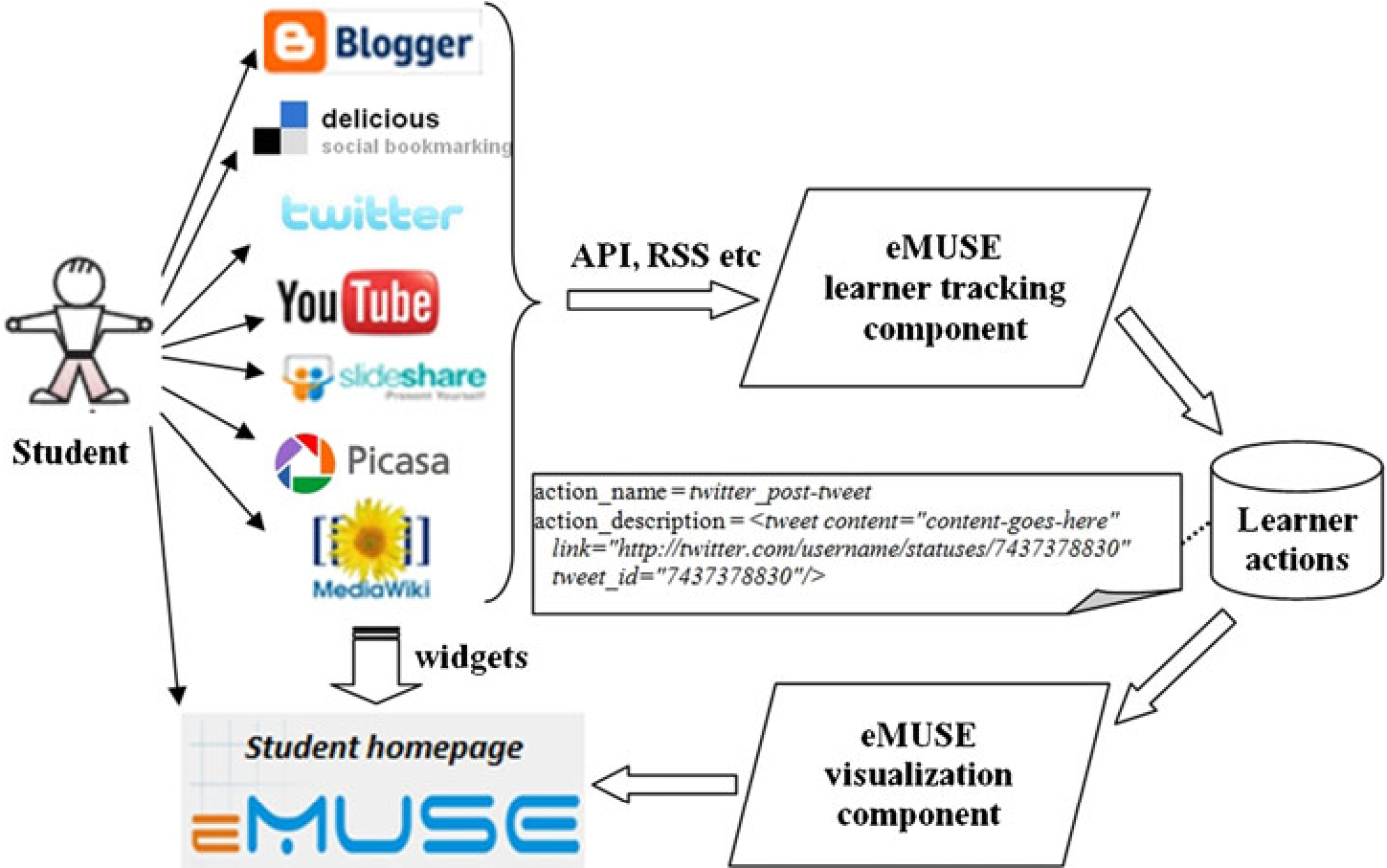 Figure 1: The eMUSE architecture showing the flow from external Web 2.0 APIs to the local Student/Instructor dashboard.
Experimental Validation: Project-Based Learning (PBL)
The platform was tested in a "Web Applications Design" course. Students were grouped into teams to build real-world clones of sites like Amazon or eBay.
Key Findings:
- Activity Volume: The Wiki was the most used tool, acting as the primary collaborative workspace, while Twitter served for quick status updates.
- The "Push" Factor: Students reported that seeing a peer's activity recorded on the dashboard "pushed" them to contribute earlier rather than waiting for the deadline.
- Self-Monitoring: The highest-rated feature (71.1% in Exp 1, 78% in Exp 2) was the ability for students to visualize their own progress.
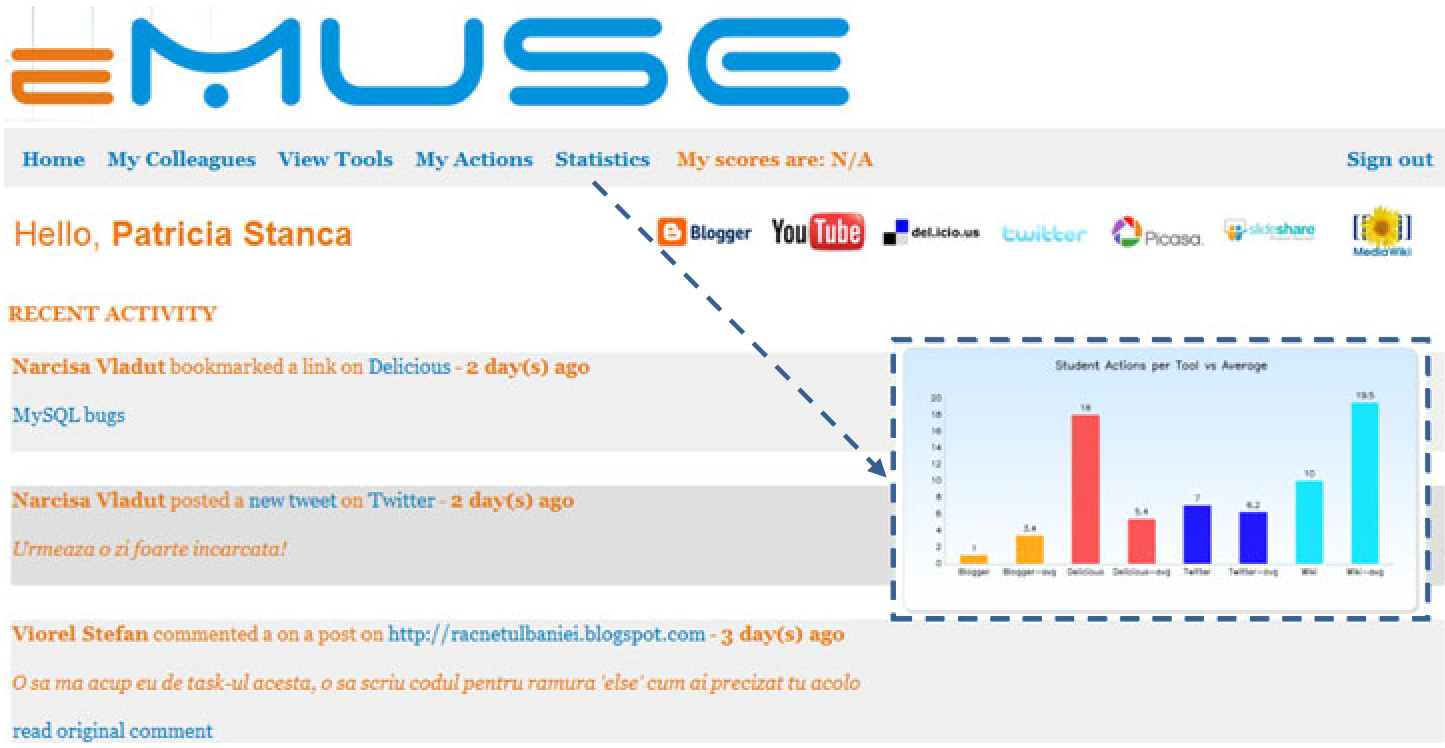 Figure 2: The Instructor perspective, providing a bird's-eye view of class engagement and individual student metrics.
Critical Analysis & Takeaways
The author candidly discusses the "Post Hunting" risk—where students might post low-quality content just to "game" the quantitative scoring system. To counter this, the paper suggests that automated scores must be paired with manual qualitative assessment.
Why it matters: Even in the era of AI, the core insight of eMUSE remains relevant: Learning is a social act. Providing students with "quick gratification" and a sense of "competitive community" through data visualization is a powerful psychological lever for engagement.
Future Outlook
The study concludes by suggesting the inclusion of Social Network Analysis (SNA) to map how students influence each other, and the incorporation of "quality components" (tags/ratings) to go beyond simple quantitative tracking.