
Collective Intelligence: The Missing Link in IT Service Quality Management
Collective Intelligence for Enhanced Quality Management of IT Services
The paper introduces a Collective Intelligence (CI) framework to enhance IT service quality management by integrating tacit human knowledge with enterprise data systems. Using the BizRay crowdsourcing platform, it captures expert insights on products, processes, and people to drive operational excellence in large-scale IT outsourcing.
TL;DR
In the hyper-complex world of IT outsourcing, "hard" data like server logs only tells half the story. The real "gold"—knowledge about process efficiency and tool defects—resides in the minds of thousands of global experts. This paper presents a systematic way to mine this tacit knowledge through Collective Intelligence (CI), integrating human insights directly into enterprise reporting systems to achieve a 30x boost in data collection efficiency.
The "Knowledge Gap" in Global IT Delivery
Modern IT outsourcing is a massive ecosystem featuring thousands of products and hundreds of thousands of staff members. While basic metrics like SLA (Service Level Agreement) compliance are easy to track, the experiential nature of services makes quality management difficult.
The authors identify a critical pain point: Tacit knowledge is not automatically discoverable. A database configuration can be scanned, but only an expert knows its practical importance or why a certain backup process consistently fails despite being "documented." Prior methods—like endless email threads or expensive consultant interviews—simply don't scale in a global factory model.
Methodology: Integrating Digital and Human Intelligence
The core of the paper is the integration of the BizRay crowdsourcing service with existing enterprise data. Unlike "open-call" crowdsourcing (like Wikipedia), this is targeted collective intelligence.
The Lifecycle of Insight
- Distributed Questionnaires: SMEs are engaged via dynamic workflows rather than static forms.
- Chains of Inquiry: If an expert no longer holds a role, they can delegate the task. This traces the "genealogy" of knowledge as people move across the organization.
- Automated ETL & Reporting: Human responses are mapped into an IBM Cognos-based reporting tool, allowing business analysts to treat human insights just like telemetry data.
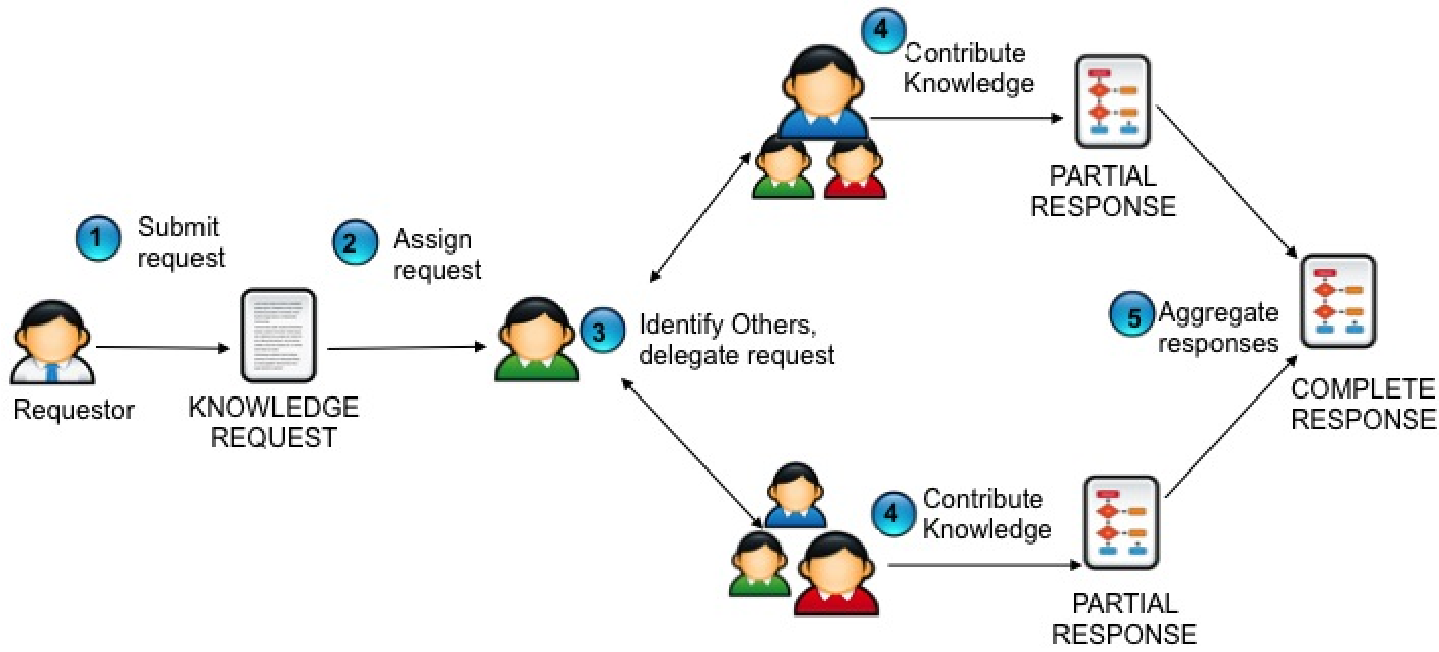 Figure 1: The framework for collaborative knowledge discovery, bridging the gap between distributed experts and centralized business intelligence.
Case Studies: Products, Processes, and People
The authors validated their CI approach across three distinct dimensions:
- Product Insights (Defect Prevention): By surveying 2,300+ quality analysts, they discovered that 60% of defect classification was manual. This "ground truth" provided a clear mandate for investing in auto-classification AI.
- Process Insights (Automation): By querying 90 system administrator "pools," they identified a mean time reduction of ~77 minutes per SME through existing (but previously uncatalogued) automation tools.
- People Insights (Compliance): They used CI to map access rights and audit trails across 128 delivery pools, identifying "micro-communities" of experts that the official org chart had missed.
 Figure 2: Integrating Collective Intelligence into the standard Defect Prevention process flow.
Critical Analysis: Why This Matters
The most profound insight here is the Auxiliary Value of collective intelligence. Beyond just getting an answer to a question (Direct Value), the system helps "discover" where the experts actually are. In a large enterprise, knowing who knows what is often more valuable than the data itself.
Limitations: The authors honsetly discuss "noise" in the data. With scale comes inconsistency. Some SMEs provide data in different units (minutes vs. hours), and others provide conflicting reports based on their specific account silos. This suggests that while CI is powerful, it requires a robust Quality Assurance layer to filter human error.
Conclusion
This work marks a shift from viewing IT services as a "black box" of servers to a "living system" of human expertise. By treating expert knowledge as a data source that can be ETL-ed and queried, IBM has shown how to scale the "wisdom of crowds" inside the corporate firewall. As we move deeper into the era of AI, these CI frameworks will likely become the primary labels for training the next generation of IT-specialized foundation models.
Key Takeaway: Don't just monitor your servers; "monitor" your experts' insights. Scalable knowledge discovery is the next frontier for SOTA IT Service Management (ITSM).