
Collective Intelligence: Solving the Human Perception Gap in Time-Critical Systems
Including collective intelligence in human-machine interactive decision-making under time constraints
This paper proposes a human-machine interactive decision-making framework that integrates "collective intelligence" to optimize stopping criteria under severe time constraints. By modeling behavioral patterns and risk-aversion, the methodology introduces "alert and confirm" functions to mitigate human misapprehension, achieving best alternative location for over 99.9% of decision-makers.
TL;DR
In high-stakes, time-sensitive environments, humans often suffer from "misapprehension"—the inability to perceive the optimal moment to act. This paper introduces a computational framework that leverages Collective Intelligence (group behavioral patterns) to design smarter human-machine interfaces. By implementing "alert and confirm" functions, the system can guide 99.9% of users to optimal outcomes by predicting the decay of decision quality over time.
Background: The Clock is Ticking
Whether it's an online support system or a transmission control procedure, decision-makers are constantly battling time constraints. The core academic challenge lies in the stopping criteria: when should a human stop searching for a better alternative and execute the decision? Traditional models often assume a "half-time" anchor (the midpoint of available time), but this neglects the complex interplay of marginal gain and psychological risk-aversion.
The Core Insight: From Individual Luck to Collective Logic
The author argues that while an individual’s perception is flawed, the behavior of a group under time pressure follows predictable distributions. By treating the maximal time constraints of many users as random variables, we can apply the Central Limit Theorem to find a "first approximation" of when most people will fail—and when the "best alternatives" are likely to be missed.
Methodology: Modeling Gain, Cost, and Learning
The paper breaks down the decision process into three distinct learning behaviors that impact the ratio of gain to time-cost:
- No-learning: The ratio decreases constantly.
- Forward-learning: The user scales down previous experiences into the remaining time.
- Backward-learning: A symmetrical reflection of previous repetitions.
The technical heart of the paper is the formulation of the Best Alternative Location: where is the total gain and is the time-proportional cost.
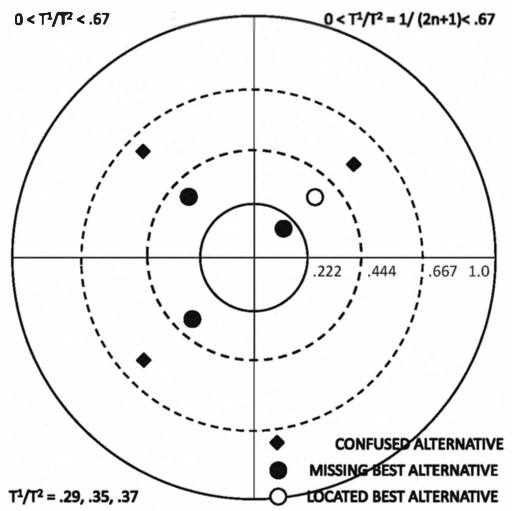 Fig 1: Visualization of Gain/Cost ratios under No-learning, Forward-learning, and Backward-learning.
Simulation: Proving the "Alert" Window
To validate the theory, the author simulated 30,000 random decision events using Exponential and Log-normal distributions. The goal was to see if a machine could predict the "misapprehension" window.
The results were striking:
- 99.9% of successes occurred when the system intervened during a specific window (0.22 to 0.33 of the larger time constraint).
- Statistical tests (Chi-square) confirmed that even if individual distributions varied, the collective behavior tended toward a predictable range where "Alert and Confirm" functions could save the decision.
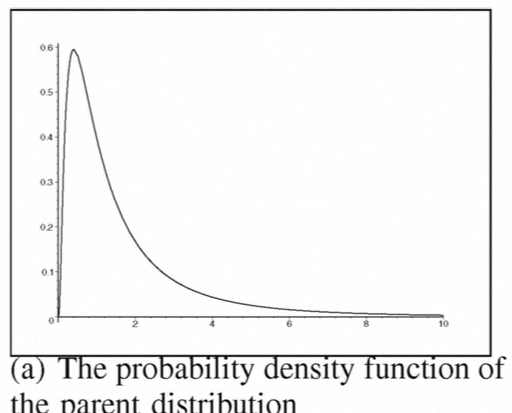 Fig 2: Simulation data showing how sample populations align with group behavioral models to mitigate perception errors.
Professional Insight: Why This Matters
The value of this research isn't just in the math—it's in the System Design philosophy.
- Inductive Bias: The system assumes users are risk-averse and will move toward equilibrium between time-spent and expected-gain.
- Proactive UX: Instead of a passive dashboard, the machine becomes a "guardian" that understands human cognitive limits.
Conclusion & Limitations
While the paper successfully identifies a high-confidence window for intervention, it relies on a specific premise of "equilibrium" which might not hold in highly chaotic or adversarial environments. Future research will need to test these "alert" functions in multi-agent environments where different users might have conflicting goals.
For developers of AI-driven cockpits or high-frequency trading interfaces, the message is clear: Don't just provide data; provide timing.