
Collective Intelligence: Transforming IT Services Through Enterprise Crowdsourcing
Collective Intelligence Applications in IT Services Business
The paper explores the application of "Collective Intelligence" (Enterprise Crowdsourcing) within IT services, presenting three real-world IBM systems: n.Fluent, BizRay, and IT-Stage. It proposes an organizational framework that categorizes crowdsourcing efforts based on service types, ranging from automated translation to complex infrastructure management and software development.
TL;DR
In the high-stakes world of IT outsourcing, human expertise is the most valuable yet hardest-to-scale asset. This paper by IBM Research introduces a systematic framework for Enterprise Crowdsourcing, shifting the paradigm from public "micro-tasking" to a structured internal ecosystem. By leveraging the collective intelligence of 30,000+ employees, IBM demonstrated that even complex tasks like software development and infrastructure discovery can be optimized through decentralized, intelligent human networks.
Problem & Motivation: The Knowledge Silo Challenge
Global IT services—encompassing automation, infrastructure, and application management—often suffer from information asymmetry. Key operational data (like server dependencies) is frequently "non-discoverable" by automated tools and resides only in the minds of specialized "siloed" experts.
The authors argue that while public crowdsourcing (e.g., Amazon Mechanical Turk) works for simple tasks, it lacks the contextual depth and regulatory compliance required for IT services. The challenge lies in designing a system that can effectively tap into "latent" (natural) skills and "orchestrated" (learned/professional) skills without disrupting the enterprise's core business processes.
Methodology: The "Shades of Collective Intelligence" Framework
The core contribution of this work is an organizational design framework that classifies crowdsourcing tasks into three "shades" based on their complexity and the nature of the human input required.
1. The Three Dimensions of Analysis:
- Origin of Input: Is the skill Latent (natural, e.g., bilingualism) or Orchestrated (learned through job experience or training)?
- Nature of Output: Is the result Auxiliary (data that feeds another process) or Direct (a final product, like a code module)?
- Size of Collective: Does the task require a "crowd" (N-to-1) or a "handful" (one-to-few) of specialists?
2. Deployed Applications at IBM:
The authors validated this framework through three distinct service types:
| Application | Service Type | Task Example | Skill Source |
|---|---|---|---|
| n.Fluent | Automation | Machine Translation Correction | Latent (Native Language) |
| BizRay | Infrastructure | Asset Inventory Discovery | Orchestrated (Job Experience) |
| IT-Stage | Application | Software Component Dev | Orchestrated (Learned Training) |
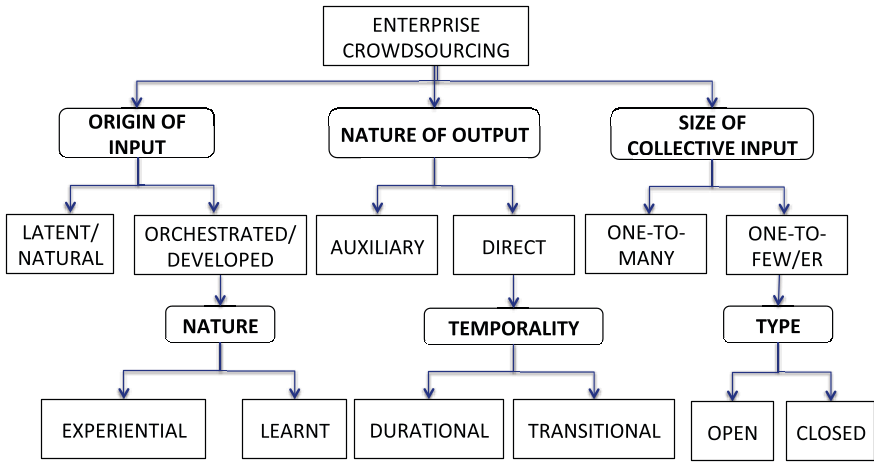 Figure 1: The interplay between individual actors and collective behavior in problem-solving.
Experiments & Results: Quantifying the "Crowd"
The efficacy of this framework was tested on a massive scale within IBM's global workforce.
- n.Fluent (The "Crowd" Success): Engaged 8,000 volunteers to translate 36 million words. By using gamification (virtual islands, leaderboards), they achieved a 5% to 20% improvement in translation engines.
- BizRay (The Efficiency King): Solved the bottleneck of manual data collection in IT audits. The distributed knowledge discovery approach improved process performance by up to 30x.
- IT-Stage (The Utilization Optimizer): Instead of developers having "idle time" between projects, they could pick up 5-10 day tasks. This significantly boosted utilization rates and provided a clear path for career development.
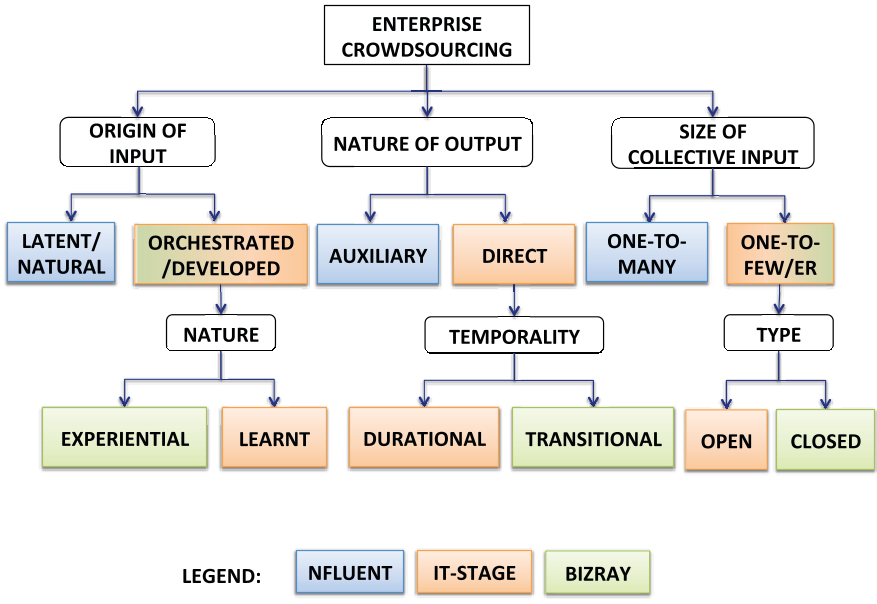 Figure 2: Comparing the properties of the three applications—note how BizRay requires high expertise but involves fewer participants.
Critical Analysis & Conclusion: The Evolutionary Path
The authors observe a fascinating evolutionary trend: enterprises should start with "Latent" skill tasks (like translation) which have low entry barriers and high participation, before attempting complex "Expert" tasks (like software components).
Key Insights:
- Incentives Matter: Social recognition (OCB) works for simple tasks, but material/performance-based rewards are necessary for expert-level contributions.
- Quality vs. Volume: For auxiliary tasks (n.Fluent), volume is king because errors can be aggregated out. For direct tasks (IT-Stage), rigorous peer review is non-negotiable.
- Limitations: The "transitional" nature of business knowledge (e.g., Peter knows the workaround, but Peter just left the company) remains a challenge for data freshness.
Future Outlook
This work sets the stage for "Proactive Process Diagnostics," where the business process itself identifies a knowledge gap and automatically engages the "crowd" to solve it. As IT services become more decentralized, the ability to orchestrate collective intelligence inside the corporate firewall will be the ultimate competitive advantage.