
Collective Intelligence: Powering Innovation in the Korean Telecommunications Industry
15245_An exploratory investigation of collective intelligence in new product development on the telecommunication industry.
This paper investigates the strategic utilization of Collective Intelligence (CI) for New Product Development (NPD) within South Korea’s major telecommunications providers. Using a qualitative case study and survey approach, it evaluates how different internal and external sources impact the novelty and feasibility of product concepts, achieving significant improvements in product divergence and quality.
TL;DR
As the telecommunications market matures and revenue per user stagnates, major Korean providers (KT, SKT, LGU+) are turning to Collective Intelligence (CI) to break internal silos. This research reveals that while internal employees are best for realistic product tweaks, "Lead Users" are the engine for radical, high-benefit product innovation.
The "Internal Expertise" Trap
In high-stakes tech industries, companies often fall into a trap: they rely solely on their internal R&D teams. While professional, these teams are often constrained by prior knowledge and corporate inertia. This paper identifies this as a critical bottleneck for the South Korean telecom industry, which is desperately seeking new business models like Cloud, IoT, and IPTV to offset declining traditional mobile revenues.
Methodology: Who Provides the Best Ideas?
The authors break down Collective Intelligence into three distinct "crowds":
- General Employees: Non-experts within the company.
- Lead Users: Advanced users who experience needs months before the general market and stand to benefit significantly from a solution.
- Ordinary Users: Typical customers with standard market needs.
The study mapped these sources against 10 Stages of NPD, analyzing which group adds the most value at which point.
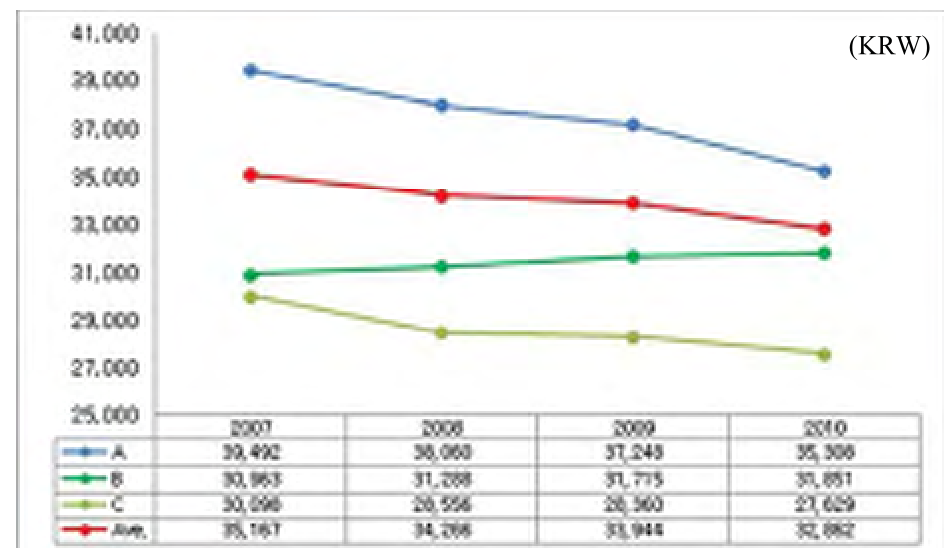 Figure 1: The strategic positioning of Collective Intelligence in the NPD funnel.
Key Insights: Novelty vs. Feasibility
The research utilized a 7-point scale to measure three critical variables: Novelty (Originality), Customer Benefit, and Feasibility.
1. The Lead User Advantage
Lead users are the undisputed champions of Novelty. Their ideas were rated significantly higher for radical innovation (creating completely new products) rather than just improving existing ones.
2. The Employee Reality Check
While general employees might not propose the most "flashy" ideas, their suggestions scored highest on Feasibility. They understand the company's technical limitations and infrastructure, making their input invaluable for "Existing Product Improvement."
3. The Timing of Intelligence
CI is not a "one-size-fits-all" tool. It peaks during the Idea Generation stage and the Testing/Pilot stage. Interestingly, it is less utilized during the "Business Analysis" or "Technical Training" phases, where specialized professional knowledge remains dominant.
 Figure 2: Comparing the impact of different intelligence sources on product quality.
Why Does This Work? (The Structural Enablers)
The paper emphasizes that CI doesn't happen in a vacuum. The success of companies like SK Telecom (with their "Idea Wiki") or LG Uplus (with "Blue Note") depends on:
- Organizational Culture: An open-minded environment that encourages sharing without fear of failure.
- Motivational Programs: Incentives for employees and customers to contribute.
- IT Systems: Robust Knowledge Management Systems (KMS) that can capture and filter thousands of ideas efficiently.
Critical Analysis & Conclusion
While the study provides a robust roadmap for telcos, it acknowledges a limitation: "Ordinary Users" were found to be less effective in this specific study, likely because they lack the technical foresight required for complex telecom services.
The Takeaway: If you want to build the "next big thing," find your Lead Users—the ones hacking your product to make it better. If you want to optimize your current stack, ask your non-tech employees.
Future innovation in the "6G" and "AI-everything" era will likely depend on how effectively these social layers are integrated into the technical core of the business.
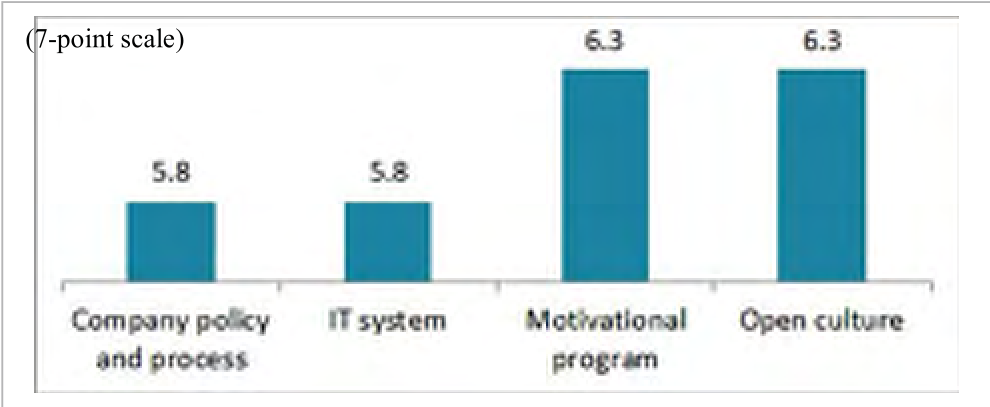 Figure 3: Mapping the degree of use across different types of NPD projects.