Collective Intelligence: A New Frontier in Digital Suicide Surveillance
Collective Intelligence for Suicide Surveillance in Web Forums
The paper proposes a specialized surveillance system designed to identify suicidal expressions in web forums by leveraging "Collective Intelligence." It integrates automated text retrieval, affect analysis, and a graph-based opinion summarization technique to distinguish high-risk threads from noise, ultimately facilitating timely intervention by public health professionals.
TL;DR
Monitoring web forums for suicidal intent is a "needle in a haystack" problem. This paper presents a system that doesn't just look at what a person says, but also at how the community reacts. By combining Affect Analysis (detecting emotions in the post) with Collective Intelligence (summarizing the "mainstream" response from other users), the system filters out the noise of the internet to help NGOs provide life-saving interventions more efficiently.
The Motivation: Moving Beyond Keyword Matching
Existing suicide prevention efforts on social media often fall into two traps: they are either purely manual (and thus impossible to scale) or they rely on simple keyword-based "expert systems" that fail to understand context.
The authors argue that web forums are a unique goldmine for public health. Unlike a static note, a forum thread is a living conversation. If a user expresses distress, the replies—whether they are supportive, dismissive, or even predatory—provide essential context that changes the "risk profile" of the original post. The challenge is: how do you programmatically distill thousands of comments into a single "opinion" that helps a machine make a better decision?
Methodology: The "Wisdom of the Crowd" Architecture
The system employs a sophisticated pipeline to transform raw HTML forum data into actionable insights.
1. Dual-Track Processing
The system splits every forum thread into two streams:
- Affect Analysis Path: Processes the original post to detect specific emotions like sadness, fear, or anger using Chinese lexical analysis (ICTCLAS).
- Collective Intelligence Path: Analyzes the replies to understand the community consensus.
2. The Graph-Based Filtering Algorithm
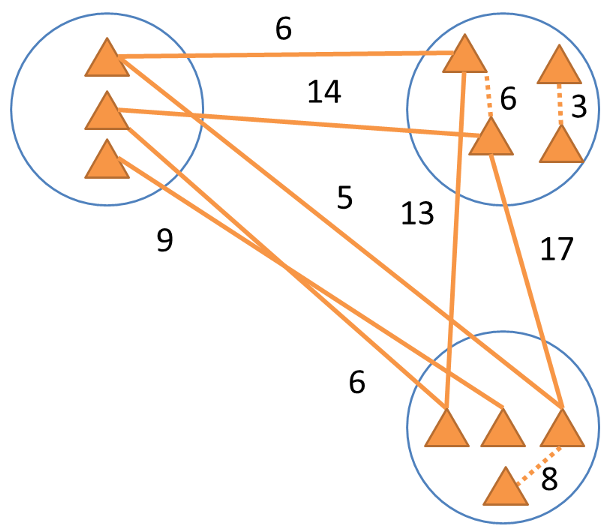
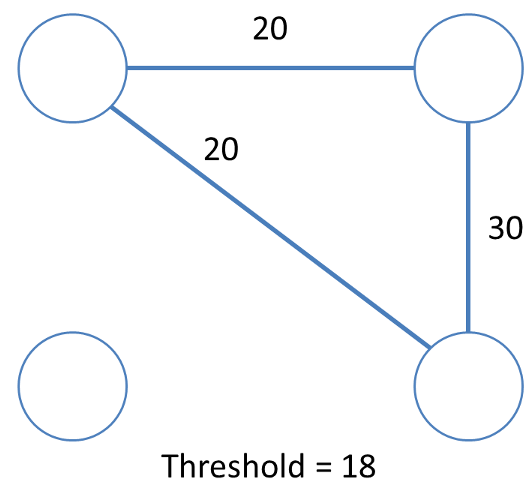
The core innovation lies in how the system handles comments. Instead of treating all replies equally, it builds a network of Author Nodes (AN) and Sentence Nodes (SN).
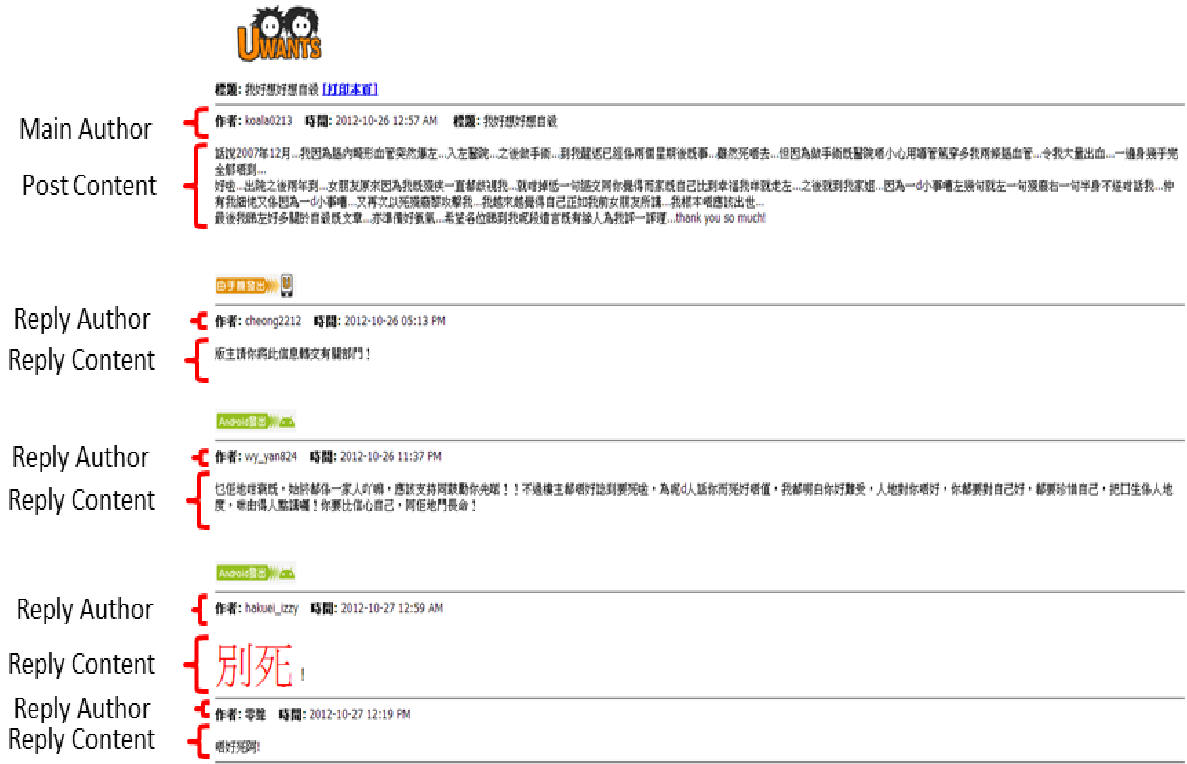
- Author Filtering: The system builds edges between authors based on shared keywords. Authors who don't contribute to the "mainstream" conversation (like the "Quick Finance" spammer in the paper's example) are detached from the graph and ignored.
- Sentence Summarization: Once the "main" group of authors is identified, it looks for overlapping sentences. If multiple people are expressing the same concern, the system picks the most representative sentence and discards the redundant ones.
Why This Matters: From Machine Learning to Human Synergy
The "Collective Intelligence" approach effectively turns regular internet users into unintentional gatekeepers. By analyzing their reactions, the AI mimics a social worker’s intuition—seeing the interaction rather than just the text.
In the paper's specific example, the system successfully filters out:
- Irrelevant Noise: A user talking about milk.
- Spam: A financial ad trying to take advantage of the user's distress.
- Redundancy: Multiple users saying, "Your parents don't understand."
By condensing these into a "mainstream opinion," the system provides a clean, summarized report to the helping professionals, allowing them to act quickly without reading through hundreds of toxic or useless replies.
Critical Analysis & Future Outlook
This work represents a vital shift toward context-aware AI. However, there are inherent challenges:
- The Sarcasm Problem: If a community reacts with sarcasm or "dark humor," a summarization system might misinterpret the threat level.
- Ethical Privacy: Surveillance, even for life-saving purposes, raises significant privacy concerns that will need to be addressed as these systems move from the lab to real-world NGOs.
The Takeaway: The next generation of public health tools won't just be "smarter" algorithms; they will be systems that can successfully harness the collective intelligence of the internet to protect its most vulnerable users.