
Engineering Social Norms: Using Game Theory to Eradicate Cyberbullying
Combating Behavioral Deviance via User Behavior Control
The paper proposes a novel framework to combat online deviant behavior, such as cyberbullying, using Graphical Evolutionary Game Theory (EGT). It introduces the Fast Behavior Control (FBC) algorithm, which dynamically adjusts social interaction parameters to eliminate bullying messages, achieving total eradication even when initial deviant content exceeds 60%.
TL;DR
Online harassment isn't just a text problem; it's a social contagion. This paper moves beyond simple NLP detection to treat cyberbullying as an Evolutionary Game. By strategically adjusting the "payoff" of social interactions, the authors' Fast Behavior Control (FBC) algorithm can force a toxic community to pivot back to healthy norms with minimal disruption to the user experience.
Background: Beyond the Filter
Traditional anti-bullying tools act like spam filters—they try to catch "bad" words. However, cyberbullying thrives on peer pressure. If your friends are aggressive online, you are up to 183% more likely to join in. The authors recognize that the social network is a dynamic system. To fix it, we don't just need better filters; we need to change the Evolutionary Stable State (ESS) of the community.
Problem & Motivation: The Contagion of Deviance
The core issue with online deviance is its "sinister" scalability. It isn't restricted by physical space. Prior work has focused on supervised learning to label offensive content. The gap? These methods don't stop the spread.
The authors hypothesize that by controlling the exposure of bystanders and the direct influence of bullies, they can shift the collective behavior of the network. They use Graphical Evolutionary Game Theory (EGT) to model this, turning a discrete social interaction into a continuous mathematical flow.
Methodology: The Math of Peer Pressure
The researchers define two strategies for users: B (Bullying) and N (Non-bullying).
The Payoff Matrix
They represent interactions using "chemical diagrams." For instance, when a Non-bullied user interacts with a Bully, the production of healthy messages is reduced by an α factor (peer pressure).

The key insight is Equation 25, which defines the velocity of "Healthy" message growth (). Depending on the payoff matrix, the system will naturally slide toward a Bullying-only state (Case III) or a Healthy-only state (Case I).
Fast Behavior Control (FBC)
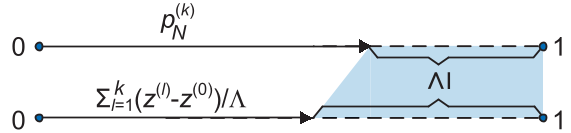
FBC is a greedy algorithm designed to relocate the "Rest Point" () of the system. If (healthy proportion) is below a certain threshold, the system collapses into toxicity. FBC temporarily adjusts parameters—like slightly delaying a bully’s message or altering the visibility of "likes"—to push the healthy proportion back above the "tipping point."
Experiments & Results: Turning the Tide
The team used a MySpace dataset (3,032 posts) to verify their theory. They found that bullies were actually more likely to be responded to than healthy users, creating a "toxicity trap."
Key Findings:
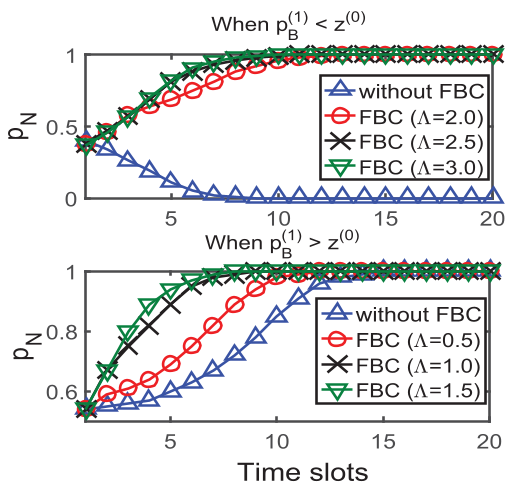
- Rapid Intervention: In threads where bullying was projected to hit 100%, FBC reversed the trend in just one time slot.
- Efficiency: In group 2 threads (at risk but recoverable), FBC improved the speed of returning to a healthy state by 122.2%.
- Resilience: The system effectively eliminated bullying even when starting from a point where 60% of the messages were aggressive.
Critical Insight & Conclusion
This paper is a masterclass in applying control theory to sociology. Instead of playing "Whack-A-Mole" with individual toxic posts, it offers a way to re-engineer the social environment.
Limitations: The current model assumes a homogeneous "clique" (everyone sees everyone). In reality, social networks are "small worlds" with complex clusters. Future work must address how to apply these controls to heterogeneous graphs where certain "Super-spreaders" of toxicity have more influence.
Future Outlook: We might soon see social platforms that don't just "delete" bad content but dynamically adjust visibility algorithms to ensure the community never crosses the tipping point into a "toxic equilibrium."