
CommenTV: Revolutionizing Video through Time-Sensitive Social Layers
CommenTV: A time-sensitive social commenting system for audiovisual content
CommenTV is a time-sensitive social commenting system that enables users to embed and synchronize rich media—including text, images, and videos—directly onto specific timestamps of audiovisual content. By leveraging an HTML5 overlay and social network integration, it transforms the traditionally passive "lean-back" TV experience into an interactive "lean-forward" social platform.
TL;DR
CommenTV is an innovative social layer for audiovisual media that moves beyond static text boxes. By anchoring comments—including images and videos—to specific timestamps, it creates a synchronized "shared watching" experience. It effectively bridges the gap between passive broadcasting and active social networking, allowing viewers to see what their friends think at the exact moment a scene unfolds.
Background & Positioning
In the landscape of social media, video has often remained a "one-way" street where interaction is relegated to a separate comments section at the bottom of the page. CommenTV, developed by researchers at MIT, represents a significant shift toward Social TV. It’s not just a UI tweak; it’s a re-imagining of video as a social bookmarking system where the community’s "Strong Ties" provide a filter for high-quality, relevant content.
The Problem: The Temporal Gap in Online Discourse
Standard commenting systems (e.g., DISQUS) are optimized for blogs, not moving images. They lack:
- Temporal Context: You can't easily see comments specifically about the 2-minute mark unless you scroll and search.
- Media Richness: Hyperlinks take you away from the video, breaking the immersion.
- Social Accountability: Anonymous, weak-tie interactions often lead to low-quality "noise" rather than meaningful discussion.
Methodology: The "Time-Space" Architecture
The authors draw inspiration from Marshall McLuhan’s concept of "clocks" as media that accelerate human association. The core of CommenTV is its time-based tagging and layered display.
1. The Interaction Layer
Instead of a sidebar, CommenTV uses an HTML5 layer on top of existing video players. This allows it to function as a plugin that doesn't require extra server space for the original video content.
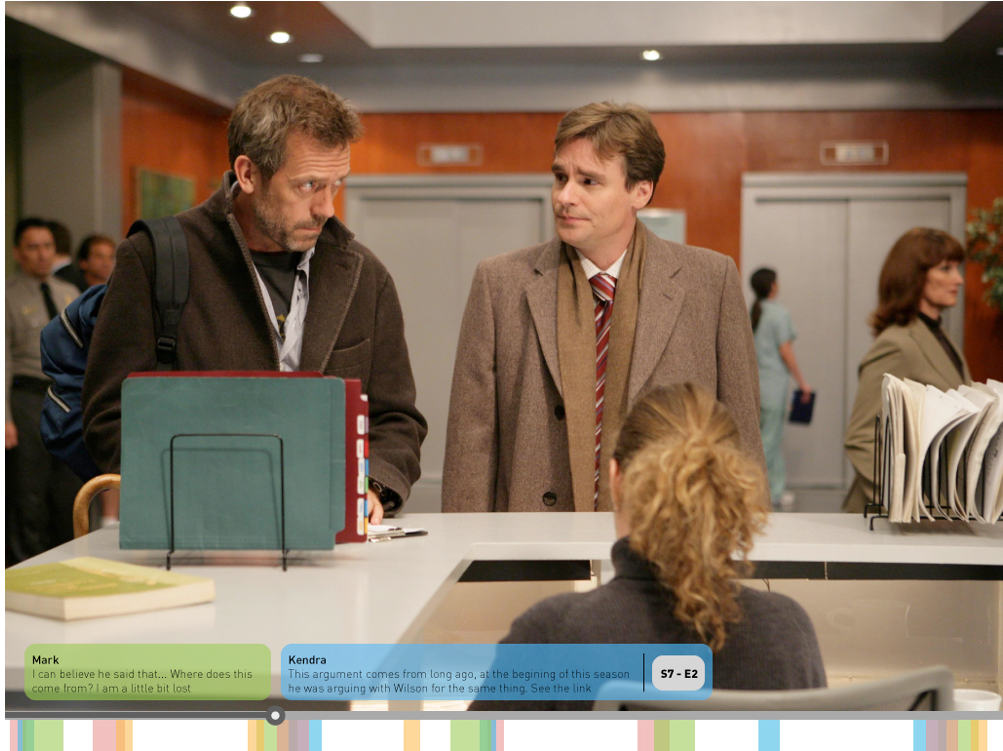 Figure 1: Example of the CommenTV interface showing time-synced social interactions.
2. Rich Media Integration
When a user clicks a "timed comment," the system can open an iFrame. If the comment links to a Wikipedia article or a Flickr image, the video automatically pauses, letting the viewer explore the extra context without losing their place.
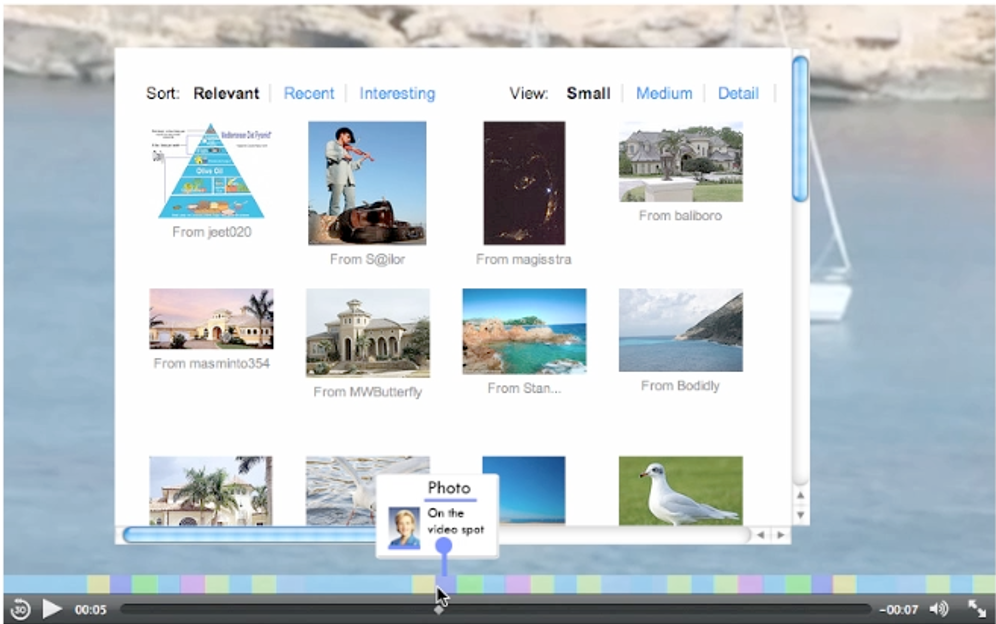 Figure 2: The comment layer pulling live content from Flickr images onto the video.
Business Opportunities: From Viewing to Consuming
One of the most compelling insights of the paper is the monetization potential. By knowing exactly what a user is interested in at a specific second, the system can deliver:
- Timed Coupons: Clicking a comment during a photography tutorial provides a discount for a camera.
- Social Group-buying: If multiple friends click the same product comment, they could trigger a "Groupon" style group discount.
Experimental Results & Social Impact
By comparing CommenTV to existing "weak-tie" systems (like Twitter widgets for TV), the authors argue that their "strong-tie" approach (focusing on friends' comments) creates a better user experience. They utilize a color-coded progress bar, similar to the "Hulu Heat Map," to show viewers where the "hot" discussion points are.
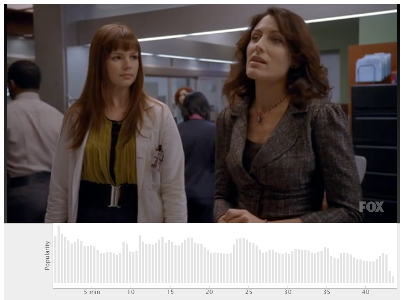 Figure 3: Visualization of comment density (Hulu Heat Map vs. BackType).
Critical Analysis & Conclusion
Takeaway
CommenTV successfully proves that the metadata of social interaction is just as valuable as the video content itself. It transforms the "Lean-back" experience of TV into an "Interactive Lean-forward" session.
Limitations
- Clutter: Too many comments can obscure the actual video (the "Nico Nico Douga" problem).
- Platform Fragmentation: The system currently works best on web-based HTML5 players but needs expansion for traditional set-top boxes.
Future Outlook
The authors suggest that future versions could integrate with RemoteTouch for smart-home environments, allowing users to interact with these social layers using gestures while sitting on a couch, perfectly blending social networking with traditional TV habits.