
CAT4: Enhancing Algorithmic Resilience via Common Value Auctions in Cultural Algorithms
11903_Using Common Value Auction In Cultural Algorithm to Enhance Robustness and Resilience of Social Knowledge Distribution Systems.
This paper introduces the Common Value Auction (CAT4) mechanism, a novel knowledge distribution strategy for Cultural Algorithms (CAs). It achieves significantly enhanced robustness and resilience compared to the established Weighted Majority (CAT2) method when solving dynamic optimization problems across linear and chaotic landscapes.
TL;DR
Current research in Evolutionary Computing is shifting from finding a "single best global optimum" to creating sustainable systems that can adapt to ever-changing environments. This paper presents CAT4, a new knowledge distribution mechanism for Cultural Algorithms that uses Common Value Auctions to significantly improve an algorithm's robustness (staying functional under stress) and resilience (bouncing back after a change).
Explaining the Intuition: Why Auctions?
In a Cultural Algorithm (CA), there are two main spaces:
- Population Space: Where individuals (agents) explore the problem.
- Belief Space: Where "Knowledge Sources" (KS) store the best traits found so far.
The hard part is Knowledge Distribution: How do you decide which Knowledge Source should influence which agent? If you always pick the same one, you lose diversity. If you pick randomly, you lose efficiency.
The authors argue that this is essentially an Allocation Problem. By treating the influence process as an Auction, Knowledge Sources "bid" for the right to guide an agent. This paper specifically looks at Common Value Auctions, where every bidder has some shared information about the agent's value, reflecting the reality of social networks.
Methodology: The CAT4 Architecture
The core innovation is the move from CAT2 (Weighted Majority) to CAT4 (Common Value Auction).
1. The Social Fabric
The algorithm doesn't treat agents as isolated points; they are arranged in a Social Fabric (e.g., Square, Hexagon, or L-Best networks). This structure is the "Common Value" information used in the auction.
2. The Bidding Process
In CAT4, a Knowledge Source's bid is not just based on its own performance. It is adjusted by an Expert System rule:
- The Rule: If a Knowledge Source (KS) influenced an agent in the past, OR if it is currently influencing that agent's neighbors, its bidding power is boosted.
- The Physics: This mirrors social "trust" or "relevance." If a mentor helped you or your friends recently, they are likely to have the right knowledge for your current situation.
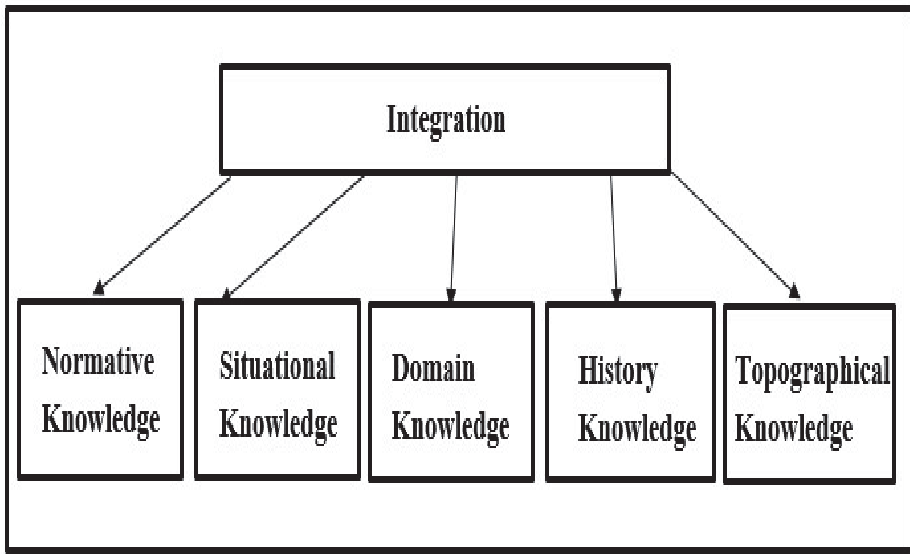 Fig 1: The Cultural Algorithm framework showing the interaction between Belief Space and Population Space.
Experiments: Testing in "Cones World"
To test if CAT4 is truly more resilient, the authors used a Dynamic Landscape Generator. Imagine a map with 100 cones; as the algorithm runs, the height and location of these cones shift according to a mathematical function (controlled by parameter ).
- Static: (Slow, predictable movement)
- Periodic: (The environment oscillates)
- Chaotic: (Wild, unpredictable shifts)
Key Results
The study compared CAT4 against the previous SOTA, Weighted Majority (CAT2).
| Complexity (A) | CAT4 (R²) | CAT2 (R²) | Improvement |
|---|---|---|---|
| Periodic (3.35) | 0.541 | 0.170 | +218% |
| Chaotic (3.99) | 0.147 | 0.212 | Mixed |
While CAT2 performed slightly better in pure chaos (where no history-based strategy works well), CAT4 was vastly superior in structured dynamic environments (Periodic). It showed a much higher correlation between the landscape shifts and its adaptation speed, meaning it "learned" the pattern of change.
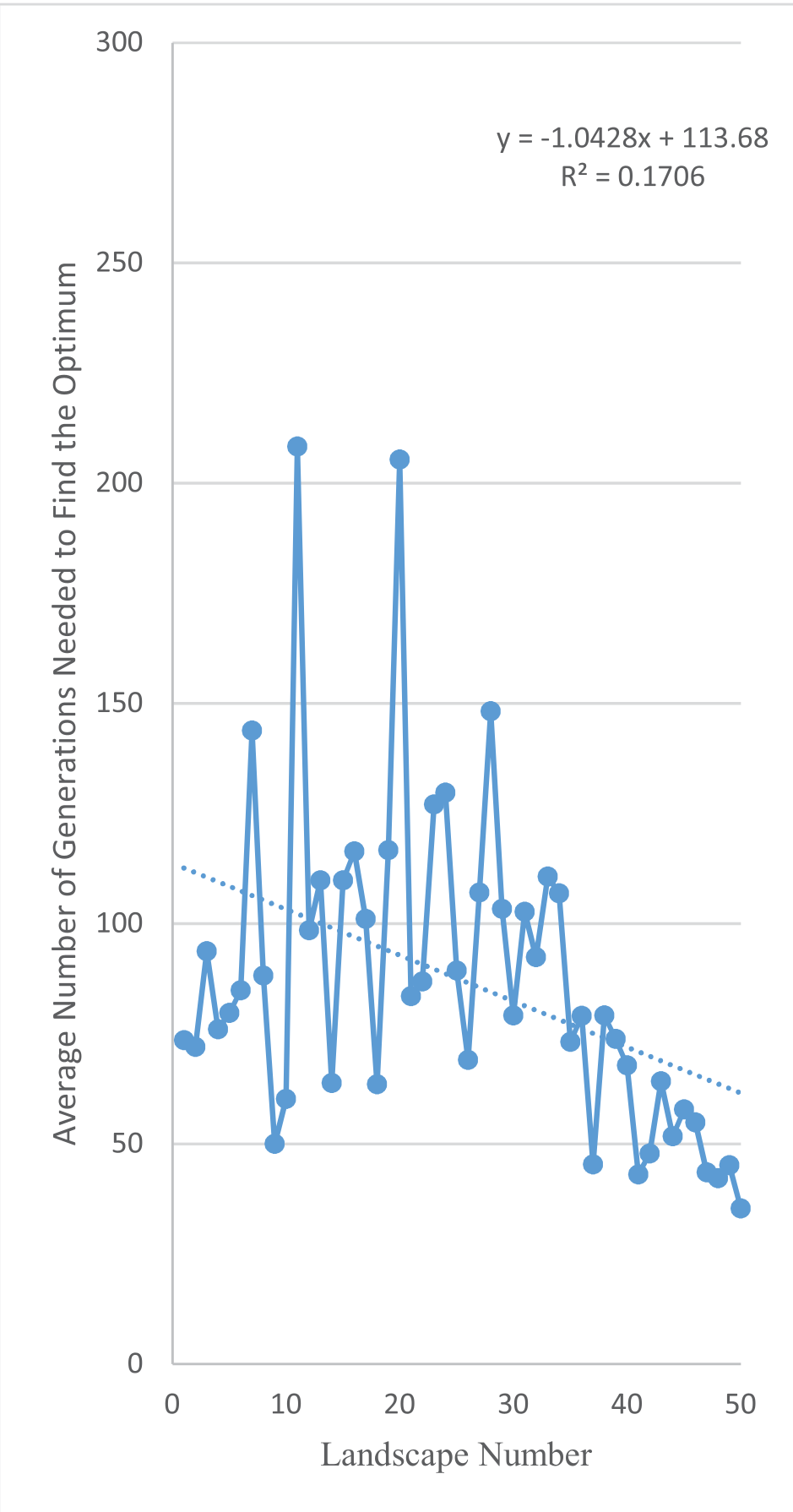 Fig 2: Regression analysis showing how CAT4 (above) maintains a tighter fit to the moving optima compared to CAT2.
Critical Analysis & Professional Insight
Why it Works
The success of CAT4 lies in its Inductive Bias. By rewarding KSs that are "socially relevant" (influencing neighbors), the algorithm creates a localized consensus. This prevents the "oscillation" problem where different agents are pulled in too many contradictory directions by competing knowledge sources when the environment changes.
Limitations
The paper notes that in the Chaotic regime (), even CAT4 struggles. When the environment changes faster than the "social memory" can update, the common value information becomes "noise." In these cases, a more "exploratory" or "random" distribution might actually be safer—a classic Stability-Plasticity dilemma.
Final Takeaway
CAT4 proves that Social Knowledge—knowing who helped whom—is just as important as Objective Knowledge (the fitness values). For researchers building AI for real-world robotics or dynamic signal processing, this highlights that social-inspired communication protocols can be the key to algorithmic resilience.