
Enhancing Scholar Connections: A Community-Based Approach to Academic Recommendations
Community-Based Scholar Recommendation Modeling in Academic Social Network Sites
This paper introduces a community-based scholar recommendation model for Academic Social Network Sites (ASNSs) like SCHOLAT. By constructing weighted graphs from user research fields and applying the Louvain method for community detection, the system recommends "core network members" using a novel Friendship Score that integrates content similarity, node degree, and common interests.
Executive Summary
TL;DR: Researchers behind the SCHOLAT platform have developed a recommendation engine that moves beyond simple profile matching. By grouping scholars into "communities" based on research fields and using a multi-factor "Friendship Score," the system successfully identifies influential peers who are often overlooked by traditional text-based algorithms.
Positioning: This work serves as a practical implementation of community detection theory (specifically the Louvain method) applied to the specific domain of academic social networking, bridging the gap between social network analysis and personalized recommendation systems.
The "Lonesome Expert" Problem
Traditional recommendation systems in Academic Social Network Sites (ASNSs) suffer from a major flaw: Content Dependency. If a lead researcher has a sparse profile or describes their "Deep Learning" work as "Neural Pattern Recognition," standard TF-IDF models might fail to connect them with relevant peers.
These "core members" are vital to the health of an academic network, yet they are often invisible to algorithms that only look at keywords. The authors argue that the structure of the network—who shares which research tags and how they cluster—contains the hidden signals needed to bridge this gap.
Methodology: From Tags to Tribes
The proposed model follows a sophisticated pipeline to transform raw profile data into actionable recommendations.
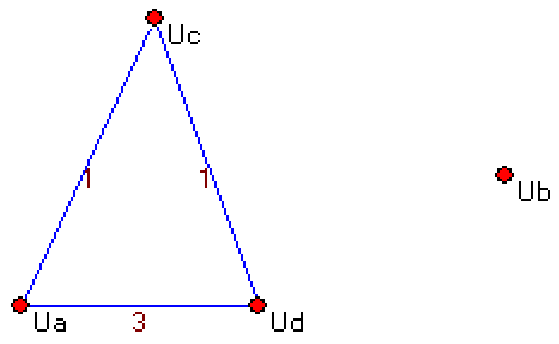
1. Research-Fields-Based Graph Construction
Instead of just looking for exact string matches, the model uses WordNet to measure semantic similarity between research tags.
- Nodes (): The scholars.
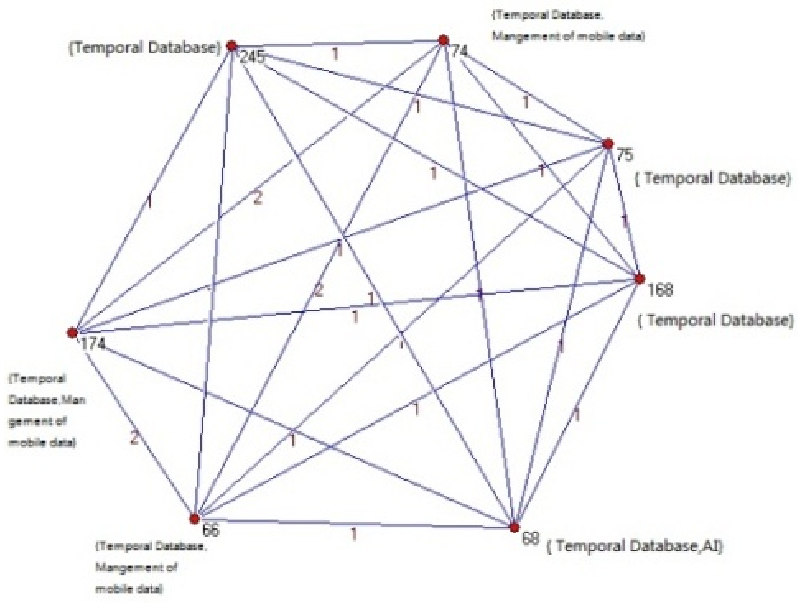
- Edges (): Created if two scholars share a research interest.
- Weights (): The number of shared interests.
2. Community Detection via Louvain Method
The authors utilize the Louvain method to maximize Modularity (). High modularity indicates a network with dense internal connections but sparse external ones—essentially identifying "silos" of expertise (e.g., a "Social Network Analysis" tribe vs. an "Artificial Intelligence" tribe).
3. The Friendship Score ()
The secret sauce is the formula, which balances three distinct factors:
- : Classical Cosine Similarity (What you say).
- : Node Degree/Centrality (How influential you are in the community).
- : Edge Weight (The overlap of your specific interests).
Experimental Validation
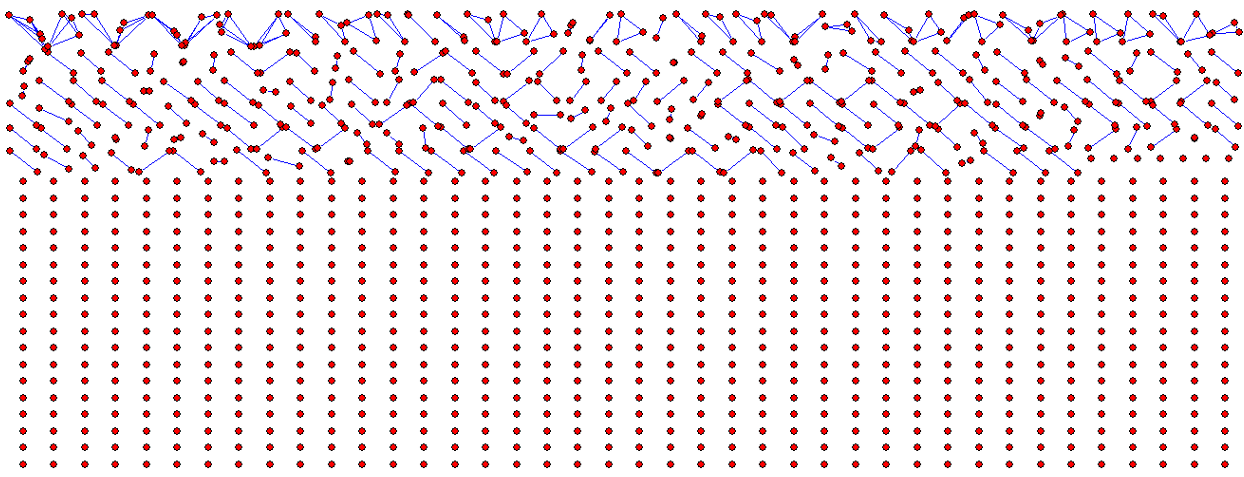
Using a snapshot of the SCHOLAT network from July 2013, the authors mapped out 1,542 communities across 2,236 nodes.
Key Findings:
- Core Member Visibility: In Community 'a', a highly influential user (User 17) was successfully ranked higher for User 203 by the model compared to content-only models.
- Overcoming Sparsity: The model effectively recommended "core" members even when their text-based similarity scores were low, provided they held central positions within the research community.
Critical Insight & Future Outlook
The primary value of this paper lies in its Inductive Bias: it assumes that academic value is not just in what you know, but where you sit in the collective knowledge graph.
Limitations: The current model relies on self-reported tags. In the future, the authors plan to incorporate automated keyword extraction from published papers to further reduce reliance on manually filled profiles. Additionally, as ASNSs scale to millions of users, the computational cost of global modularity optimization will require more distributed graph processing approaches.
Conclusion: By treating an academic network as a collection of specialized communities rather than a monolithic database, recommendation engines can move closer to mimicking real-world networking: finding the right person, in the right field, at the right time.