
Designing in the Wild: Breaking the Workshop Barrier in Rural CSCW
10635_Community engagement for research contextual design in rural CSCW system development.
This paper explores "Research in the Wild" for rural CSCW (Computer-Supported Cooperative Work) through a case study of a farmers' market portal in West Wales. It introduces an adapted methodology combining Action Research, Ethnography, and Soft Systems Methodology (SSM) to foster stakeholder engagement in non-institutional settings.
TL;DR
Innovation doesn't always happen in a lab or a slick office workshop. This paper argues that for technology to truly serve rural communities, researchers must "decamp" from the lab and embed themselves in the "messy" social fabric of the real world. By studying a farmers' market in Wales, the authors demonstrate how Contextual Design and Action Research must be adapted to foster trust and engagement where traditional methods fail.
Problem: The Failure of the Laboratory Mindset
Most Participatory Design (PD) assumes a "captive audience"—employees in a company or students in a room. However, when moving IT into the "fabric of everyday life," specifically in rural areas, these 9-to-5 structures collapse. Rural stakeholders face:
- Logistical Hurdles: Poor travel infrastructure and sparse connectivity.
- Economic Pressures: A market trader cannot leave their stall for a two-hour design workshop.
- Social Complexity: Distrust of "outsiders" and the presence of multiple languages (English and Welsh).
The paper identifies that the "invisible work" of engagement is often overlooked, yet it is the pivot upon which the success of any community-based system turns.
Methodology: The "Embedded Regular" Approach
The authors didn't just visit the market; they became part of the "fixtures and fittings" of the site. They moved through several methodological phases:
1. The Ritual of Induction
Trust wasn't gained through credentials, but through being there. As one stakeholder noted: "We didn’t think you were serious until you kept coming back." This "ritual" validated the researchers as genuine participants in the market culture.
2. Conceptual Triggers vs. Vision Statements
Instead of formal specifications, the researchers used an iPad to show simple logo concepts and wireframes. These acted as "engagement tools" to spark co-reasoning and debate, allowing traders to respond to something concrete rather than abstract theories.
3. Iterative Spatial Strategy
A key insight was the "Anatomy of Failure" regarding a fixed research stall. When the researchers set up a stall in one corner, traders from other areas wouldn't visit because of territorial boundaries. The solution? Moving to the center of the market—a "no-man's land"—which signaled accessibility to all.
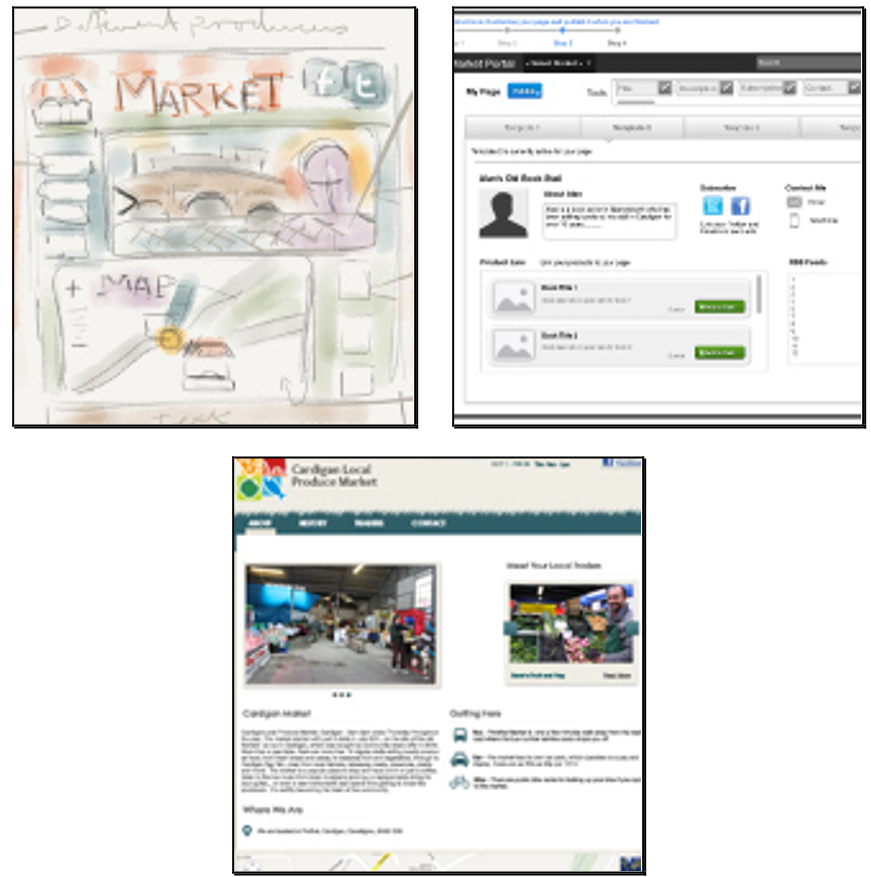 Figure 1: The progression from concept sketch to wireframe and mock-up for the Market Portal.
Experiments & Results: Action Research in Practice
The researchers combined high-level political support (local MPs) with "technical altruism." By helping traders set up Facebook or Trip Advisor accounts, they provided immediate value, which lowered the barrier to participation in the larger Market Portal project.
The "Spacial Layout" of the market (Figure 2) was not just a map, but a social blueprint for engagement.
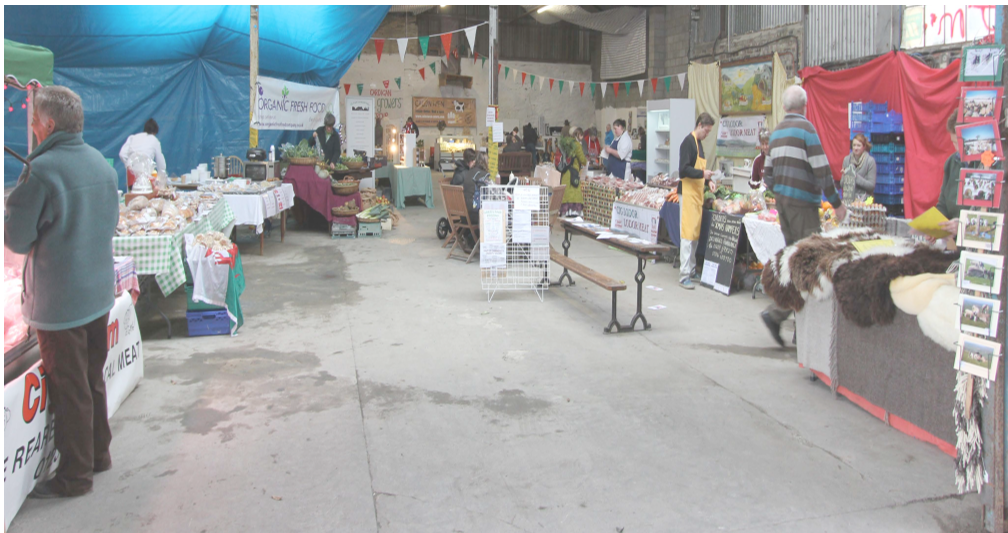 Figure 2: The physical and social mapping of the stallholders, crucial for determining where "neutral ground" lay.
Key Outcomes:
- Agility over Planning: They replaced the traditional "Design-Implement-Test" loop with rapid, parallel workflows that could adapt when traders were busy or when requirements shifted unexpectedly.
- Prioritization: They learned to abandon "cool" features (like sensors) that the community didn't value, focusing instead on tools that drove "footfall" and business.
Critical Analysis & Conclusion
This paper serves as a vital reminder that in Human-Computer Interaction (HCI), the "Human" and the "Context" are often more complex than the "Computer."
The Takeaway: Designers must be ready to "design the engagement strategy" as much as the product. If your users won't come to your workshop, you must take the workshop to them—not as an intruder, but as a "market regular" who understands the rhythm of their day.
Limitations: The study is highly localized to a specific Welsh rural context. While the approach is generalizable, the specific tactics (like using local politicians) may vary greatly in different cultural or urban settings.
Future Work: How can these intensive ethnographic methods be scaled? The challenge for future researchers is maintaining the "deep trust" of embedded research while working across multiple, perhaps digital, communities simultaneously.