
MSN-D2D-CoMP: Turning Interference into Cooperation in Mobile Social Networks
On CoMP Transmission for Device-to-Device Communications in Mobile Social Networks
This paper proposes MSN-D2D-CoMP, a novel coordinated multipoint (CoMP) transmission scheme for Device-to-Device (D2D) communications within Mobile Social Networks (MSN). By utilizing the Control and Data Planes Separation Architecture (SARC), it enables multi-device cooperation to mitigate interference and achieves a significant Spectral Efficiency (SE) improvement of approximately 38.4% over conventional paired D2D.
TL;DR
As mobile social networks (MSN) become more dense, the interference between Device-to-Device (D2D) links becomes a bottleneck. This paper introduces MSN-D2D-CoMP, a scheme that applies CoMP (Coordinated Multipoint) transmission to D2D links by leveraging a split control/data plane architecture (SARC). The results show a massive 38.4% average boost in Spectral Efficiency (SE), proving that social-driven proximity can be harnessed for better connectivity.
The Problem: The High Cost of Proximity
In modern heterogeneous cellular networks (HCNs), D2D communication is a double-edged sword. While it allows for high-speed local data exchange by reusing spectrum, it creates a chaotic interference environment.
Traditional D2D models use "pairing"—one transmitter talking to one receiver. When many users gather (high "social centralization"), these pairs interfere with each other and with the base stations (BS). Standard architectures struggle to fix this because coordinated transmission requires precise CSI and signaling, which is hard to manage in a decentralized D2D setup.
The Innovation: Control-Plane Separation meets Social Logic
The authors propose a shift in both architecture and serving logic:
- Architecture (SARC): By separating the Control Plane (handled by a unified base station) from the Data Plane (handled by devices or local BSs), the network can coordinate multiple devices to serve a single user.
- Social-Aware Modeling: Unlike uniform distribution models, this paper uses a power-law distribution for device distances. This reflects reality: people in social networks cluster together.
- MSN-D2D-CoMP Scheme: A device isn't just served by one partner; it is served by a cluster of devices (or BSs) whose average signal power exceeds a threshold .
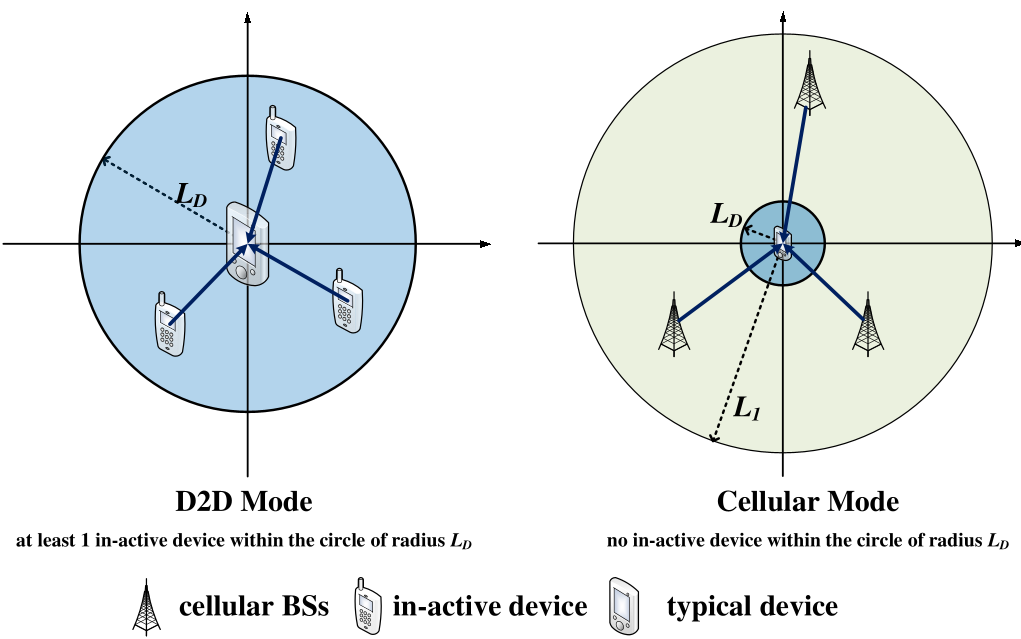 Fig 1: A typical D2D-enabled network where the user can be served by multiple nodes simultaneously.
Methodology: Stochastic Geometry Analysis
The researchers didn't just simulate; they used Stochastic Geometry (specifically Poisson Point Processes) to derive the SE for a K-tier network. This allows for a mathematical understanding of how density () and social clustering () impact the bottom line.
The received SINR is modeled for both D2D and Cellular modes, considering the aggregated power of the CoMP cluster against the interference of the "complementary set" (all other nodes).
Experimental Results: The Social Gain
The study reveals a few critical insights:
- CoMP vs. Paired D2D: As the selection threshold decreases (meaning more devices join the cooperation cluster), the SE of MSN-D2D-CoMP continues to rise. In contrast, paired D2D peaks and then fails because it can only pick one device, even if that device is far away and causes high interference.
- The ρ Impact: As social relations get closer (higher ), the gain of CoMP grows. In highly centralized social scenarios, the SE gain reached over 60%.
- Density Resilience: While traditional D2D suffers as more devices are added (due to interference), MSN-D2D-CoMP thrives because it can recruit those extra devices into the serving cluster.
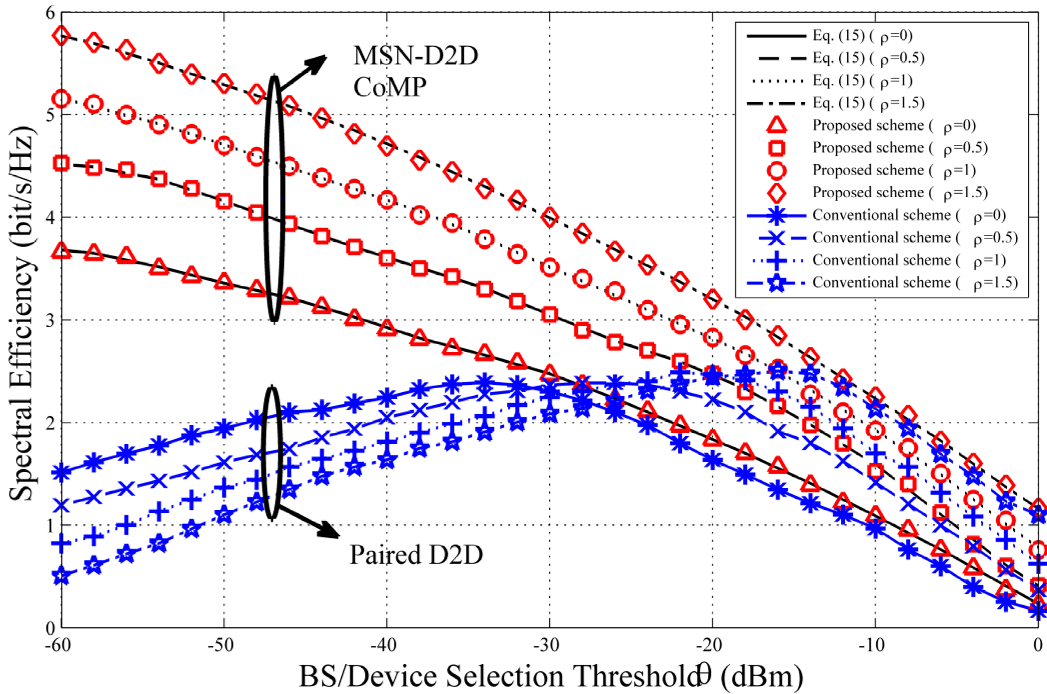 Fig 2: Performance comparison showing the clear advantage of CoMP over traditional pairing as the threshold varies.
Critical Insight & Conclusion
This paper effectively argues that the future of D2D isn't just about "connecting two phones," but about creating an ad-hoc cooperative fabric.
Takeaway: The "Social" in MSN isn't just a use-case; it is a physical layer advantage. Using SARC to manage social clusters through CoMP effectively turns the "interference problem" of dense networks into a "diversity gain" for the community.
Future Work: The authors note that the overhead of this signaling and the latency involved in coordinating multiple moving devices remains a challenge to be solved in future radio resource management (RRM) studies.