
The Cultural Paradox: Why Most Software Process Improvements Fail
Competing values in software process improvement: an assumption analysis of cmm from an organizational culture perspective
This paper performs a critical assumption analysis of the Capability Maturity Model (CMM) through the lens of the Competing Values Framework (CVF). It identifies institutionalized contradictions in the CMM and People-CMM (P-CMM) that lead to a staggering 70% failure rate in Software Process Improvement (SPI) initiatives.
TL;DR
The Capability Maturity Model (CMM) is the gold standard for software excellence, yet 70% of SPI programs fail. This paper argues the failure isn't technical—it's cultural. By analyzing the CMM through the "Competing Values Framework," the authors expose a fundamental conflict: CMM tries to build "learning organizations" using the rigid tools of "mechanistic bureaucracies."
The Hidden Friction in SPI
Software Process Improvement (SPI) is often marketed as a neutral, technical evolution. However, the authors posit that SPI is actually a hostile intervention in organizational culture. Most organizations approach CMM with a "Rational" mindset—focusing on productivity and efficiency—but neglect the "Social" fabric of their teams.
The core problem? The CMM views software development as a predictable factory line, while in reality, it is a complex, creative, and non-routine human activity.
Methodology: The Culture Lens
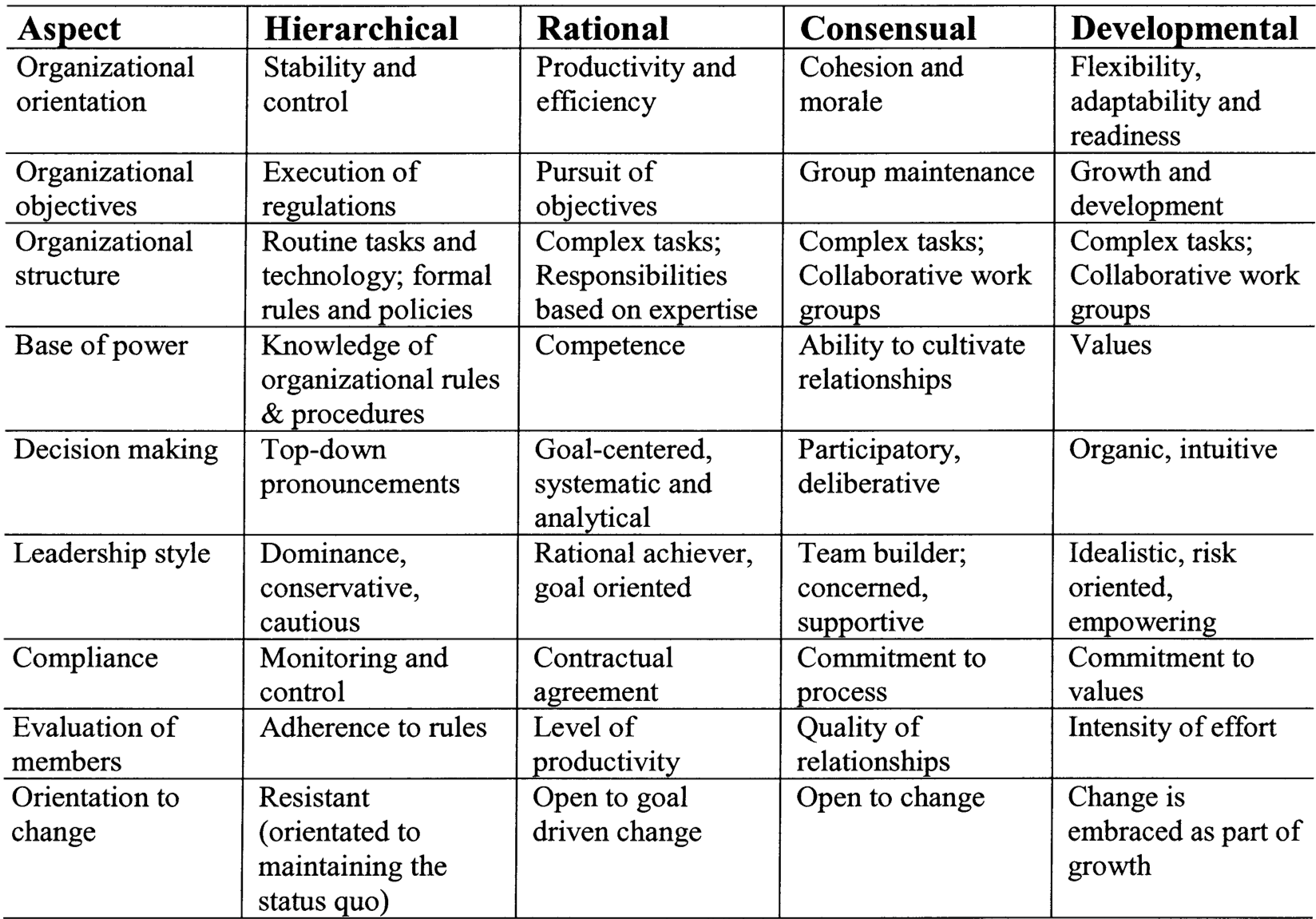
The authors used the Competing Values Framework (CVF) to categorize the "DNA" of the CMM. The CVF defines four archetypal cultures:
- Rational: Goal-oriented, focused on productivity.
- Hierarchical: Rule-oriented, focused on stability.
- Consensual: Relationship-oriented, focused on morale.
- Developmental: Innovation-oriented, focused on growth.
Theoretical Contradictions: The "Drift" to Hierarchy
One of the paper’s most striking findings is the "cultural drift" within the SW-CMM.
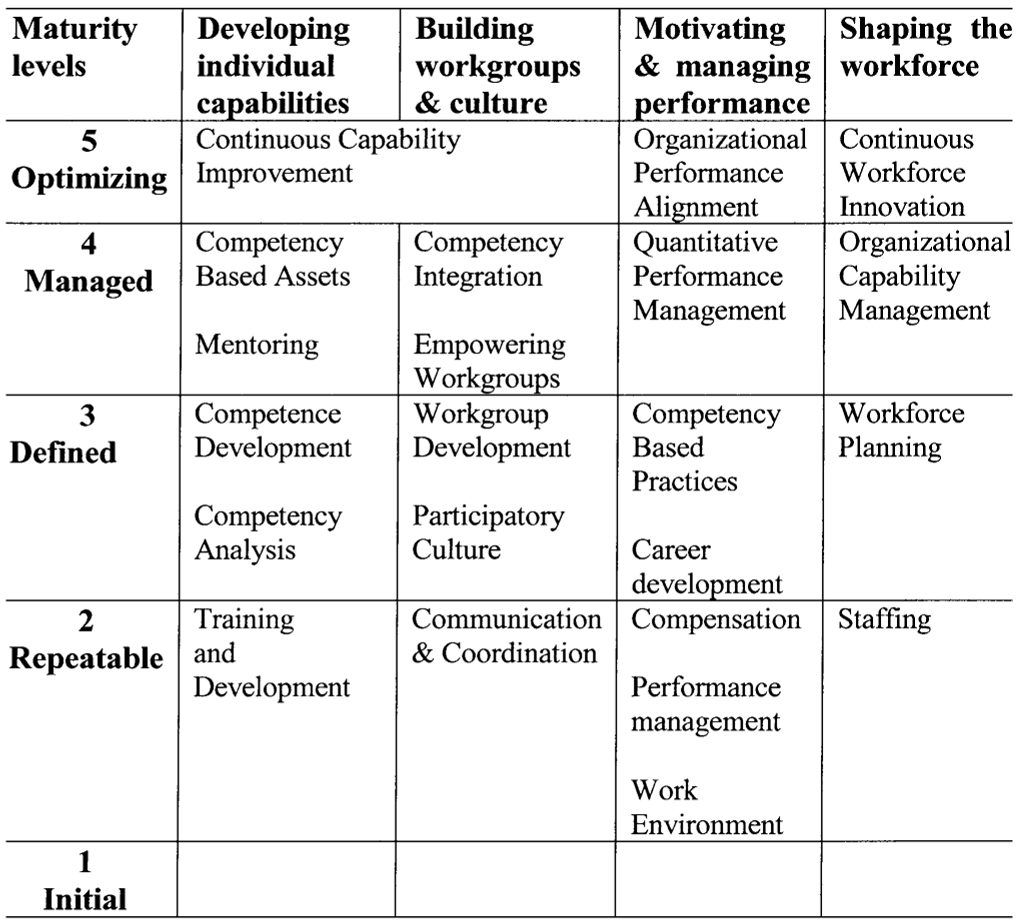
- Initial Levels (1-3): The model is Rational. It sets goals (Key Process Areas) and expects contractual compliance.
- Higher Levels (4-5): Instead of becoming more flexible, the model drifts toward a Hierarchical ideal. Quantitative management and statistical process control treat the organization like a machine that must be "controlled" within a zone of quality.
This creates a paradox: to reach the "Optimizing" stage (Level 5), an organization often becomes more rigid and rule-bound, which can stifle the very innovation it seeks to foster.
The P-CMM Conflict: Mixed Signals
When the SEI introduced the People CMM (P-CMM) to address the "human element," they inadvertently created more confusion.
- SW-CMM tells managers to focus on Rules and Goals (Rational/Hierarchical).
- P-CMM tells managers to focus on Empowerment and Participation (Consensual/Developmental).
As the authors note, "teamwork" in CMM isn't true democratic consensus; it is "compliance to the process" masked as collaboration. This inconsistency leaves managers and developers caught between two antagonistic worlds.
Experimental Analysis of the CMM "Artifacts"
The authors performed a deep dive into over 1,200 pages of CMM documentation. Their word-frequency analysis confirms the bias:
- "Goal" appears 683 times.
- "Measure/Measurement" appears over 560 times.
- "Empower" appears only twice in the entire SW-CMM.
This quantitative evidence supports the "Rational-Hierarchical" dominance. The "Developmental" culture—which embraces change as a natural part of growth—is effectively missing from the model's implementation steps, even if it is mentioned in the "Executive Summary" as an ultimate goal.
Critical Insight: Move Toward "Professional Bureaucracy"
The authors conclude that CMM's "Standard Process" approach leads to over-bureaucratization. They suggest a different path: Mintzberg’s Professional Bureaucracy.
Instead of standardizing the process (which kills flexibility), organizations should standardize skills and competence. Like a hospital or an elite engineering firm, the "Professional" model relies on trust and high-level skill sets rather than thick rulebooks.
Conclusion & Key Takeaway
The high failure rate of SPI isn't because developers are "resistant to change" or lazy; it's because the CMM framework contains fundamental cultural contradictions. If your organization is trying to implement CMM, you must decide: Are you building a machine (Hierarchical) or a community of professionals (Developmental)? You cannot easily do both with the current CMM toolkit.
Editor's Note: This paper remains a seminal warning for those attempting to scale Agile or DevOps today—technical maturity without cultural alignment is a recipe for expensive failure.