
Transforming Facebook Noise into Strategic Signal: Ontology-Driven CI for TELCOs
Competitive Intelligence Using Domain Ontologies on Facebook of Telecommunications Companies of Peru
The paper introduces a Competitive Intelligence (CI) framework specifically designed for the telecommunications sector (TELCO) in Peru, leveraging Facebook data. The core method utilizes a custom-built domain ontology to classify over 1.4 million comments and 15,000 posts, enabling semantic search and competitor benchmarking.
TL;DR
In the hyper-competitive Peruvian telecommunications market, social media is a goldmine of strategic data—if you can read between the lines. This paper presents a structured Competitive Intelligence (CI) system that uses domain-specific ontologies to automatically categorize over 1.4 million Facebook interactions, allowing executives to perform semantic searches and side-by-side competitor benchmarking.
Context: The Data Wealth vs. Insight Poverty
With mobile subscriptions exceeding the national population in Peru, TELCOs like Movistar and Claro are in a constant "war of promotions." Although social media data is public and legal to harvest, it usually remains "dark data" because typical keyword searches fail to capture the nuance of service bundles (e.g., distinguishing a "prepaid unlimited voice" promotion from a "postpaid data" one).
The Core Innovation: A Semantic Backbone
The researchers argue that Competitive Intelligence is not just about data scraping; it is a recursive process of giving meaning to data. To achieve this, they built a specialized TELCO Ontology.
1. Methodology: The Four-Phase Cycle
The authors refined a standard CI cycle into a specialized pipeline:
- Collection: Harvesting 15,634 posts and 1,411,921 comments using Python and Facebook’s Graph API.
- Ontology Creation: Instead of pure machine learning, they used expert knowledge to define 27 core concepts (Voice, SMS, Data, Rate Plans) and 119 identifying words.
- Classification: A semantic engine that maps unstructured posts to the ontology concepts.
2. Strategic Visualizations
The "Dissemination" phase is handled by a Web application that transforms raw counts into strategic insights through:
- Word Tree Interfaces: Allowing decision-makers to "drill down" from broad concepts (Services) to specific offerings (Unlimited 4G).
- Event Timeline Analysis (ETA): Comparing post frequencies and sentiment shifts over years to see how competitors react to market changes.
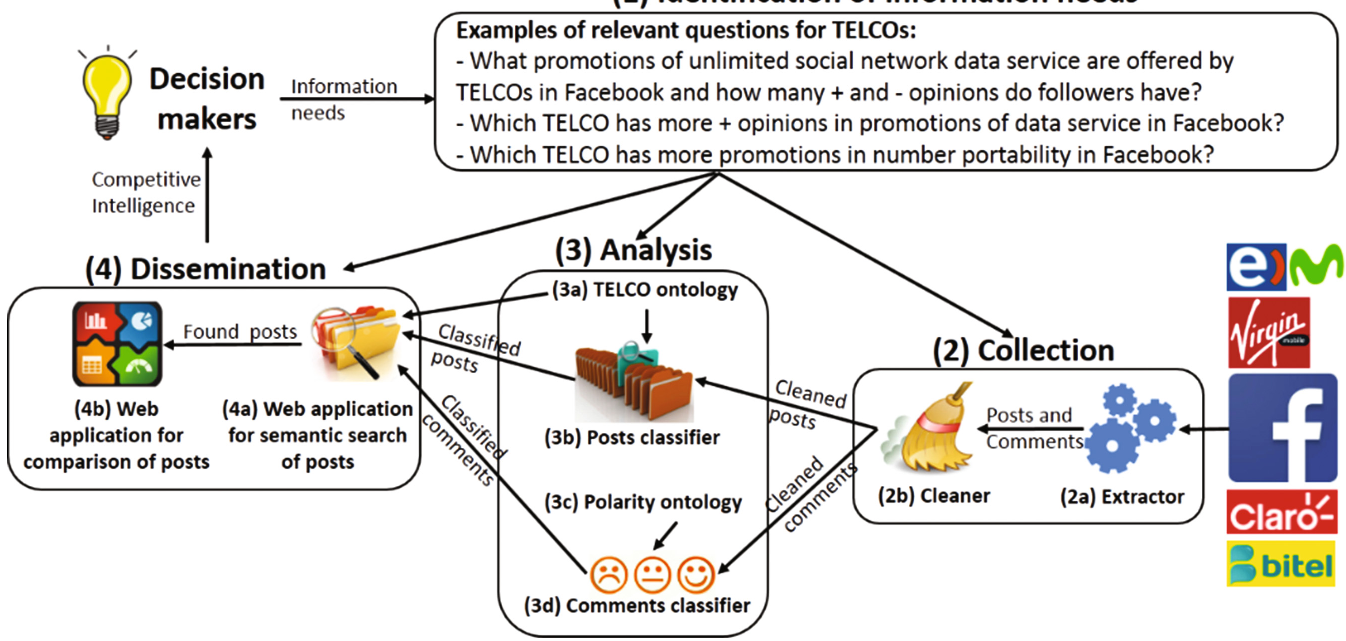 Figure 1: The proposed CI architecture from extraction to decision support.
Experiments & Results
The efficiency of the ontology-driven approach is remarkable. By manually analyzing just 110 posts (0.7% of the total), the authors were able to build an ontology capable of accurately classifying 67% of the entire 15,634-post dataset.
| Metric | Total Count | Size on Disk |
|---|---|---|
| Cleaned Posts | 15,634 | 4.79 MB |
| Cleaned Comments | 1,411,921 | 240.30 MB |
| Ontology Concepts | 27 | - |
| Classification Rate | 67% | - |
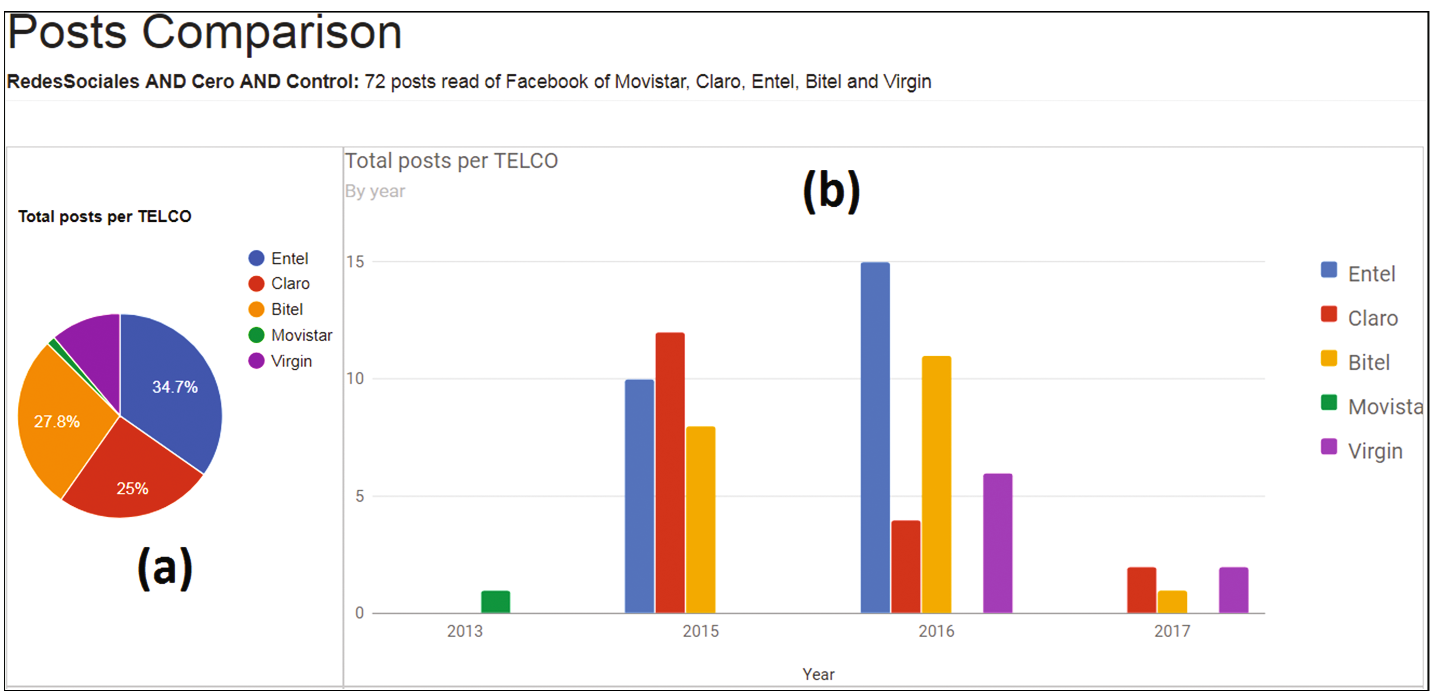 Figure 2: Visual Comparison of post volume across competitors (Movistar, Claro, Entel, Bitel, Virgin) over time.
Critical Analysis & Professional Insight
Why this matters
The strength of this approach lies in its Interpretability. Unlike "Black Box" Neural Networks, an ontology-based system tells the decision-maker exactly why a post was classified as a "Prepaid Voice Promotion." This transparency is vital for corporate strategy where the cost of a "false positive" insight can lead to millions in misallocated marketing spend.
Limitations & Future Directions
While successful, the system currently misses 33% of posts. The authors plan to:
- Refine the Logic: Increase the classification rate to 90% by incorporating more "negative" descriptors (what a service is not).
- Sentiment Integration: Complete the "Polarity Ontology" to automatically tag comments as positive or negative, allowing for an "Impact Score" for every competitor's promotion.
- Real-time Granularity: Shifting timelines from yearly to monthly views to detect rapid "price war" shifts.
Conclusion
This study bridges the gap between Academic Ontology and Practical Business Strategy. By providing a "controlled vocabulary" for the Peruvian TELCO market, the authors have turned Facebook from a chaotic message board into a structured laboratory for market analysis.