
Detecting COVID-19 Deception: Why the Source Network Matters More Than the Words
Complex Network and Source Inspired COVID-19 Fake News Classification on Twitter
The paper proposes a novel source-based framework for COVID-19 fake news classification on Twitter by integrating complex network measures and user profile features. Utilizing models like CATBoost and RNN, the method achieves a state-of-the-art AUC score of 98% by analyzing the connectivity patterns of news propagators rather than relying solely on content.
TL;DR
Researchers have developed a "Source-Inspired" model for Twitter that detects COVID-19 fake news with 98% accuracy. By shifting focus from what is said to who is spreading it and how they are connected, the model identifies the architectural fingerprints of misinformation communities using complex network science and machine learning.
Context: The Limitations of Content-Based Detection
During the COVID-19 infodemic, traditional fake news detection hit a wall. Content-based filters are easily fooled by high-quality deceptive writing, and propagation-based models often detect fake news only after it has already gone viral—rendering them "too little, too late."
The authors of this paper argue that misinformation is a social phenomenon. Malicious actors don't just post news; they build communities. The core insight here is that fake news propagators exhibit connectivity patterns (like dense, small, highly connected clusters) that are fundamentally different from those of legitimate information sharers.
Methodology: The Architecture of an Echo Chamber
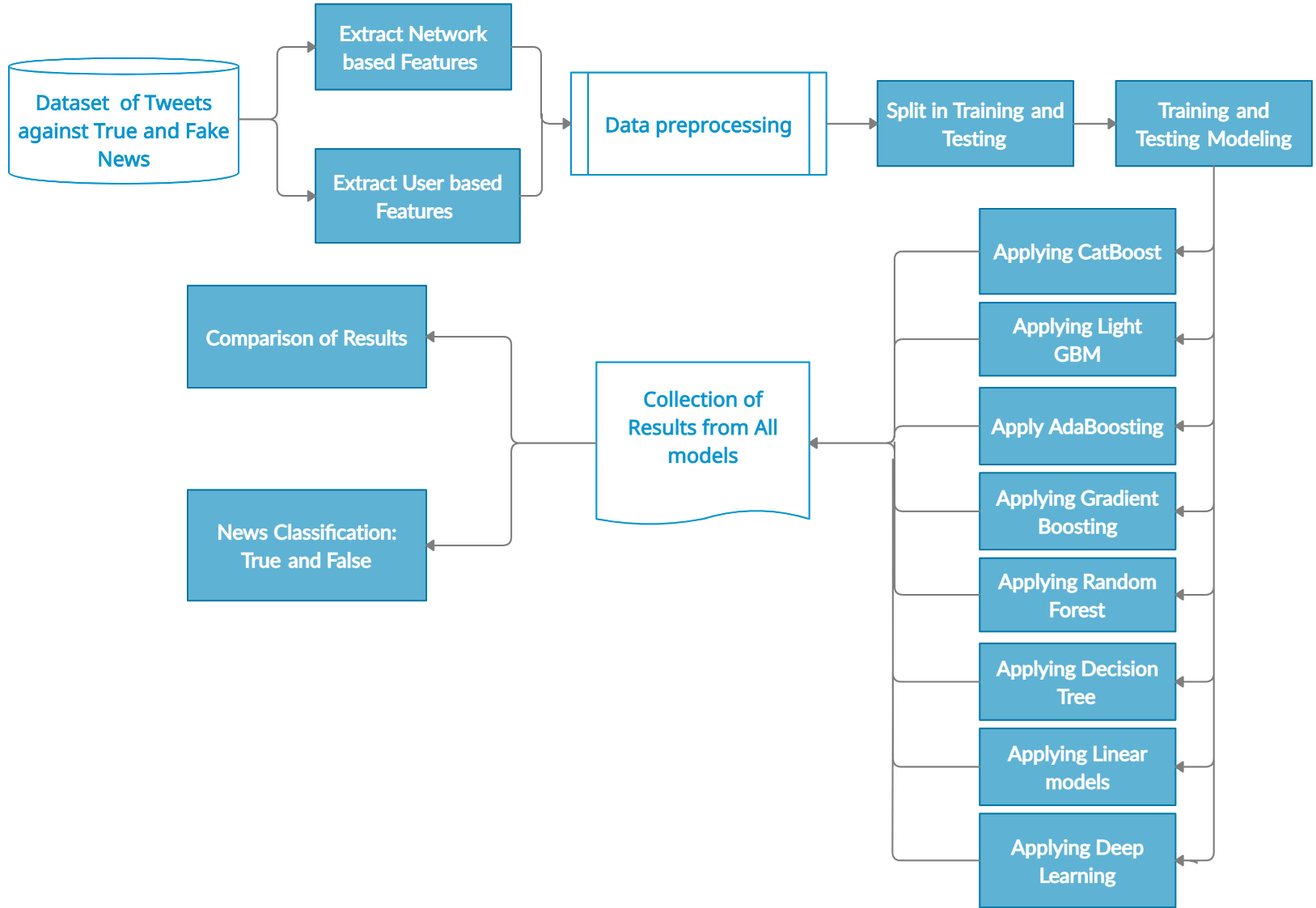
The framework (referred to as Approach II) uses a hybrid feature set that merges two worlds:
- Complex Network Measures: Capturing topological features such as Average Clustering Coefficient, Betweenness Centrality, and PageRank.
- User Profile Features: Analyzing account age, followers count, and the critical "Bot Score."
The researchers built a custom COVID-19 dataset and processed it through four distinct experimental configurations, ranging from node-level analysis to community-wide aggregation.
Why the Hybrid Approach Works
The study found that while user profiles help identify bots, they aren't enough to catch "human" spreaders of fake news. However, when combined with network metrics, the models can identify the structural "Echo Chamber" effect. Fake news communities tend to be smaller, denser, and more interconnected than real news networks, which are often more fragmented and large-scale.
Experimental Results & SOTA Performance
After testing 11 machine learning algorithms and two deep learning architectures (RNN and CNN), the CATBoost and RNN models emerged as the winners.
- Accuracy: 98.4%
- AUC Score: 0.98
- Domain Transfers: The model maintained >91% accuracy when tested on non-COVID datasets like PolitiFact (Politics) and GossipCop (Entertainment), suggesting the structural "fingerprint" of fake news is universal.
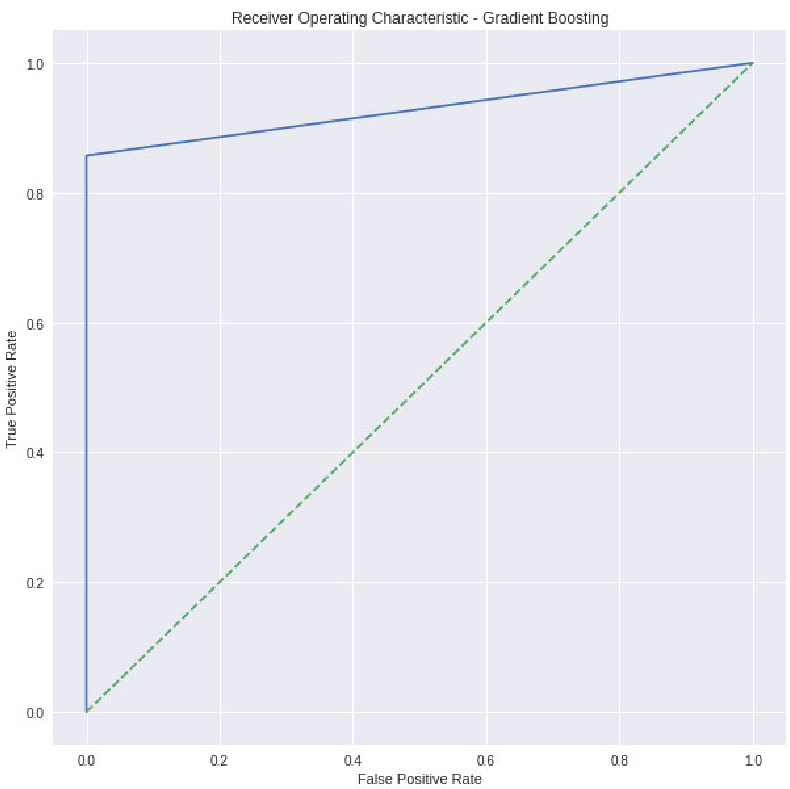
The ablation study (MDI analysis) revealed that Average Degree, Clustering Coefficient, and Eigenvector Centrality were the most dominant predictors, proving that the geometry of the network is the most potent weapon against disinformation.
Visualizing the Difference
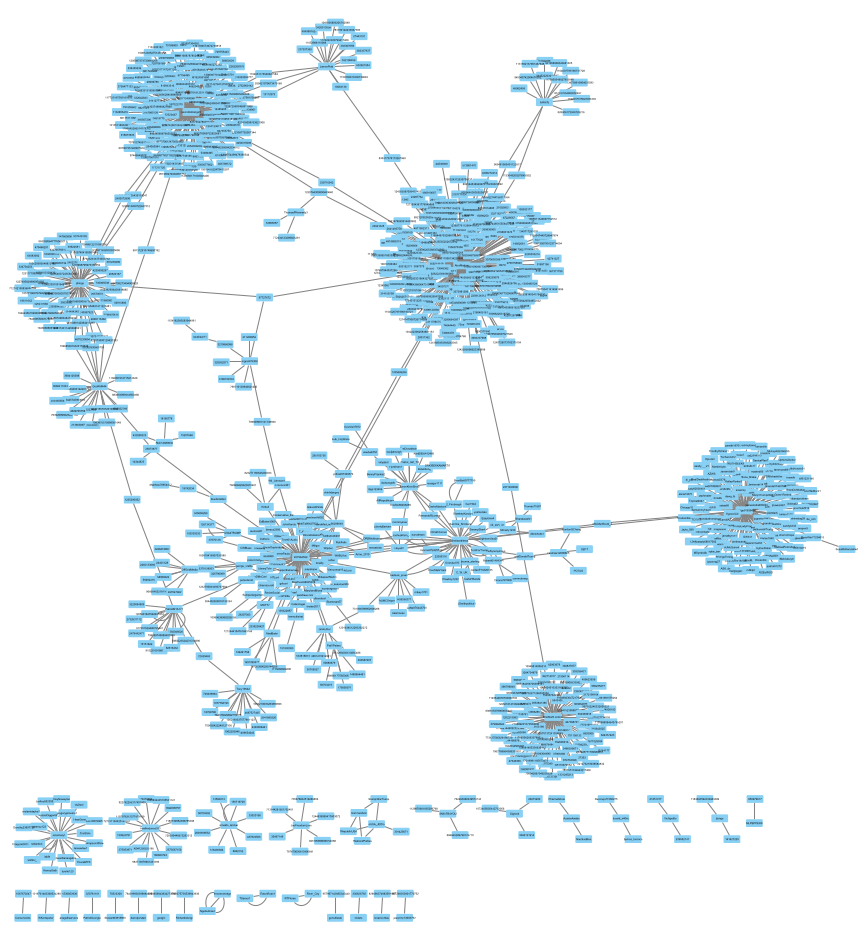
One of the most compelling aspects of this research is the visual contrast between news "types."
- Fake News Communities: Denser, highly connected, and localized.
- True News Communities: Larger, more distributed, with many disconnected components.
Critical Insight & Conclusion
This paper shifts the paradigm of fake news detection from "NLP-heavy" to "Graph-heavy." By treating the Twitter follower-following graph as a physical manifold where misinformation lives, the authors provide a scalable, fast, and domain-agnostic solution.
Limitations: The model relies on Twitter's API to fetch follower data, which is increasingly restricted. Future work will likely need to explore "zero-knowledge" network detection where only visible interactions (likes/retweets) are used instead of full follower lists.
Takeaway: In the battle against the infodemic, the "who" and "how" are finally proving more important than the "what."