
Complicating History: A Deep Dive into the Social Networks of the Three Kingdoms
Complicating the Social Networks for Better Storytelling: An Empirical Study of Chinese Historical Text and Novel
This paper presents a comparative empirical study of Chinese historical narratives using "Records of the Three Kingdoms" and "Romance of the Three Kingdoms." The authors employ a BERT-based deep learning framework to extract characters and social networks, achieving over 90% extraction accuracy to analyze the divergence between historical accounts and literary fiction.
TL;DR
By applying state-of-the-art NLP (BERT) and Social Network Analysis (SNA), researchers have quantified the difference between history and fiction. The study reveals that the legendary novel Romance of the Three Kingdoms intentionally complicates character relationships and polarizes sentiments to achieve higher "literariness" compared to the factual Records of the Three Kingdoms.
Motivation: Why Compare History with Fiction?
The story of the Three Kingdoms is a cornerstone of East Asian culture. However, the distinction between the historical facts (the Records) and the fictionalized drama (the Romance) has always been a qualitative discussion for historians. The authors of this study sought a quantitative answer: How does a novelist transform dry history into an epic? The core insight is that the "complexity" of the character network is the key metric of literary craftsmanship.
Methodology: Bridging NLP and Network Science
The researchers faced a common challenge in Digital Humanities: Small Data. To train a robust character extraction model, they utilized:
- BERT + SQuAD: Transforming speaker identification into a Machine Reading Comprehension (MRC) task.
- Data Augmentation: Generating over a million samples to fine-tune the BERT-Base-Multilingual model.
- Dynamic Network Slicing: Breaking the text into five chronological stages to observe how the social structure "grows" over time.
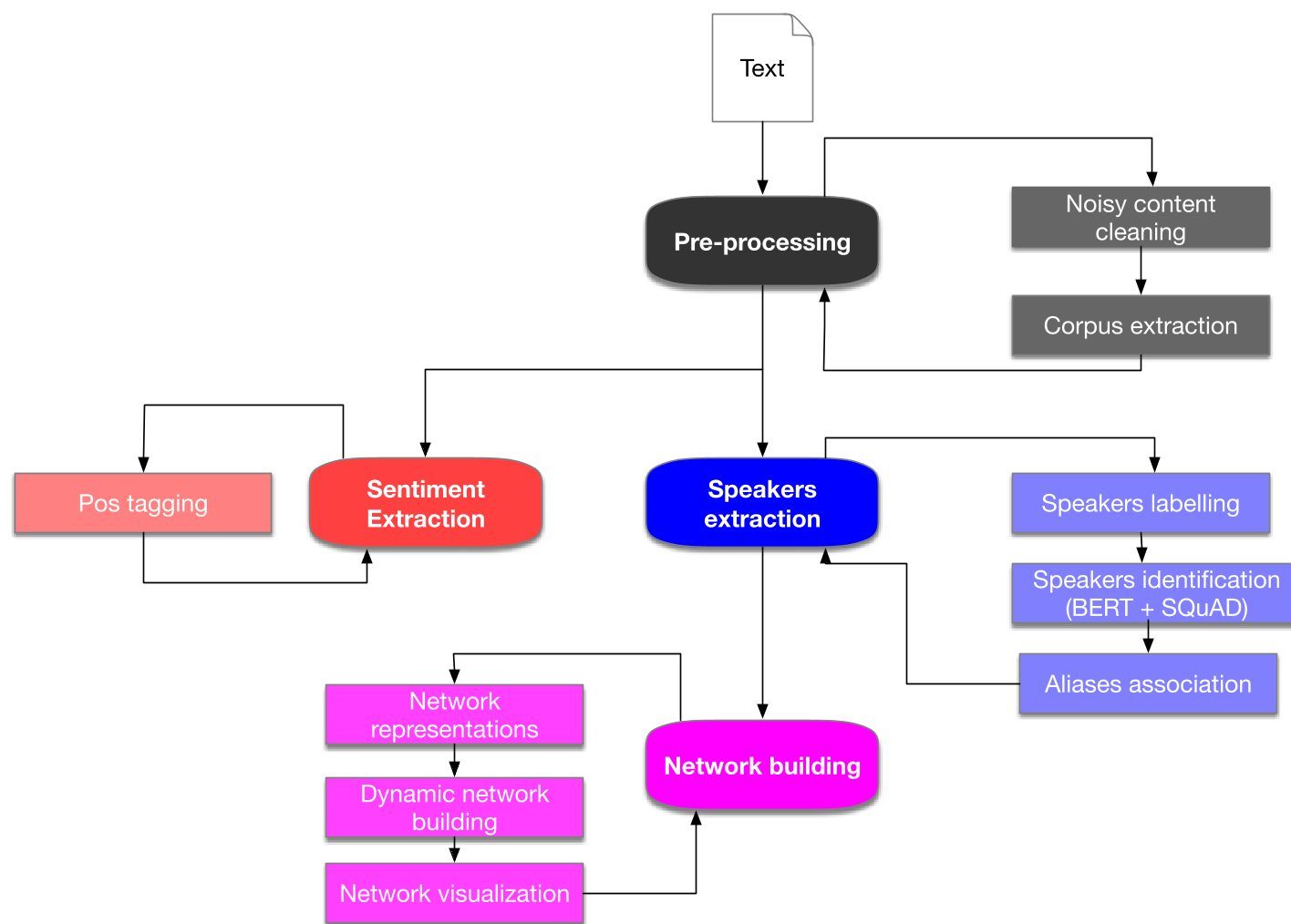 Fig 1. The workflow from raw text processing to network visualization.
The "Grandness" of the Novel
The study confirms that Romance is objectively "grander" than Records:
- Network Scale: Romance contains 508 characters compared to 124 in Records.
- Connectivity: The diameter of the Romance network is 9, suggesting a much more spread-out and intricate web of interactions than the compact diameter of 3 in Records.
- Small-World Properties: Interestingly, Records has a higher Small-World Index (SWI) of 1.5679 compared to 0.8713 for Romance. This indicates that historical texts are tightly clustered around a few key figures (biographical), whereas novels introduce a "mass of characters" to weave a broader narrative.
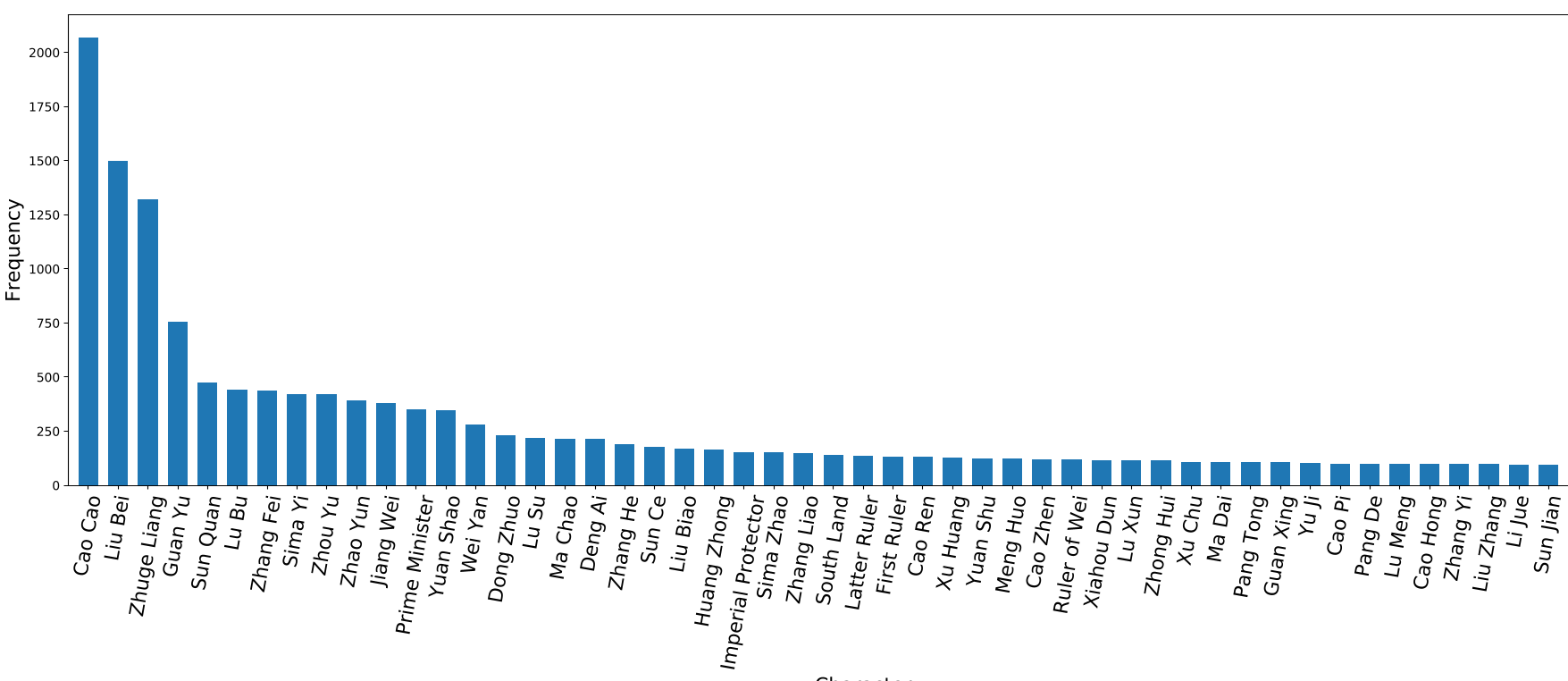 Fig 2. Social network visualization of Romance (Left) vs Records (Right).
Character Influence and Sentiment Bias
One of the most striking findings is the shift in character influence:
- In the History (Records), Liu Bei is represented as the most central and influential figure.
- In the Novel (Romance), Cao Cao takes the lead in all centrality metrics (Degree, Closeness, and Betweenness), effectively serving as the "bridge" and primary antagonist that drives the plot forward.
Sentiment analysis via SentiWordNet revealed that the novel uses more polarized language. While Cao Cao is depicted with "able" and "great" qualities in both, the novel injects negative descriptors like "crafty" and "evil" to enhance the dramatic conflict.
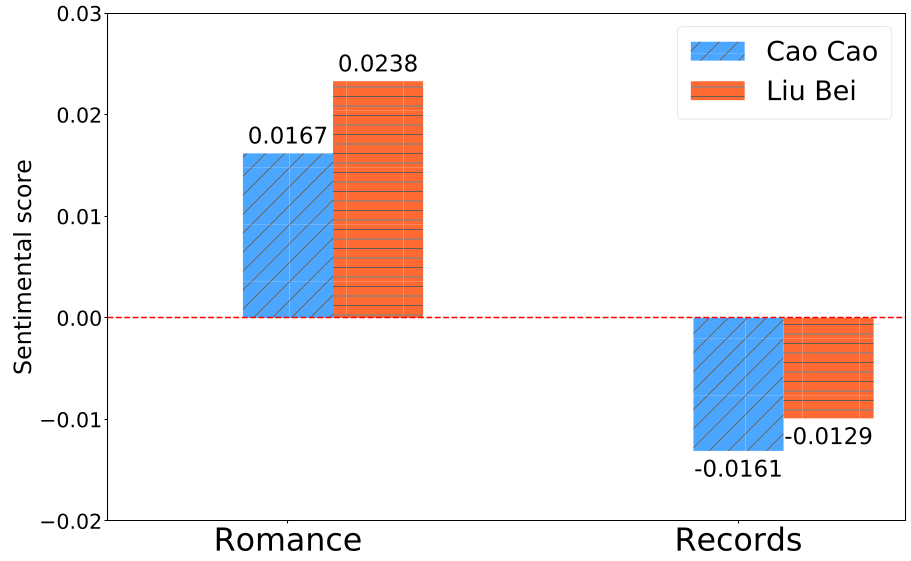 Fig 3. Quantitative sentiment scores revealing the novelist's subjective bias.
Critical Analysis & Takeaways
The paper successfully demonstrates that literariness is measurable. A novel does not just add "fluff"; it structurally changes the topology of the social world it describes.
Limitations:
- The edge definition (co-occurrence in a context) is relatively coarse. It doesn't distinguish between a friendly conversation and a battlefield duel.
- Classical Chinese nuances might be lost in translation, as the study used English versions of the texts.
Future Work: The authors suggest moving towards finer granularity—perhaps year-by-year network shifts—and incorporating specific relationship types like "marriage" or "military conflict" to provide a multi-layered view of historical evolution.