
The Physics of Failure: Mapping E-Commerce Capital Chain Rupture via Catastrophe Theory
A computational analysis of capital chain rupture in e-commerce enterprise
This paper presents a computational analysis of capital chain rupture in e-commerce enterprises using a hybrid approach of Multi-Agent Systems (MAS) and System Dynamics (SD). By modeling HY Company (an electronic accessory merchant on Amazon), the authors identify how internal financial metrics and external factors like user loyalty and investor confidence interact to trigger catastrophic business failure.
TL;DR
In the hyper-competitive world of e-commerce, why do seemingly successful companies suddenly vanish? This study moves beyond stale balance sheets to model the "sudden snap" of capital chains. By combining Multi-Agent Systems (MAS) and System Dynamics (SD), the authors demonstrate that capital rupture is a non-linear mutation triggered by the interplay between internal cash flow and external customer/investor sentiment.
Background: Why Financial Ratios Aren't Enough
Historically, predicting business failure relied on Altman’s Z-score or similar linear regressions of internal financial ratios. However, e-commerce operates in a "high-entropy" environment where user loyalty is fickle and supply chains are often outsourced. The authors argue that a capital chain doesn't just "wear down"—it ruptures. To understand this, we need to look at the business as a dynamical system capable of sudden phase transitions.
Methodology: The Hybrid Simulation Architecture
The researchers constructed a digital twin of HY Company, a real-world Amazon electronics seller. The architecture is two-fold:
- Multi-Agent Model: Simulates the messy interactions between users (loyalty models), factories (production capacity), and competitors.
- System Dynamics Model: Tracks the accumulation and depletion of cash, influenced by the micro-behaviors defined in the agent layer.
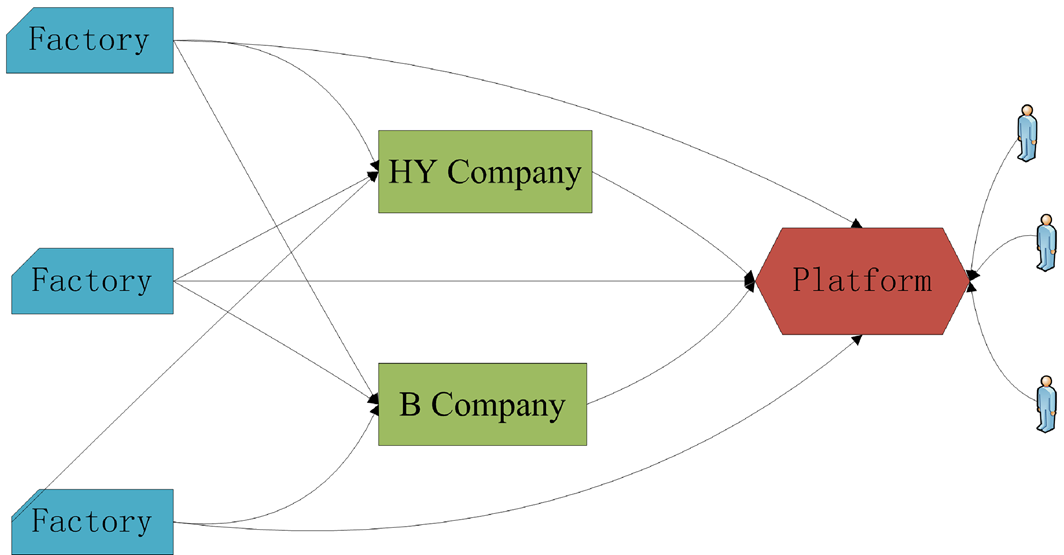 Figure 1: The multi-layered supply chain interaction model including factories, platforms, and competing enterprises.
The "Psychology" of Inventory
A unique feature of this study is the inclusion of Ordering Personnel's Psychology (OP). If the buyer is too pessimistic (), the firm suffers frequent stock-outs, destroying user loyalty. If too optimistic, storage costs eat the margins. The "sweet spot" identified is a slightly optimistic lean (), suggesting that in e-commerce, the cost of losing a customer (loyalty) is far higher than the cost of holding extra plastic in a warehouse.
The Core Insight: Cusp Catastrophe Theory
The most sophisticated part of the paper is the application of Catastrophe Theory. The authors define a 3D surface where the "State" (Capital Health) depends on two "Control Variables":
- (Internal): Primarily driven by Cash Flow.
- (External): A composite of User Loyalty and Investor Trust.
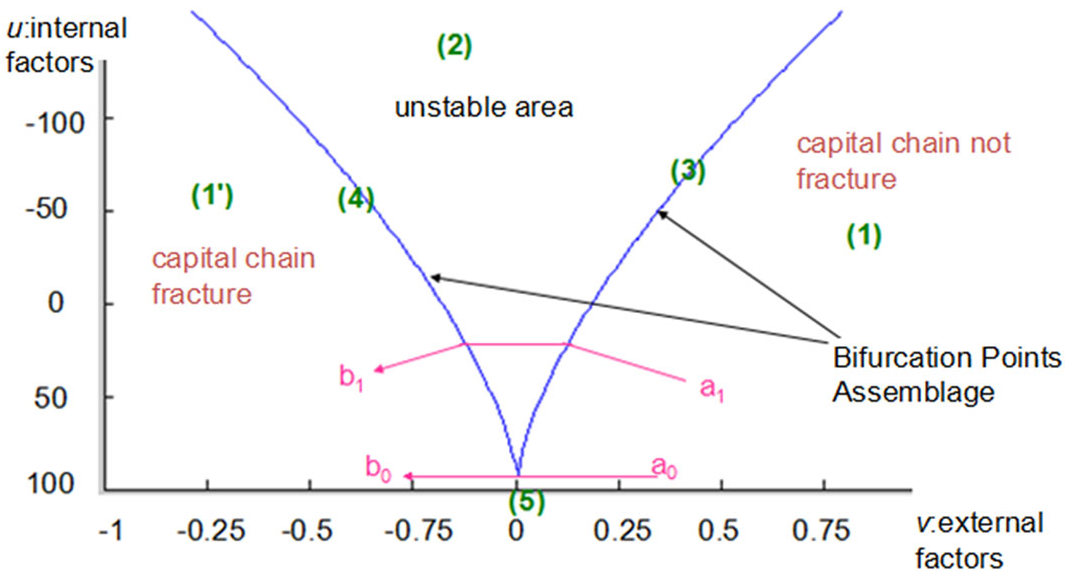 Figure 13: The Bifurcation Map. Moving across the "fold lines" into the shaded regions represents a sudden, irreversible capital chain rupture.
When cash flow is high, the system follows a smooth path even if loyalty dips (the curve). However, when cash flow is thin, even a tiny drop in loyalty can push the company over the "cliff" (the transition), leading to a sudden death that financial indicators alone might not predict in time.
Experimental Analysis: The 18% Rule
The simulation ran 400-day cycles across varied pricing strategies.
- Price Sensitivity: A 10-20% discount optimizes cash flow and investor confidence.
- The Breaking Point: Once discounts hit 35%, the volatility in stock management and the surge in return rates create a "Bullwhip Effect" that destabilizes the capital chain regardless of the increased sales volume.
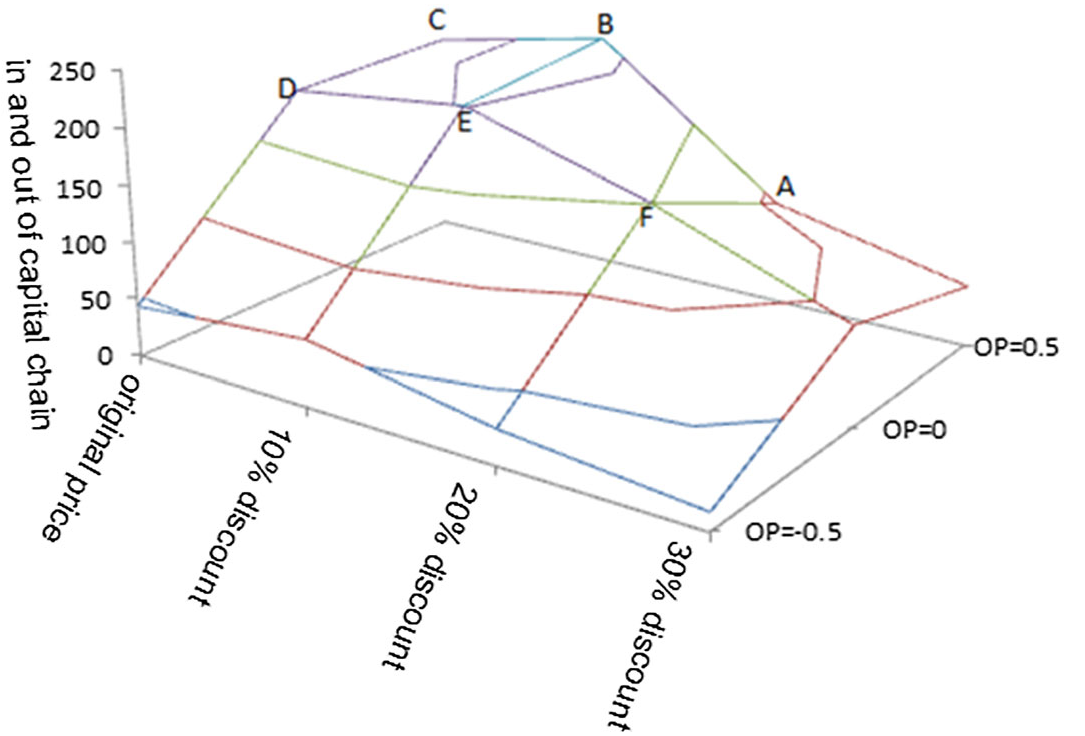 Figure 10: Capital chain stability across different Price and Psychology (OP) combinations.
Conclusion and Takeaways
This paper shifts the perspective of capital management from "accounting" to "system stability."
- Management Lesson: Don't just watch the bottom line; watch the coupling between cash flow and brand loyalty.
- Technical Lesson: System Dynamics and Multi-Agent simulations provide a powerful "stress test" for business strategies before they are deployed in the real market.
Limitations: The model assumes a single-product focus and simplified competitor behavior. Future work should incorporate multi-product portfolio risks and more complex game-theoretic strategies between platform giants.