
The Topology of Craving: A Computational Model of Social Media Addiction
A Computational Model of Internet Addiction Phenomena in Social Networks
The paper introduces a novel Hybrid Automata-based computational model of the Dopamine System to simulate Internet addiction. By extending established neurocomputational models of chemical addiction and applying them to virtual social network topologies, it demonstrates how scale-free network structures and user interaction propensities facilitate the emergence of addictive behaviors.
TL;DR
This research bridges the gap between neuroscience and network science. By modeling the human brain's dopamine system as a Hybrid Automaton, the authors show that "Internet Addiction" follows the same biological pathways as nicotine. Crucially, they discover that the Scale-Free topology of modern social networks (like Twitter or Instagram) acts as a catalyst, where highly connected "hubs" accelerate the spread of compulsive behavior across the entire population.
Background: Does "Liking" Equal "Smoking"?
In the neurobiological view, addiction is a "malfunction" of the reward system. Whether it's a hit of nicotine or a notification on a smartphone, the brain releases Dopamine, creating a sensation of pleasure. Over time, the brain develops Tolerance—it remembers the stimulus and dampens the reward, forcing the user to seek more frequent/intense stimuli to feel "normal."
While chemical addiction is well-mapped, the authors argue that Internet addiction is unique because the "stimulus" is social. Your addiction depends not just on your brain, but on who you are connected to.
Methodology: Coding the Dopamine System
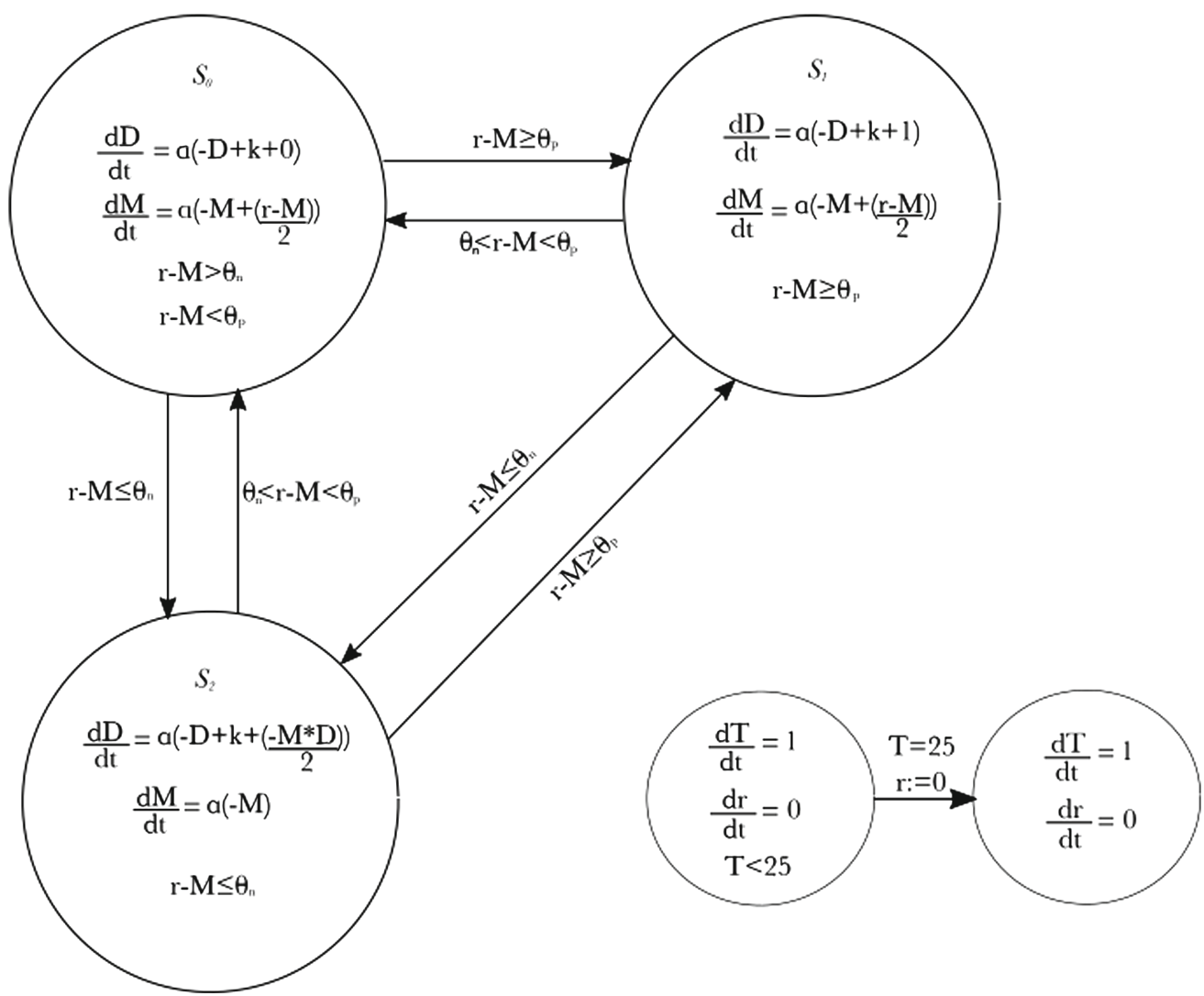
The authors utilize Hybrid Automata—a mathematical tool that combines discrete logic (switching between states) with continuous differential equations (modeling the rise and fall of chemical levels).
1. The Dopamine-Memory Seesaw
The model tracks two primary variables:
- D (Dopamine Concentration): Represents the immediate "high."
- M (Memory): Represents the "opponent process" or tolerance. As M grows, it suppresses the effects of D.
2. The Anticipation Effect (Prediction Error)
A key insight is the "Prediction Error": in addicts, dopamine levels rise before the reward is received (e.g., while sending a message and waiting for a reply). The model simulates this by adding a secondary stimulus when the user is in an addictive state ().
Experiment: Who "Spreads" Addiction?
The study moves from a single brain to a network of 100 interconnected brains. Each node (user) runs its own Dopamine/Memory simulation.
The Power of Hubs
The researchers compared two types of networks:
- Star Graphs: A central "hub" connected to many "leaves."
- Scale-Free Networks: Complex structures resembling real social networks (Facebook/X).
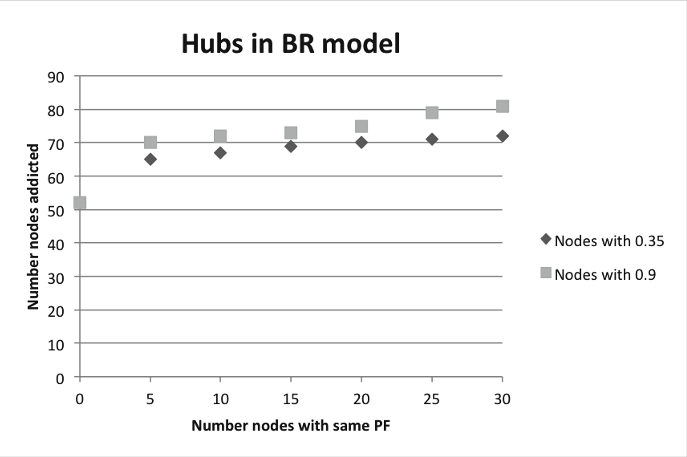
They found that addiction is highly sensitive to the Propensity Factor—the likelihood a user will interact.
Key Findings:
- The Hub Effect: In Scale-Free networks (BR model), addiction spreads significantly faster because "hubs" (users with massive connections) receive and broadcast stimuli constantly.
- Structural Vulnerability: Even if most users have low interaction propensity, a few high-activity hubs can "pull" the rest of the network into an addictive cycle.
- Tolerance Threshold: Once Memory () hits the threshold of 15, the feedback loop of anticipation ensures the dopamine levels never return to a healthy baseline.
Critical Insight: The Network is the Drug
The most striking takeaway is that addiction is emergent. A user who might not become "addicted" in a small 2-person interaction might easily cross the threshold when placed in a Scale-Free network. The topology of the network itself reduces the "reward" via tolerance and increases "withdrawal" symptoms.
Limitations & Future Work
While the model is robust, it assumes a binary interaction (message sent/received). Real-world stimuli vary in "potency" (a 'like' vs. a 'comment'). Furthermore, the propensity factor is currently static, whereas in reality, a user's desire to interact likely fluctuates based on their current dopamine state.
Conclusion
This work provides a terrifyingly clear computational mirror to our digital habits. It suggests that social media platforms, by their very design (favored attachment and hub creation), are mathematically optimized to foster biological addiction.
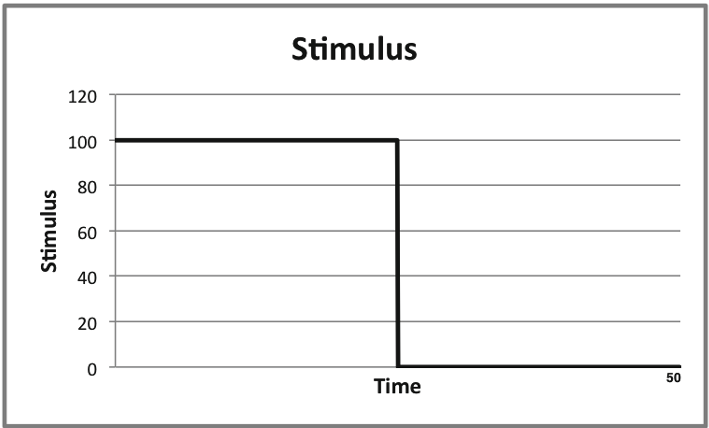 Figure: The "Spike and Drop" – As stimulus becomes constant, Memory (green) rises to suppress Dopamine (blue), leading to a crash (withdrawal) when the stimulus stops.