
Computational Neurology: Bridging the Gap Between Molecules and Medicine in Dementia
Computational neurology: Computational modeling approaches in dementia
The paper introduces "Computational Neurology" as a framework to study dementia, specifically Alzheimer’s Disease (AD), by integrating biophysical mechanistic modeling with data-driven AI. It demonstrates how neuronal circuit simulations and multi-modal machine learning can bridge the gap between ion-channel dysfunctions and clinical diagnosis.
TL;DR
Dementia research is shifting from descriptive observation to quantitative prediction. This paper formalizes the field of Computational Neurology, combining biophysical simulations (why neurons fail) with machine learning (predicting who will convert to AD). By modeling A-type potassium current dysfunctions and applying Multi-Kernel Learning to neuroimaging, the authors demonstrate a path toward high-accuracy clinical decision support systems.
The "Complexity Crisis" in Dementia
Neurology faces a daunting challenge: Alzheimer’s Disease (AD) is a multi-scale disaster. It starts with molecular mutations (APP, PSEN1), leads to protein aggregates (Amyloid-beta, Tau), disrupts ion-channel homeostasis, and eventually manifests as memory loss.
The authors highlight two major bottlenecks:
- The Clinical Blind Spot: Misdiagnosis rates are high because primary care physicians often lack specialized training and time.
- The Mechanistic Gap: We have plenty of "what" data (symptoms) but lack the "why" (biophysical links).
Methodology Part I: The Mechanistic "Hardware"
To understand the pathology, the researchers utilized Computational Neuroscience. They focused on the hippocampal-septal region—the brain's ground zero for memory processing.
Using a biophysical Hodgkin-Huxley type model, they simulated four populations of neurons. The core mathematical focus was on the membrane potential () as a function of various ion-channel currents ():
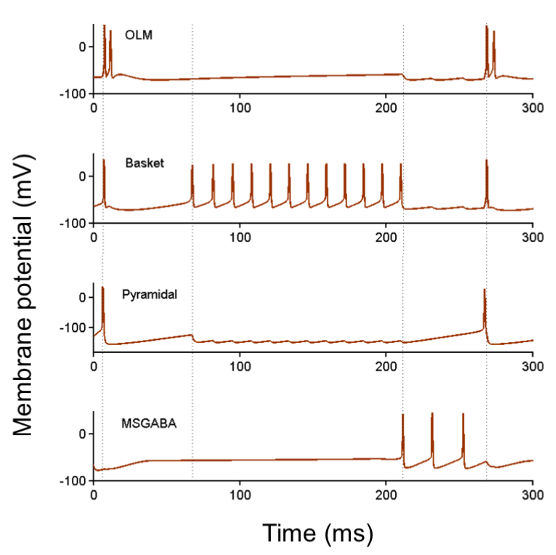 Fig 1: Neuronal circuit architecture of the hippocampal-septal region used in the mechanistic simulations.
The Insight: They discovered that when beta-amyloid plaques inhibit the A-type potassium current (), the pyramidal neurons (the brain's principal "excitatory" cells) become hyperexcitable. This doesn't just "break" the brain—it changes its rhythm. This hyperexcitability explains why AD patients often suffer from comorbid epileptic seizures.
Methodology Part II: Data-Driven AI for the Clinic
While mechanistic models explain the "How," AI handles the "Who." The paper showcases Multi-Kernel Learning (MKL) with the DARTEL algorithm to fuse disparate data sources.
In the world of AI, more data isn't always better if it’s "noisy." By combining PiB-PET (which tracks amyloid) and MRI (which tracks structural atrophy), the MKL framework achieves superior results.
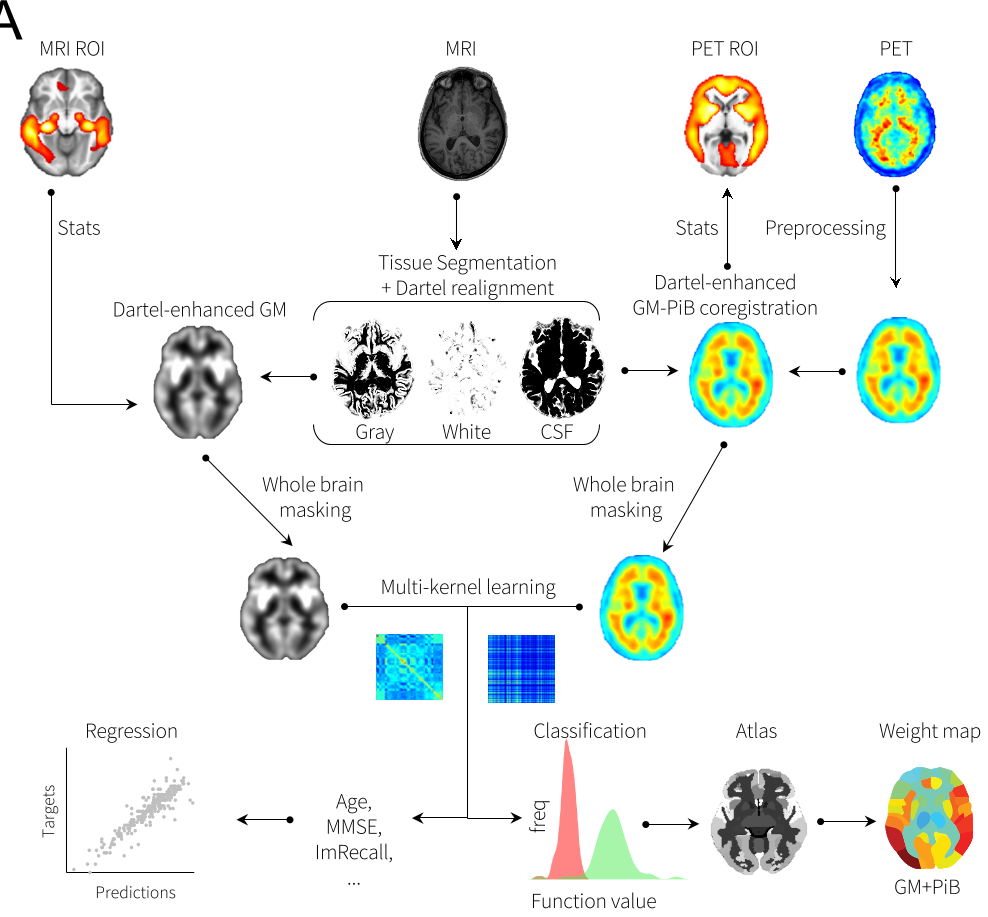 Fig 2: The Multi-Kernel Learning framework for multi-modal data fusion.
Key Results:
- Accuracy: The fused model hit a 95.7% accuracy rate for AD detection.
- MCI Transition: Predicting the conversion from Mild Cognitive Impairment (MCI) to full AD—the "holy grail" of early intervention—was significantly improved by modality fusion ().
Clinical Decision Support: The Future of Care
The ultimate goal of Computational Neurology is to put these tools in the hands of doctors. The paper presents a prototype Clinical Decision Support System (CDSS). Instead of a simple "Yes/No" diagnosis, it provides a graded severity scale, recognizing that dementia is a continuous spectrum rather than a set of discrete boxes.
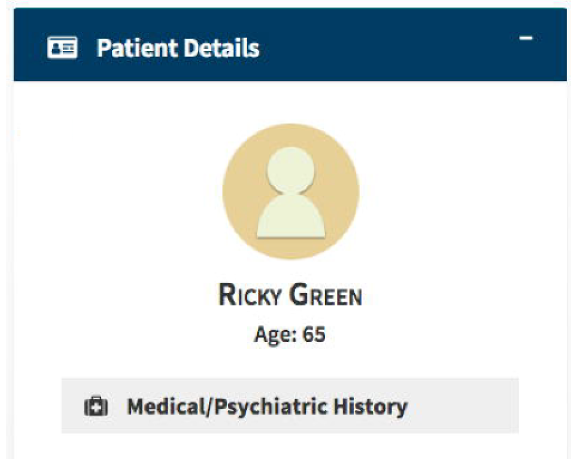 Fig 3: Prototype of a clinical decision support system for continuous AD severity tracking.
Critical Analysis & Outlook
Wait, is AI ready for the clinic? The authors are refreshingly honest. Current open-source datasets (like ADNI) are "cleaner" than real-world electronic health records. There is a lack of pragmatism: many attributes used in research models (like specific exotic biomarkers) aren't even collected in routine clinical visits.
Takeaways:
- Inductive Bias: Incorporating biological knowledge (like the A-type current dynamics) into AI models could lead to more robust clinical predictions.
- Continuous Modeling: We must stop treating "Diagnosis" as a static label and start viewing it as a dynamical system trajectory.
The path forward requires a "Hybrid approach"—using AI to filter the big data and mechanistic models to provide the causal explanation that doctors (and patients) deserve.