
SpecPSO: Bio-Inspired Swarm Intelligence for Social-Aware Cognitive Radio Handovers
Computers and Electrical Engineering
The paper introduces SpecPSO, a bio-inspired supervised learning approach based on Particle Swarm Optimization for Social Cognitive Radio Networks (SCRN). It addresses spectrum scarcity by leveraging social mining and mobile network data to perform efficient Social Cognitive Handovers (SCH).
TL;DR
As mobile data demand sky-rockets, traditional spectrum management hits a ceiling. This paper introduces SpecPSO, a swarm-intelligence-driven framework that integrates social mining into Cognitive Radio Networks (CRN). By treating mobile users not just as nodes, but as social entities, SpecPSO optimizes the handover process, achieving a 75% performance boost over conventional social-unaware models and hitting data rates of 70 Mbps.
Problem & Motivation: The Lack of "Social Vision"
The primary bottleneck in current Cognitive Radio (CR) is spectrum underutilization. While CR allows secondary users to "borrow" licensed spectrum, the decision-making process for handovers (switching channels to avoid interference) often lacks context.
The authors argue that mobile communication is inherently social. People move and use data based on social ties. Existing methods fail because:
- Randomness: They treat user mobility as stochastic, ignoring the predictable patterns driven by social groups.
- Centralization: Relying on a central entity for spectrum sensing creates a bottleneck and overhead.
The insight? By mimicking Social Language—the way natural communities (like bees or ants) coordinate without a central leader—radios can "observe" and "understand" peer actions to make smarter handover decisions.
Methodology: The SpecPSO Framework
The core of the proposal is Social Cognitive Handover (SCH) powered by an optimized version of Particle Swarm Optimization (PSO).
1. The Social Intelligence Cycle
The system treats each CR node as an intelligent agent. As shown in the paper's architecture, nodes go through a cycle of:
- Observation: Identifying the lucidity of messages from other nodes.
- Understanding: Decoding the "why" behind a peer's move to a specific frequency.
- Action: Executing a handover that minimizes interference for the entire "society."
2. SpecPSO Algorithm
To solve the optimization problem of finding the best spectrum "hole," the authors use PSO with a critical twist: Globally Adaptive Inertia Weight ().
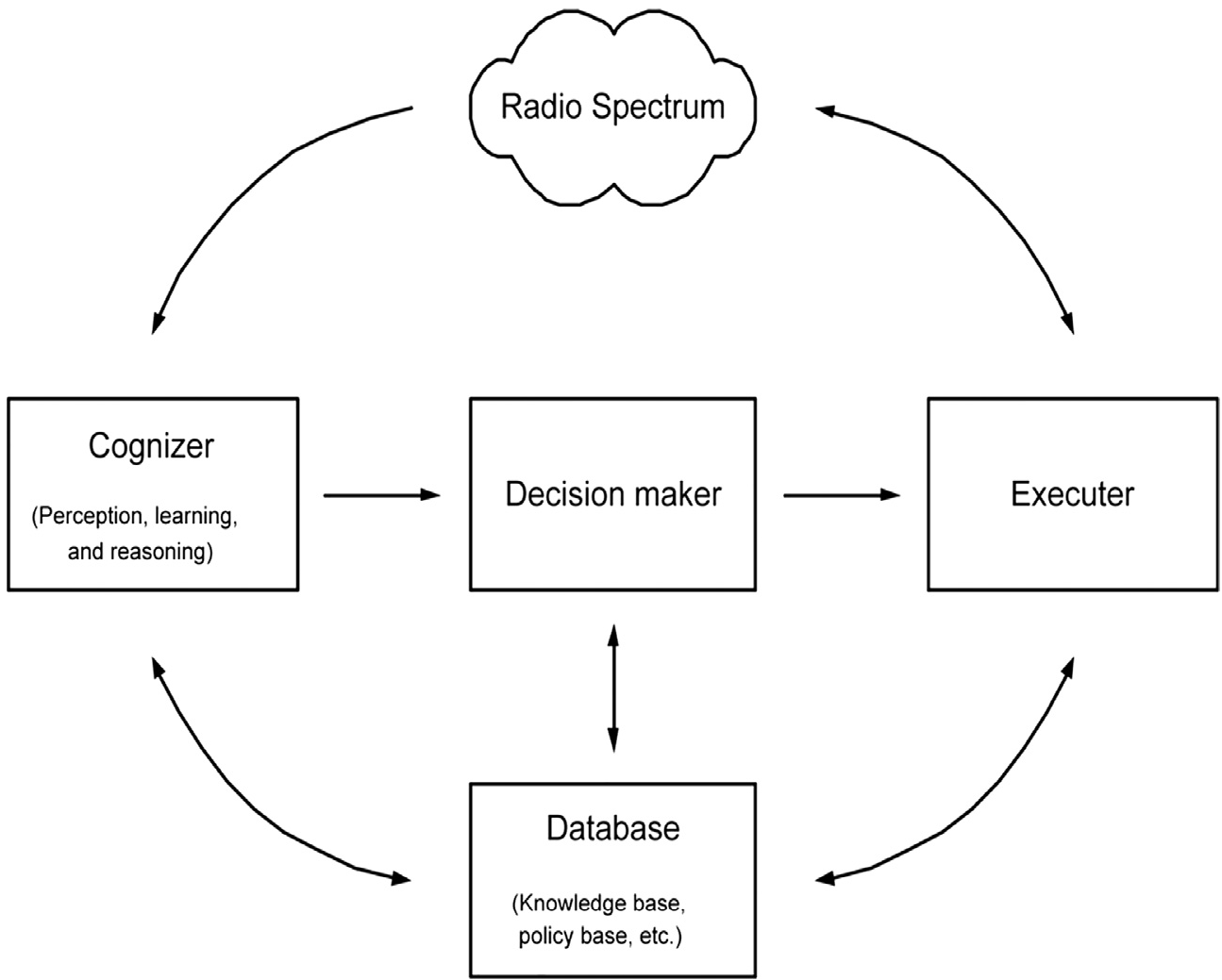 Fig 1: The Social Intelligence Cycle for CR Nodes.
The velocity update equation incorporates three distinct components:
- Inertia: Maintains previous momentum.
- Cognitive (): Individual memory of the "personal best" position.
- Social (): Collective knowledge of the "global best" position.
By dynamically adjusting the inertia weight based on convergence, SpecPSO avoids getting stuck in local optima during the high-speed search for available channels.
Experiments & Results: Crushing the Baseline
The researchers tested SpecPSO across several multimodal benchmark functions (Ackley, Griewank, Rastrigin) to ensure its robustness in complex electromagnetic environments.
Key Findings:
- Protocol Supremacy: When applied to different IEEE 802.x standards, the IEEE 802.16 (WiMAX) protocol combined with SpecPSO yielded the best results, reaching a 70 Mbps data rate.
- Optimization Speed: SpecPSO achieved convergence significantly faster than standard OPSO or RegPSO, proving it can handle the millisecond-requirements of real-time mobile handovers.
- Efficiency: The proposed SCH method improved spectrum usage by roughly 75.66% compared to baseline Mobile Social Network models.
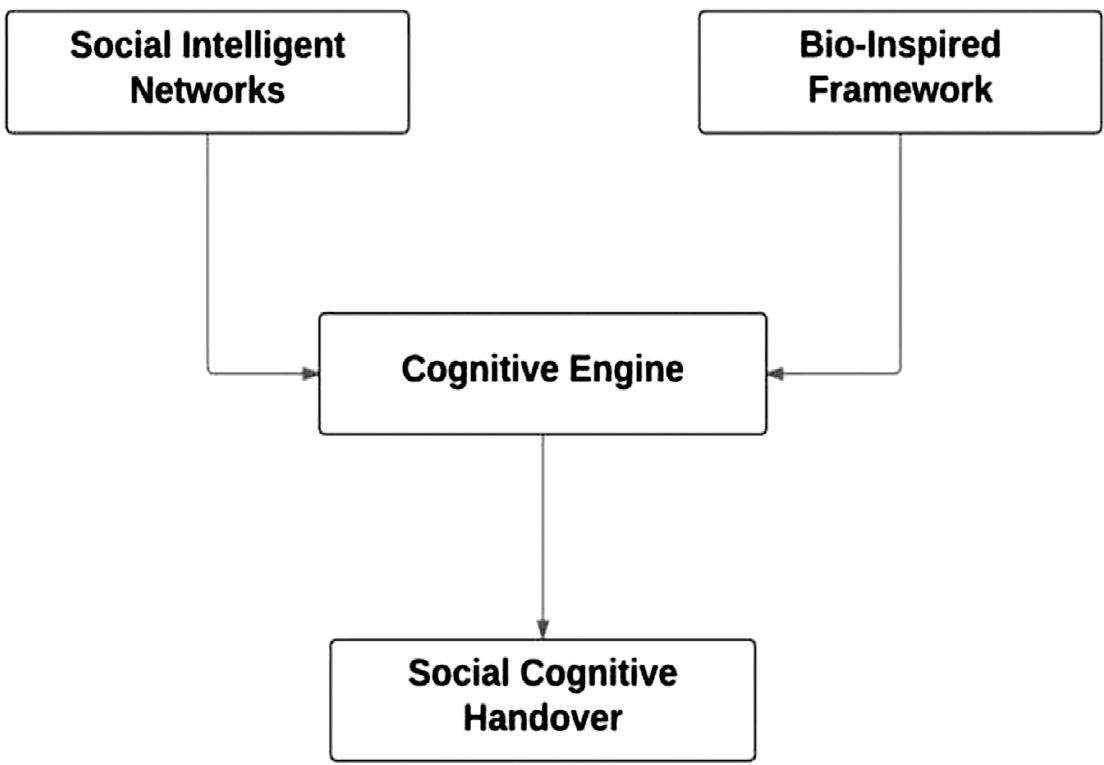 Fig 2: The MSN Handover Procedure utilizing SpecPSO.
Critical Insight & Conclusion
The real value of this paper isn't just the PSO update; it's the bridging of Social Science and Wireless Engineering. By treating spectrum holes as a shared community resource rather than a competitive prize, SpecPSO reduces the "noise" of uncoordinated handovers.
Takeaway: Future 6G systems will likely move away from purely physical sensing towards this type of "Contextual Intelligence," where the network predicts your next move because it understands your social environment.
Limitations: While the simulation results in Matlab are impressive, the real-world complexity of "Social Language" decoding in high-interference urban environments (where signal-to-noise ratios vary wildly) remains a hurdle for physical implementation.