
NMF: Redefining Fault Detection in Agricultural Wireless Sensor Networks
Computers and Electronics in Agriculture
This paper proposes a machine learning-based fault detection system for agricultural Wireless Sensor Networks (WSN) using Non-Negative Matrix Factorization (NMF). By factorizing the spectral representation of soil moisture data into positive basis vectors, the method extracts low-dimensional features that model normal sensor behavior, achieving performance comparable to Multi-scale Principal Component Analysis (MSPCA).
TL;DR
Agriculture 4.0 relies on precision, yet sensors in the field are notoriously fragile. This paper introduces a Non-Negative Matrix Factorization (NMF) framework to detect sensor faults by learning the "spectral signature" of healthy data. It proves that by focusing on low-frequency energy bands, we can catch Offset, Gain, and Stuck-at errors with near-perfect accuracy, rivaling traditional Wavelet-based PCA methods while offering better interpretability.
The Fragility of the "Smart Farm"
In modern agriculture, soil moisture sensors are the front line of water conservation. However, these nodes live in hostile environments—exposed to chemicals, extreme weather, and battery drain. When a sensor "fails," it doesn't always go dark; often, it produces "plausible but wrong" data, such as a slight offset or a frozen value (stuck-at).
The core challenge is: How do we distinguish between a real environmental change and a sensor malfunctioning? Current SOTA methods like Multi-scale PCA (MSPCA) are effective but can be computationally heavy and lack intuitive interpretability.
Methodology: Why NMF?
The authors pivot from traditional variance-based analysis (PCA) to Non-Negative Matrix Factorization (NMF).
1. The Physical Intuition
Signal data is inherently non-negative. NMF respects this constraint, decomposing the signal into a set of Spectral Basis Vectors (SBVs). In the context of soil moisture, these basis vectors represent the natural, slow-moving frequency components of the earth's hydration levels.
2. The Math of "Normalcy"
The system works in three stages:
- Pre-processing: Butterworth and Savitzky-Golay filters remove high-frequency noise.
- Matrix Factorization: . Here, represents the universal patterns of "good" data.
- Residual Analysis: When a new reading comes in, the system keeps fixed and tries to find the best . If the reconstruction error is high or distorted, the sensor is flagging a fault.
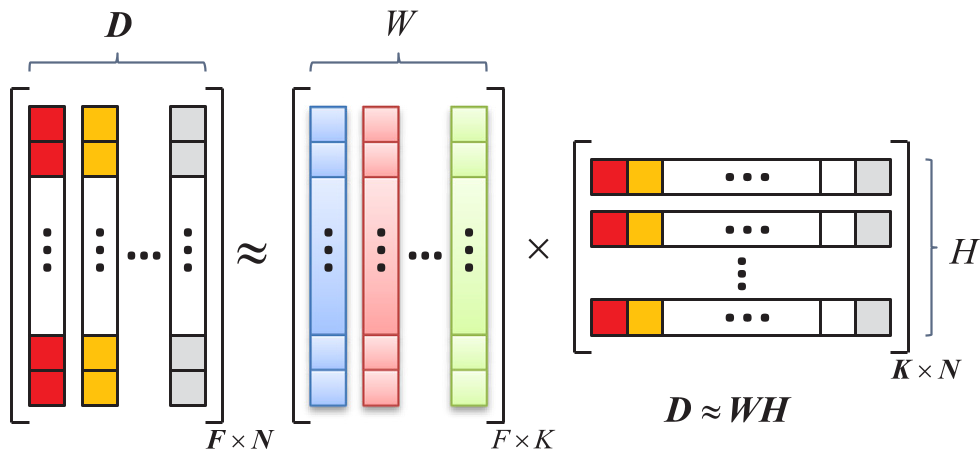 Figure 1: Graphical representation of the NMF-based decomposition process.
Experiments: NMF vs. MSPCA
The researchers tested the system against five artificial fault types: Precision Degradation, Gain, Offset, Outlier, and Stuck-at.
Key Findings:
- Offset & Stuck-at: NMF was the clear winner. By modeling the base energy of the signal, NMF immediately spots when the "baseline" of a sensor shifts.
- Interpretability: Unlike PCA, which uses abstract principal components, the NMF basis vectors clearly showed that soil moisture energy is concentrated in the low-frequency bands—a result that matches physical soil science.
- Efficiency: By averaging features, the authors reduced the feature set from 513 dimensions to 19, slashing execution time by over 80% while maintaining detection performance.
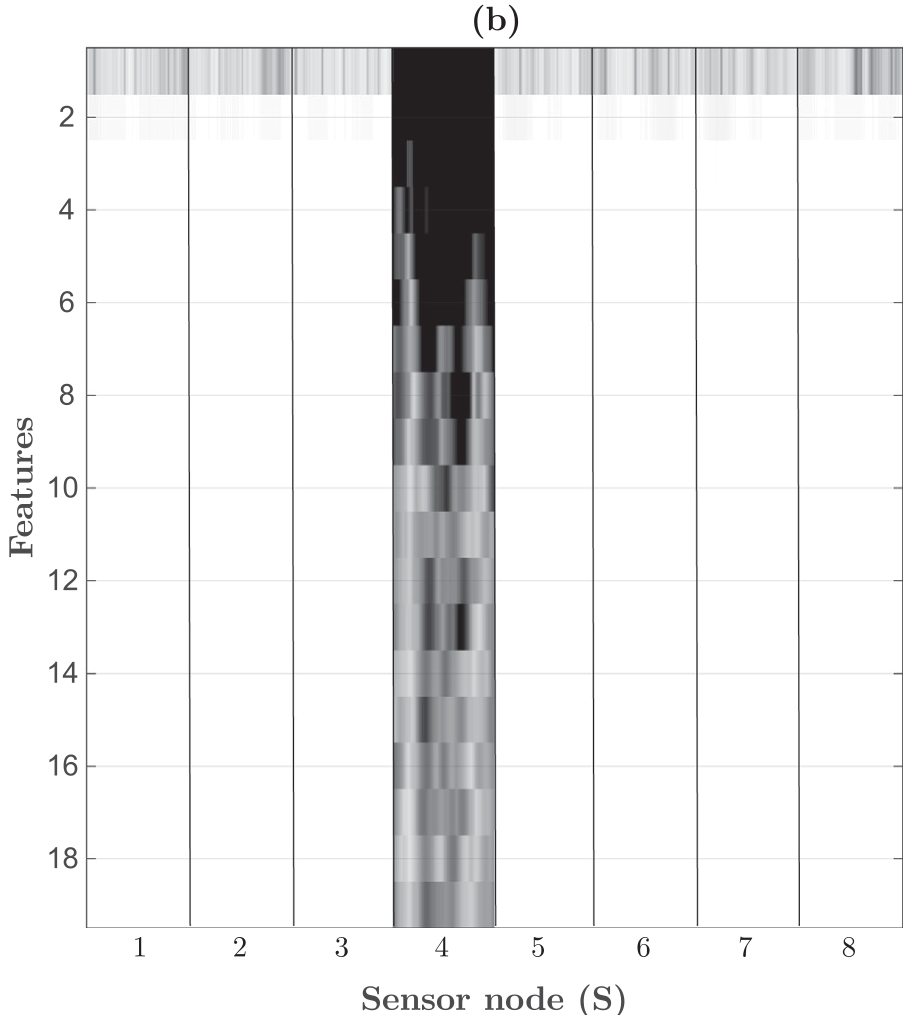 Figure 2: Approximation error (Es) showcasing the distinct visual "fingerprint" left by a fault at Sensor 4.
Critical Insight: The Power of Residuals
The "Aha!" moment of this paper lies in Figure 8. In a healthy sensor network, the error matrix (Es) is nearly uniform and light. The moment a fault occurs, specific cells in the matrix darken significantly. This sparse, localized error makes it incredibly easy for a simple SVM or Logistic Regressor to make a high-confidence decision.
Conclusion & Future Outlook
While MSPCA remains a robust baseline for gain-related errors, this paper proves that NMF is a superior choice for detecting structural faults (Stuck-at/Offset) in WSNs.
Future Directions: The next step for this technology is moving the "Decision Stage" directly onto the edge devices. Because NMF requires only matrix multiplication after the initial training, it is lightweight enough to run on the microcontrollers themselves, allowing for real-time, autonomous "self-healing" sensor networks.
Takeaway for Engineers: If your data is naturally non-negative (like spectral or biological signals), stop defaulting to PCA. NMF’s ability to extract "parts" of the signal provides a much cleaner baseline for anomaly detection.